
Rho Agenda Books in Order
Part ofRichard Phillips Books in OrderSee the Rho Agenda books in order by Richard Phillips, with quick summaries, series background, and a clear guide to where to start.
Last updated:
As an Amazon Associate, we earn from qualifying purchases (at no extra cost to you).
Rho Agenda books in publication order
4 books
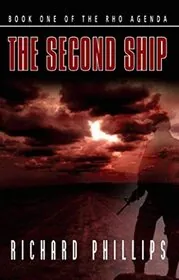
The Second Ship
by Richard Phillips
2006
Three New Mexico teenagers discover a hidden alien ship and accidentally unlock powers the government has chased for decades. Their find pulls them into conspiracies, secret experiments, and an extraterrestrial war.
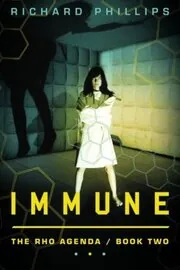
Immune
by Richard Phillips
2009
The Rho Project's miracle nano-serum is spreading fast, and the body count is rising with it. Hunted from all sides, Mark, Jennifer, Heather, and Jack Gregory race to stop a plan that could alter humanity forever.
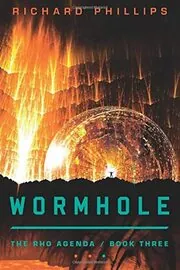
Wormhole
by Richard Phillips
2012
A deadly anomaly at the Large Hadron Collider leaves humanity relying on the very alien tech it fears. Heather, Mark, and Jennifer must stop a new Rho scheme before its cure becomes Earth's destruction.
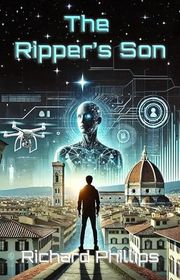
The Ripper's Son
by Richard Phillips
2025
In an AI-managed future that looks peaceful on the surface, Rob Gregory is pushed back into violence by a devastating loss. His hunt for answers leads him toward rogue subminds, hidden power brokers, and a dangerous secret.
Rho Agenda books in chronological order
Series background & context
The Rho Agenda is the series that put Richard Phillips on the map for a lot of readers, and it blends alien-contact science fiction with conspiracy thriller pacing. The core setup reaches back to 1948, when an alien ship crashes in New Mexico and vanishes into a secret government project at Los Alamos. Decades later, the technology from that wreck is still being studied, hidden, and weaponized. Then another ship enters the picture, and everything gets harder to control.
That second discovery lands in the hands of three young people, Mark Smythe, Jennifer Smythe, and Heather McFarland. When they find the hidden ship in the New Mexico wilderness, they do not just stumble onto a secret. They get changed by it. From there the story becomes part coming-of-age tale, part technothriller, and part race to understand what alien technology is doing to the human beings around it.
The books start like a secret-history thriller and keep getting bigger.
New Mexico is not just a cool backdrop here. The Los Alamos setting, the desert landscape, and the long shadow of hidden military research all give the story its shape. Phillips clearly likes writing about the way breakthroughs move from labs to power structures, and he keeps asking the same uneasy question from different angles: if you hand human institutions something far beyond their maturity level, what do they do with it? In these books, the answer is usually messy.
The Second Ship is the discovery book, where the Smythes and Heather realize they are tangled in something much older and more dangerous than a cover-up. Immune widens the crisis through a supposedly miraculous nano-serum that promises to cure disease while threatening to alter humanity itself. Wormhole then pushes the trilogy toward a larger scientific and existential disaster, with global stakes and a clearer picture of the alien agendas behind the chaos. Jack Gregory and Janet Price, who get their own prequel trilogy elsewhere, also become important players here and add a more overt black-ops edge.
If you like stories where scientific breakthroughs solve one problem and create three worse ones, this is the lane.
The tone mixes fast plotting with big speculative ideas. There are teen protagonists, but this is not soft or cozy science fiction. It is full of secret programs, ruthless factions, altered humans, and the sense that every gift from the stars comes with a trap hidden inside it. Read in order, the trilogy works as both an alien-war story and a running argument about whether humanity is wise enough to survive its own next leap.



Edited by
Software engineer whose passion for tracking book recommendations from podcasts inspired the creation of MRB.
Lead investor at 3one4 Capital whose startup expertise and love for books helped shape MRB and its growth.
Comments
Did we miss something? Have feedback?
Help us improve this page by sharing your thoughts