
Ray Celestin Books in Order
This page lists Ray Celestin books in order, with short summaries, City Blues Quartet background, standalone notes, and a simple guide to where to start.
Last updated:
As an Amazon Associate, we earn from qualifying purchases (at no extra cost to you).
Ray Celestin books in publication order
5 books
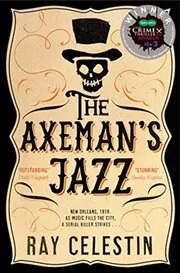
The Axeman's Jazz / The Axeman
by Ray Celestin
2014
New Orleans, 1919. As the Axeman terrorises the city, Detective Michael Talbot, ex-cop Luca d'Andrea, and Pinkerton secretary Ida chase the killer from three sides, while jazz, corruption, and a gathering storm close in.
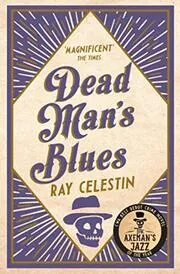
Dead Man's Blues
by Ray Celestin
2016
Chicago, 1928. A missing heiress, a mutilated gangster, and a deadly hotel poisoning pull Ida Davis and Michael Talbot into a knot of corruption, while photographer Jacob Russo and mob fixer Dante Sanfelippo follow dangerous threads of their own.
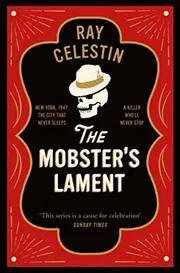
The Mobster's Lament
by Ray Celestin
2019
New York, 1947. Ida Davis and Michael Talbot investigate a brutal Harlem killing spree as mob fixer Gabriel Leveson hunts stolen money for Frank Costello, while Louis Armstrong faces a career crossroads.
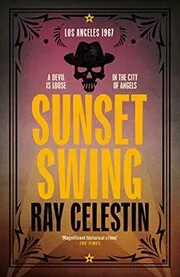
Sunset Swing
by Ray Celestin
2022
Los Angeles, Christmas 1967. A young nurse searches for her missing brother, retired investigator Ida Young is pulled into a motel murder, and Dante Sanfelippo stumbles toward a conspiracy tied to a random-killing serial predator.
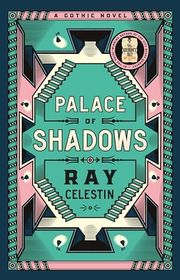
Palace of Shadows
by Ray Celestin
2023
In 1899, struggling artist Samuel Etherstone takes a commission at a vast, ever-growing house on the North Yorkshire coast. What looks like a lifeline turns into a gothic mystery of disappearances, superstition, and a patron hiding terrifying plans.
Where to start with Ray Celestin
For the full City Blues Quartet arc: The Axeman's Jazz / The Axeman → Dead Man's Blues → The Mobster's Lament → Sunset Swing
For his clearest entry into historical crime: The Axeman's Jazz / The Axeman → Dead Man's Blues
For a later, bigger-city noir sweep: Dead Man's Blues → The Mobster's Lament → Sunset Swing
For a standalone gothic mystery: Palace of Shadows
Ray Celestin sub-series and character series
Standalone Ray Celestin books
Author bio
Ray Celestin is a novelist and screenwriter from London, where he still lives. He grew up in a Greek family and studied art at university, specialising in Japanese art. That combination of visual training, historical curiosity, and love of story helps explain why his fiction pays such close attention to atmosphere, architecture, music, and the look and feel of a city.
He was writing stories long before he published a novel.
As a schoolboy he made comic books with friends, and later moved on to short stories and short film scripts. He has said that he always wanted to write a novel, but the scale of it felt daunting at first. The turning point was the idea that became The Axeman's Jazz, a story built around the real New Orleans serial killer known as the Axeman.
That first novel took years. Celestin was working full time while writing in spare hours, then spent more time revising it with an agent and publisher before it finally came out in 2014. He has said he was learning the craft as he went, and that the first book taught him how much rewriting matters. The early part of his career feels less like a sudden breakthrough and more like a long apprenticeship.
The Axeman's Jazz introduced many of the things readers now connect with Celestin. Set in New Orleans in 1919, it follows police lieutenant Michael Talbot, Pinkerton secretary Ida, and former detective Luca d'Andrea as they close in on the same killer from different angles. What makes the book memorable is not just the case itself, but the way jazz, race, corruption, gossip, and the weather all press in on the story.
He carried that approach into the rest of the City Blues Quartet, Dead Man's Blues, The Mobster's Lament, and Sunset Swing. The quartet moves through Chicago, New York, and Los Angeles, following recurring characters across decades while also tracing the linked histories of jazz and the mob. People met as young adults in the early books reappear older, wearier, and changed by what they have seen. Celestin planned the series with a pattern in mind, each book tied to a different city, decade, season, weather, and song. It is a clever bit of design, but it mostly works because it deepens the mood and shows how time changes both a country and the people trying to make a life inside it.
Music matters here.
But so do neighbourhoods, hotel lobbies, police stations, alleyways, and the feeling of a city at street level. That may be where his screenwriting background shows most clearly. He likes several story lines moving at once, and he often cuts between people on different sides of the same problem, cops, private investigators, musicians, reporters, and gangsters. The result is crime fiction that feels broad without losing the human scale.
With Palace of Shadows, Celestin stepped away from the quartet and into standalone gothic suspense. Set on the North Yorkshire coast in 1899, it follows a struggling artist named Samuel Etherstone who is drawn into the secrets of a vast and unsettling house that never seems to stop growing. He arrives looking for work and walks into a place full of rumours, disappearances, and dread. It is still recognisably Celestin's work, with careful historical detail and layered mystery, but the mood is darker, stranger, and closer to ghost story territory.
Celestin has spoken openly about loving historical crime fiction, and he has named writers such as James Ellroy and C. J. Sansom among the authors he admires. He has also said that part of the appeal of historical crime is the sense of escapism it offers. He loves old films, and when he is not writing he has said he is usually reading or at the cinema. He once made short films with friends, and he still talks like someone interested in how stories change when you move from page to screen. These days he remains based in London, writing novels and screenplays.






Edited by
Software engineer whose passion for tracking book recommendations from podcasts inspired the creation of MRB.
Lead investor at 3one4 Capital whose startup expertise and love for books helped shape MRB and its growth.
Comments
Did we miss something? Have feedback?
Help us improve this page by sharing your thoughts