
Rabbi Daniel Winter Mysteries Books in Order
Part ofJoseph Telushkin Books in OrderExplore the Rabbi Daniel Winter Mysteries by Joseph Telushkin, with the books in order, short summaries, series background, and help choosing where to start.
Last updated:
As an Amazon Associate, we earn from qualifying purchases (at no extra cost to you).
Rabbi Daniel Winter Mysteries books in publication order
4 books
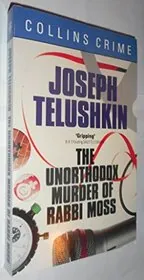
The Unorthodox Murder Of Rabbi Moss
by Joseph Telushkin
1986
In the first Rabbi Daniel Winter mystery, a controversial female rabbi is killed and Winter finds himself uncomfortably close to the case. His search for the murderer pulls him into Los Angeles politics, theology, and very personal danger.

The Unorthodox Murder of Rabbi Wahl
by Joseph Telushkin
1987
After a heated radio appearance, outspoken Rabbi Myrna Wahl is killed and Daniel Winter becomes a prime suspect. To clear his name, he has to navigate public controversy, hidden enemies, and a case that keeps circling back to him.
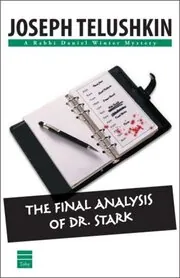
The Final Analysis of Dr. Stark
by Joseph Telushkin
1988
When a psychiatrist whose clients include Los Angeles power players is found brutally murdered, Rabbi Daniel Winter starts asking questions. Missing records, private secrets, and a polished public image make this mystery especially tricky.

An Eye for an Eye
by Joseph Telushkin
1991
A killing tied to an old crime sends Rabbi Daniel Winter into a case shaped by grief, revenge, and the limits of the justice system. As suspicion falls on the wrong man, Winter tries to defend him and find the truth.
Rabbi Daniel Winter Mysteries books in chronological order
Series background & context
The Rabbi Daniel Winter Mysteries follow an Orthodox rabbi in Los Angeles who keeps getting pulled into crimes he never asked for. Daniel Winter has a congregation, a public voice, and a habit of taking moral questions seriously, which means murder cases rarely stay simple around him. He is not a professional detective, and that is part of the appeal.
He is a rabbi first, detective second.
That difference shapes the whole series. Winter notices clues, but he also notices motive, guilt, shame, family pressure, and the stories people tell themselves to justify what they do. He is thoughtful, sometimes reluctant, and very aware that words can stir up trouble long before anyone reaches for violence. His role as a radio host gives the books an extra spark, because public arguments about religion, gender, justice, and belief do not stay public for long.
The setting matters too. These are Los Angeles mysteries, not small-town puzzles. The books move through temples, radio studios, therapists' offices, courtrooms, and the polished but uneasy corners of city life. Celebrity culture, media pressure, denominational tension, and personal reinvention all sit in the background. Telushkin uses that world well, because it lets him place ancient moral questions inside very modern conflicts.
The cases usually begin with a death that already carries a debate inside it. A controversial female rabbi is killed after a heated public appearance. A well-connected psychiatrist to powerful Angelenos turns up dead, with rumors circling and key records missing. A case shaped by grief and questions of justice pushes Winter into the orbit of lawyers, suspects, and wounded families. In books like The Unorthodox Murder of Rabbi Moss, The Final Analysis of Dr. Stark, An Eye for an Eye, and The Unorthodox Murder of Rabbi Wahl, the crime is never only a puzzle. It is also a test of judgment.
The clues matter, but the arguments matter too.
Telushkin uses the mysteries to explore questions that sit just under the investigation. What does justice owe victims, and what does mercy owe the accused? When does loyalty become blindness? How should a decent person speak, forgive, or judge when emotions are running hot? Daniel Winter thinks like a rabbi even when he is acting like a sleuth, so the books often turn on interpretation, patience, and moral reasoning as much as on physical evidence.
That gives the series a tone all its own. It is not hardboiled, and it is not cozy either. There is humor, especially when Winter is trying to keep his footing while the world around him grows more absurd, but there is also real seriousness about harm and responsibility. Readers who like mysteries with character, ideas, and a strong sense of Jewish life will probably click with these books. If you want crime fiction where the investigation shares space with conscience, this is what the series does well.







Edited by
Software engineer whose passion for tracking book recommendations from podcasts inspired the creation of MRB.
Lead investor at 3one4 Capital whose startup expertise and love for books helped shape MRB and its growth.
Comments
Did we miss something? Have feedback?
Help us improve this page by sharing your thoughts