
R Austin Freeman Books in Order
Explore the R Austin Freeman books in order, from Dr. Thorndyke mysteries to standalone novels, with short summaries, series notes, and where to start.
Last updated:
As an Amazon Associate, we earn from qualifying purchases (at no extra cost to you).
R Austin Freeman books in publication order
38 books
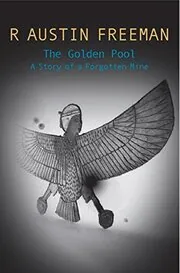
The Golden Pool
by R Austin Freeman
1905
Bank clerk Richard Englefield grabs a chance to sail to West Africa and stumbles into trade, local legends, and the rumor of a forgotten gold mine. It is adventure first, with Freeman's practical eye close behind.
The Red Thumb Mark
by R Austin Freeman
1907
When diamonds vanish from a family safe, Reuben Hornby seems doomed by a bloody thumbprint. Dr. Thorndyke takes the case and turns a famous early fingerprint mystery into a cool, methodical fight for the truth.
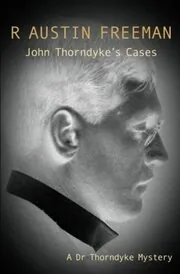
John Thorndyke's Cases
by R Austin Freeman
1909
This early collection introduces Thorndyke across a run of short cases involving ciphers, thefts, disappearances, and murder. It is a strong showcase for Freeman's forensic style in brisk, puzzle-first form.
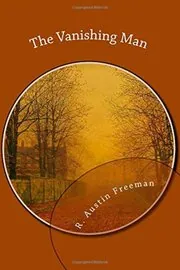
The Eye of Osiris / The Vanishing Man
by R Austin Freeman
1911
Archaeologist John Bellingham vanishes, leaving behind legal confusion, family tension, and a troubling Egyptian clue. Thorndyke probes the missing man case with medical knowledge and patient attention to the smallest facts.
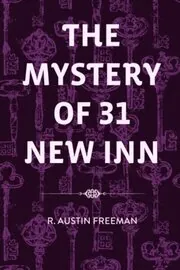
The Mystery of 31 New Inn
by R Austin Freeman
1912
Dr. Jervis is summoned in secret to a strange house and finds a supposed illness that looks more like a crime. Thorndyke follows the trail through poisoning, wills, and locked-room style misdirection.
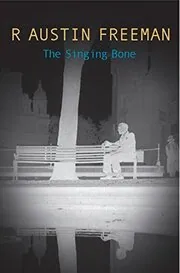
The Singing Bone / The Adventures of Dr Thorndyke
by R Austin Freeman
1912
A classic Thorndyke collection that mixes several early inverted mysteries with direct investigations. Murder, theft, and deception are all solved through scientific detail rather than dramatic guesswork.
The Unwilling Adventurer
by R Austin Freeman
1913
A reluctant narrator is pulled into tragedy, shipwreck, enemies, and shifting fortunes in this non-Thorndyke adventure. Freeman keeps the pace high while piling on disguises, peril, and uneasy alliances.
A Savant's Vendetta / The Uttermost Farthing
by R Austin Freeman
1914
Humphrey Challoner, a brilliant but damaged savant, turns his scientific mind toward vengeance after his wife's murder. It is darker than Freeman's detective fiction, and much more interested in obsession.
A Silent Witness
by R Austin Freeman
1914
Young doctor Humphrey Jardine finds what seems to be a corpse, then watches the evidence vanish. Thorndyke steps into a tense London case involving a reliquary, an attempted murder, and clues others dismiss.
The Great Portrait Mystery
by R Austin Freeman
1918
This mixed collection ranges from art theft and hidden treasure to two Thorndyke cases built on carefully planted evidence. It shows Freeman writing beyond the series without giving up his taste for neat puzzles.
Helen Vardon's Confession
by R Austin Freeman
1922
Helen Vardon marries the grim Lewis Otway to save her father, then finds herself trapped in a far darker story. Part domestic drama, part mystery, it follows her search for truth after sudden death and suspicion.
Dr Thorndyke's Casebook / The Blue Scarab
by R Austin Freeman
1923
Seven short cases give Thorndyke stolen ingots, strange artifacts, suspicious deaths, and tricky false leads. It is one of the best collections for readers who want compact mysteries with a strong scientific bent.
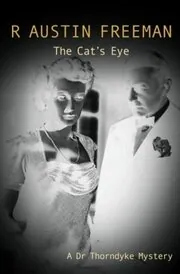
The Cat's Eye
by R Austin Freeman
1923
After Andrew Drayton is found murdered, Thorndyke investigates for the victim's formidable brother, Sir Lawrence. The case mixes inheritance trouble, physical evidence, and the kind of small forensic details Freeman loves.
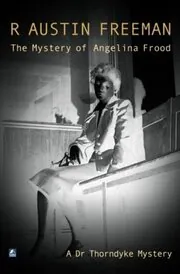
The Mystery of Angelina Frood
by R Austin Freeman
1924
Angelina Frood disappears from a miserable marriage, and her husband's disappearance only deepens the puzzle. Thorndyke works through contradictory evidence to decide whether this is flight, fraud, or murder.
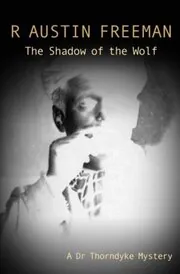
The Shadow of the Wolf
by R Austin Freeman
1925
A vanished man leaves his wife trapped between hope and widowhood while Thorndyke quietly studies the facts. Freeman treats the case as an inverted mystery, letting the suspense come from proof rather than surprise.
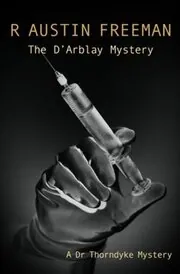
The D'Arblay Mystery
by R Austin Freeman
1926
Newly qualified doctor Stephen Gray becomes entangled in the death of artist Julius D'Arblay after a body is found in a pond. Thorndyke turns what looks simple into a layered case of murder and danger.
A Certain Dr Thorndyke
by R Austin Freeman
1927
An apparently impossible robbery brings Thorndyke into a case where the victim seems as puzzled as the police. The pleasure here is watching him dismantle a locked-room style problem with calm precision.
The Magic Casket
by R Austin Freeman
1927
This collection offers Thorndyke in shorter form, with jewel thefts, courtroom puzzles, false alibis, and some unusually odd pieces of evidence. The title story is a neat example of Freeman's taste for hidden mechanisms and patient deduction.
The Puzzle Lock
by R Austin Freeman
1927
A set of short mysteries built around vanishing jewels, awkward alibis, eerie sightings, and stubborn bits of physical proof. Thorndyke and Polton do some of their best quiet work here.
As a Thief in the Night
by R Austin Freeman
1928
A suspicious death that looks tidy on the surface draws Thorndyke into a case where appearances, motive, and legal proof refuse to line up. It is a lean later mystery with Freeman's usual forensic patience.
Flighty Phyllis
by R Austin Freeman
1928
Phyllis borrows her cousin's rooms and clothes, dresses as a man for fun, and lands in trouble because she looks too much like him. The result is a lively comedy of disguise, risk, and romance.
The Naturalist at Law
by R Austin Freeman
1929
In this shorter Thorndyke case, a baffling attack is read through traces in the landscape and the habits of the natural world. It is a compact example of Freeman linking field observation with legal proof.
Dr. Thorndyke Investigates
by R Austin Freeman
1930
This anthology samples Thorndyke at short length, from the famous Blue Sequin to later forensic puzzles. It is a good taster if you want several cases in one slim volume.
Mr Pottermack's Oversight
by R Austin Freeman
1930
In this inverted mystery, Mr. Pottermack believes he has carried off the perfect crime and buried the past with it. The tension comes from watching Thorndyke notice the one mistake that could ruin everything.
Pontifex, Son And Thorndyke
by R Austin Freeman
1931
Errand boy Jasper Gray stumbles into a chain of curious events that pull Thorndyke into a larger mystery. The novel ties odd encounters, family secrets, and legal stakes into one of Freeman's busier plots.
When Rogues Fall Out / Dr. Thorndyke's Discovery
by R Austin Freeman
1932
Shady dealer Mr. Toke's schemes around stolen antiques and dishonest bargains spiral into murder. Thorndyke has to sort out both the crooks and the killing, with Inspector Badger's death raising the stakes.
Dr Thorndyke Intervenes
by R Austin Freeman
1933
A sensational case of mutilated remains and mounting public alarm demands Thorndyke's coolest thinking. Freeman gives him a messy, high-pressure puzzle where medical evidence matters more than rumor.
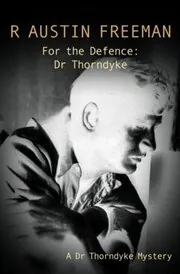
For The Defence
by R Austin Freeman
1934
A murder case pushes Thorndyke toward the witness box and the courtroom as much as the crime scene. It is a legal puzzle as well as a forensic one, with the defence built clue by clue.
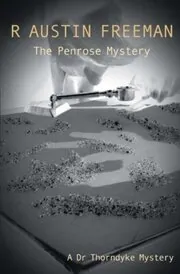
The Penrose Mystery
by R Austin Freeman
1936
Eccentric collector Daniel Penrose vanishes after a road accident, while gems, a scrap of paper, and inheritance questions muddy the case. Thorndyke chases a missing man mystery that keeps changing shape.
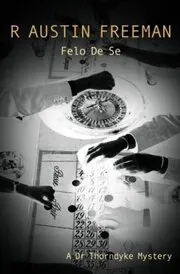
Felo De Se? / Death At the Inn
by R Austin Freeman
1937
A death that may be suicide begins to look far less simple once Thorndyke studies the inn, the body, and the room itself. This is a tight late-period mystery built on physical evidence.
The Stoneware Monkey
by R Austin Freeman
1938
A curious ceramic monkey sits near the center of a London murder puzzle wrapped in fog and misdirection. Thorndyke teases meaning from a seemingly trivial object and the mistakes people make around it.
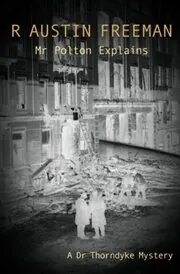
Mr Polton Explains
by R Austin Freeman
1940
Nathaniel Polton takes center stage in a case of murder, fire, and an ingenious mechanical setup. The book is a treat for readers who enjoy Thorndyke's workshop side as much as his courtroom logic.
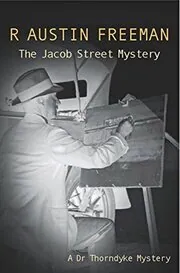
The Jacob Street Mystery / The Unconscious Witness
by R Austin Freeman
1942
Landscape painter Tom Pedley may have witnessed a murder, and later his pushy neighbor Lotta Schiller vanishes as an inheritance issue grows urgent. Thorndyke enters late and methodically turns scattered clues into a case.
The Best Dr. Thorndyke Detective Stories
by R Austin Freeman
1973
This selection gathers some of Thorndyke's best known shorter cases in one volume. Expect classic Freeman ingredients: forensic detail, careful logic, and mysteries that reward close reading.
The Queen's Treasure
by R Austin Freeman
1975
A cipher in an old family prayer book sends two very different men hunting for Sir Francis Drake's hidden treasure in Kent. Romance, rivalry, and a watchful investigator keep the quest from turning simple.
English Country House Murders
by Thomas Godfrey, Arthur Conan Doyle, Wilkie Collins, Robert Barr, Emma Orczy, R Austin Freeman, Gilbert Keith Chesterton, Agatha Christie, Dorothy L. Sayers, Ngaio Marsh, Margery Allingham, Freeman Wills Crofts, John Dickson Carr, Cecil Day-Lewis, PG Wodehouse, J. I. M. Stewart, Philip MacDonald, Ethel Lina White, Christianna Brand, Cyril Hare, Ruth Rendell, PD James & James G. Miles
1988
Edited by Thomas Godfrey, this anthology gathers classic British mystery stories set in and around country estates. The selection ranges from early detective fiction to later crime tales, with contributions from writers including Arthur Conan Doyle, Agatha Christie, Ngaio Marsh, Ruth Rendell, and P. D. James.
The Oxford Book of Detective Stories
by Patricia Craig, Émile Gaboriau, John Charles Dent, Arthur Conan Doyle, R Austin Freeman, Maurice Leblanc, Palle Rosenkrantz, William Briggs MacHarg, Jacques Futrelle, Harvey J. O'Higgins, Raymond Chandler, Erle Stanley Gardner, Agatha Christie, Dashiell Hammett, James Thurber, Jorge Luis Borges, Georges Simenon, Ellery Queen, 松本清張, Robert Van Gulik, Paolo Levi, Gwendoline Butler, Josef Škvorecký, Amanda Cross, Janwillem van de Wetering, Ted Wood, James Melville, Stuart M Kaminsky, Shizuko Natsuki, Sarah L. Caudwell, Sue Grafton, Vincent Banville, Ruth Dudley Edwards, Sara Paretsky, Pentti Kirstilä, Garry Disher, Peter Robinson & Ian Rankin
2000
Patricia Craig’s international detective-story anthology spans classic and modern crime fiction from Britain, the United States, Europe, Japan, and beyond. The selection includes police procedurals, amateur sleuths, women detectives, and locked-room puzzles, with a story by Garry Disher.

The Missing Mortgagee
by R Austin Freeman
2021
One of Thorndyke's inverted cases, this story begins with a disappearance and lets the reader watch the trap being set. The pleasure is in seeing how tiny physical clues undo a careful plan.
Where to start with R Austin Freeman
If you want publication-order Thorndyke: The Red Thumb Mark → John Thorndyke's Cases → The Eye of Osiris
If you want short forensic puzzles: John Thorndyke's Cases → The Singing Bone → Dr Thorndyke's Casebook
If you want Freeman's inverted mysteries: The Shadow of the Wolf → Mr Pottermack's Oversight → Felo De Se?
If you want his non-Thorndyke fiction: The Golden Pool → The Unwilling Adventurer → Flighty Phyllis
R Austin Freeman sub-series and character series
Dr. Thorndyke Mysteries books in order
Explore this series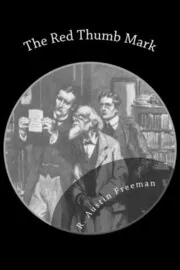

The Singing Bone / The Adventures of Dr Thorndyke
by R Austin Freeman
1912Dr. Thorndyke Mysteries, Book 5

The Jacob Street Mystery / The Unconscious Witness
by R Austin Freeman
1942Dr. Thorndyke Mysteries, Book 30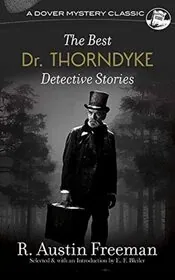
Dr. Thorndyke Mysteries books in chronological order
The Singing Bone / The Adventures of Dr Thorndyke
by R Austin Freeman
1912Dr. Thorndyke Mysteries, Book 5The Jacob Street Mystery / The Unconscious Witness
by R Austin Freeman
1942Dr. Thorndyke Mysteries, Book 30
R Austin Freeman collections, short stories, and related book types
Short Stories/Novellas
Standalone R Austin Freeman books


by Thomas Godfrey, Arthur Conan Doyle, Wilkie Collins, Robert Barr, Emma Orczy, R Austin Freeman, Gilbert Keith Chesterton, Agatha Christie, Dorothy L. Sayers, Ngaio Marsh, Margery Allingham, Freeman Wills Crofts, John Dickson Carr, Cecil Day-Lewis, PG Wodehouse, J. I. M. Stewart, Philip MacDonald, Ethel Lina White, Christianna Brand, Cyril Hare, Ruth Rendell, PD James & James G. Miles
1988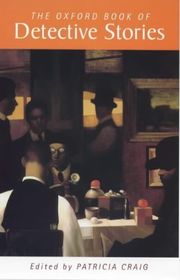
The Oxford Book of Detective Stories
by Patricia Craig, Émile Gaboriau, John Charles Dent, Arthur Conan Doyle, R Austin Freeman, Maurice Leblanc, Palle Rosenkrantz, William Briggs MacHarg, Jacques Futrelle, Harvey J. O'Higgins, Raymond Chandler, Erle Stanley Gardner, Agatha Christie, Dashiell Hammett, James Thurber, Jorge Luis Borges, Georges Simenon, Ellery Queen, 松本清張, Robert Van Gulik, Paolo Levi, Gwendoline Butler, Josef Škvorecký, Amanda Cross, Janwillem van de Wetering, Ted Wood, James Melville, Stuart M Kaminsky, Shizuko Natsuki, Sarah L. Caudwell, Sue Grafton, Vincent Banville, Ruth Dudley Edwards, Sara Paretsky, Pentti Kirstilä, Garry Disher, Peter Robinson & Ian Rankin
2000
Author bio
R Austin Freeman was born Richard Austin Freeman in Soho, London, on April 11, 1862, the youngest of five children. He grew up in London, trained at Middlesex Hospital from the age of eighteen, and qualified in medicine in 1886. The medical training mattered. Long before forensic detectives became familiar, Freeman already knew how doctors observed bodies, injuries, chemistry, and small physical traces.
Then Africa changed the direction of his life.
In 1887 he married Annie Elizabeth Edwards and entered the Colonial Service as an assistant surgeon on the Gold Coast, in what is now Ghana. He served in places including Keta and Accra, and joined an expedition to Ashanti and Jaman as doctor, naturalist, and surveyor. Those years gave him first-hand knowledge of tropical medicine, travel, trade, and colonial life, all of which later fed into his fiction. They also damaged his health. After blackwater fever and repeated strain, he returned to England in 1891.
Back in London, Freeman tried to keep a medical career going. He worked in practice, held temporary medical posts, and for a time collaborated with fellow doctor John James Pitcairn on fiction under the name Clifford Ashdown. But medicine was no longer a secure path, and writing slowly became the work that stayed. His first solo novel, The Golden Pool, drew directly on his West African experience, mixing adventure with close local detail and the practical eye of a man who had actually been there.
Then came Dr. Thorndyke.
With The Red Thumb Mark in 1907, Freeman introduced the calm, exact, medically trained investigator who would define most of his career. Thorndyke was not a flamboyant sleuth. He was a doctor, a barrister, and a forensic thinker, the kind of man who noticed dust, fingerprints, fibres, tides, soils, and tiny mechanical details. Freeman followed that with books and collections such as John Thorndyke's Cases, The Eye of Osiris, and The Singing Bone. Readers who like the series tend to enjoy the slow gathering of proof and the sense that the science, even when old-fashioned now, is being used seriously rather than as a magic trick.
Freeman is also remembered for helping to shape the inverted detective story, where the crime, and sometimes the criminal, are shown early and the real suspense lies in whether the detective can prove what happened. You can see that especially clearly in stories from The Singing Bone and later novels like Mr Pottermack's Oversight. That idea sounds modern because, in some ways, it still is.
During the First World War he served as a captain in the Royal Army Medical Corps. After the war he settled into a long run of steady writing, producing Thorndyke novels and stories almost every year. Even outside the main series, he was not stuck in one mode. The Unwilling Adventurer leans into peril and travel, Flighty Phyllis shows a lighter, comic side, and The Uttermost Farthing is much darker than the Thorndyke books.
His fiction kept one foot in the lab and the other in the street.
Freeman spent his later years in Gravesend, Kent. He had a workshop and laboratory at home, and he was known to test the scientific points he put into his stories. Even when Parkinson's disease made life harder, he kept working. During the Second World War he resumed writing in an air-raid shelter in his garden, which feels very much in character for a man who liked practical solutions.
He died in Gravesend on September 28, 1943. By then he had written a long shelf of mysteries and adventure stories, but the Thorndyke books remain the clearest picture of what made him different: a doctor's patience, a lawyer's structure, and a real delight in facts that look too small to matter until they suddenly matter most.








Edited by
Software engineer whose passion for tracking book recommendations from podcasts inspired the creation of MRB.
Lead investor at 3one4 Capital whose startup expertise and love for books helped shape MRB and its growth.
Comments
Did we miss something? Have feedback?
Help us improve this page by sharing your thoughts