
Peter Schweizer Books in Order
This page lists Peter Schweizer's books in order, with summaries, background on his political exposés, and tips on where new readers should start.
Last updated: 1 new book added
As an Amazon Associate, we earn from qualifying purchases (at no extra cost to you).
Peter Schweizer books in publication order
20 books
Friendly Spies
by Peter Schweizer
1993
Friendly Spies investigates how intelligence services from U.S. allies such as Japan, France, Germany, South Korea, and Israel target American companies, describing economic espionage operations, corporate theft, and the scramble for high-tech secrets in the post-Cold War marketplace.
Victory
by Peter Schweizer
1994
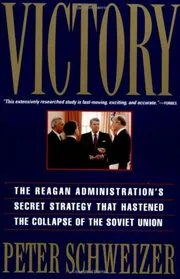
Victory recounts the Reagan administration's secret strategy for pressuring the Soviet Union, from economic warfare and oil diplomacy to covert support for dissident movements, arguing that a coordinated campaign in the 1980s helped hasten the collapse of the Soviet empire.
Disney
by Peter Schweizer
1998
Disney: The Mouse Betrayed is a critical look at the modern Walt Disney Company, alleging that corporate greed, lax safety, adult content, and internal cover-ups have undermined the family-friendly image that once defined its films and theme parks.
The Fall of the Berlin Wall
by Peter Schweizer
2000
The Fall of the Berlin Wall collects essays from Reagan-era officials and scholars reassessing how U.S. strategy, intelligence work, and military buildup contributed to the end of the Cold War and the dramatic collapse of the Soviet bloc.
Reagan's War
by Peter Schweizer
2002
Reagan's War traces Ronald Reagan's long campaign against communism, following him from Hollywood labor battles to the White House and contending that his persistence and strategic vision were central to the West's victory in the Cold War.
The Bushes
by Peter Schweizer
2004
The Bushes offers a multigenerational portrait of the Bush family, from early twentieth century businessmen to two presidents and a governor, weaving together family life, business deals, political campaigns, and the networks that built a modern American dynasty.

Chain of Command
by Peter Schweizer
2005
Chain of Command is a political thriller about Secret Service agent Michael Delaney, who is framed for the president's assassination as coordinated attacks hit U.S. cities, forcing him to uncover a homegrown conspiracy buried deep inside the national security establishment.
Do As I Say
by Peter Schweizer
2005
Do As I Say (Not As I Do) profiles prominent American liberals and highlights what Schweizer sees as gaps between their public stances on issues like taxes, labor, and the environment and the private choices they make in their own careers and investments.
Landmark Speeches of the American Conservative Movement
by Peter Schweizer
2007
Landmark Speeches of the American Conservative Movement anthologizes key conservative speeches since the mid twentieth century, pairing the full text of each address with introductions that explain its historical moment, core arguments, and lasting impact.
Makers and Takers
by Peter Schweizer
2008
Makers and Takers draws on polls, tax data, and social science research to argue that self-described conservatives, on average, work harder, give more to charity, and report stronger family ties and greater happiness than liberals.
Architects of Ruin
by Peter Schweizer
2009
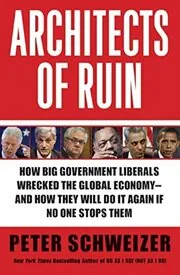
Architects of Ruin contends that liberal politicians, activists, and financial allies helped trigger the housing bubble and 2008 financial crisis by pushing easy credit, risky mortgages, and interventions Schweizer argues distorted the market in the name of social justice.
Throw Them All Out
by Peter Schweizer
2011
Throw Them All Out examines how members of Congress allegedly profit from insider stock tips, earmarks, land deals, and access to federal contracts, arguing that permissive rules let lawmakers enrich themselves while similar behavior would threaten ordinary investors with prosecution.
Extortion
by Peter Schweizer
2013
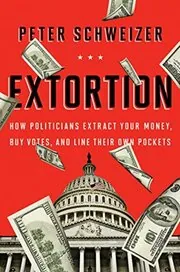
Extortion argues that modern politicians do not simply accept bribes but actively shake down industries and donors, using committee assignments, regulatory threats, and stalled legislation to extract contributions that then support campaigns, PACs, and comfortable lifestyles.
Bush Bucks
by Peter Schweizer
2015
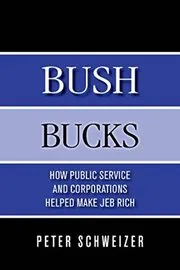
Bush Bucks investigates Jeb Bush's post-governor income, tracing how companies that benefited from his policies in Florida later hired him for consulting, board seats, and speaking work, and raising questions about the blurry line between public service and private gain.
Clinton Cash
by Peter Schweizer
2015
Clinton Cash follows the money surrounding Bill and Hillary Clinton after they left the White House, focusing on speaking fees and donations to the Clinton Foundation and suggesting that foreign governments and corporations used those payments to seek influence over U.S. policy.
Secret Empires
by Peter Schweizer
2018
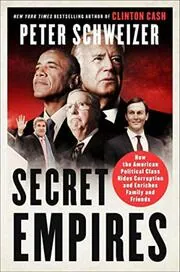
Secret Empires describes what Schweizer calls corruption by proxy, in which the children and associates of powerful officials enter lucrative overseas deals, especially in places like China and Ukraine, that may benefit from their relatives' political access.
Profiles in Corruption
by Peter Schweizer
2020
Profiles in Corruption turns that lens on well-known progressive politicians, exploring the businesses, nonprofits, and family arrangements around them to argue that many have quietly mixed public power with private enrichment and special treatment for insiders.
Red-Handed
by Peter Schweizer
2022
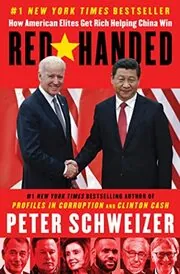
Red-Handed investigates financial and institutional ties between American elites and entities linked to the Chinese state, alleging that politicians, technology leaders, financiers, universities, and even sports figures have helped advance Beijing's interests while pursuing their own.
Blood Money
by Peter Schweizer
2024
Blood Money argues that the Chinese regime and its partners are driving deadly threats such as fentanyl and tainted products into the United States, while powerful American figures and institutions look away or profit, leaving ordinary Americans to bear the human cost.
The Invisible Coup
by Peter Schweizer
2026
Peter Schweizer argues that American elites and foreign powers use immigration to advance political objectives. Drawing on documents and reported investigations, he alleges links between political leaders, organizations, and criminal networks, presenting mass migration as a national security concern.
Where to start with Peter Schweizer
If you want his Washington corruption exposés: Throw Them All Out → Extortion → Secret Empires.
If you're curious about the Clintons and political dynasties: Clinton Cash → Bush Bucks → Profiles in Corruption.
If you want to focus on China and global elites: Red-Handed → Blood Money.
If you're interested in Reagan and the Cold War: Reagan's War → Victory → The Fall of the Berlin Wall.
If you prefer his earlier espionage and media investigations: Friendly Spies → Disney.
Peter Schweizer collections, short stories, and related book types
Non-Fiction













by Peter Schweizer
2026How American Elites and Foreign Powers Use Immigration as a Weapon
Standalone Peter Schweizer books
Author bio
Peter Schweizer is an American political consultant and author whose work circles around a single question, how money and power mix in modern politics. Over several decades he has written both Cold War histories and highly argued investigative books about politicians, corporations, and global elites, often from a conservative point of view.
Schweizer graduated from high school in Washington state and, as a teenager, found his way into the conservative student world. He attended the National Conservative Students Conference in Washington, DC, became active with Young America’s Foundation, and later joined its staff. He earned a bachelor’s degree from George Washington University and an M.Phil. from St Cross College at Oxford University.
In his twenties he went to work for Senator Jeremiah Denton’s National Forum Foundation, writing about the Sandinista revolution in Nicaragua, European supporters of the Strategic Defense Initiative, and the broader Cold War landscape.
Those early projects led to his first books. Titles like Friendly Spies and Victory explored economic espionage by America’s allies and the Reagan administration’s strategy toward the Soviet Union, combining interviews with officials, intelligence stories, and a strong belief that U.S. policy helped push the USSR toward collapse.
Schweizer later became a William J. Casey research fellow at the Hoover Institution and consulted for major news outlets on national security issues. He co-wrote two military thrillers with former defense secretary Caspar Weinberger and returned repeatedly to Ronald Reagan as a subject in books like Reagan’s War. With his first wife, Rochelle Schweizer, he co-authored Disney: The Mouse Betrayed and The Bushes, blending reporting with biography.
Alongside his writing, Schweizer has moved in and out of the political world. He served as a consultant to the White House speechwriting office in the late 2000s, then partnered with another former speechwriter to launch a firm helping public figures prepare testimony and op-eds. In 2012 he co-founded the Government Accountability Institute, a Tallahassee-based think tank focused on investigating public corruption.
From there his focus narrowed to what he calls 'follow the money' reporting. Books such as Throw Them All Out, Extortion, Clinton Cash, Secret Empires, Profiles in Corruption, Red-Handed, and Blood Money dig into financial disclosures, corporate records, and family businesses around politicians, arguing that official power is often used to benefit friends and relatives.
Those investigations have had real-world effects. His work on congressional stock trading helped inspire an ethics law aimed at tightening the rules on lawmakers’ investments, and several of his books have topped bestseller lists and been adapted into films or television segments. At the same time, fact-checkers and journalists have challenged parts of his reporting, pointing to errors, speculative leaps, and passages that were later corrected or clarified.
Schweizer also stays active in conservative policy circles. He has served as a fellow or adviser to free-market think tanks, sits on advisory councils, and has held editor-at-large and contributor roles at right-leaning media outlets. He frequently appears on television, radio, and podcasts to promote new investigations and discuss current events.
He lives in Tallahassee, Florida with his wife, Rhonda, and their family, and continues to write books that aim to make complicated financial and political stories accessible to general readers.

















Edited by
Software engineer whose passion for tracking book recommendations from podcasts inspired the creation of MRB.
Lead investor at 3one4 Capital whose startup expertise and love for books helped shape MRB and its growth.
Comments
Did we miss something? Have feedback?
Help us improve this page by sharing your thoughts