
Pete Dexter Books in Order
Explore Pete Dexter books in order, with quick summaries, clear starting points, and a guide to his darkest, funniest novels and journalism.
Last updated:
As an Amazon Associate, we earn from qualifying purchases (at no extra cost to you).
Pete Dexter books in publication order
8 books
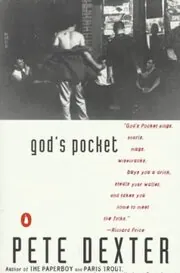
God's Pocket
by Pete Dexter
1983
When Leon Hubbard dies on a construction site, his stepfather Mickey Scarpato scrambles to bury him, hide ugly truths, and survive the fallout. In Dexter's South Philly neighborhood, grief, gossip, and bad luck quickly turn brutal.
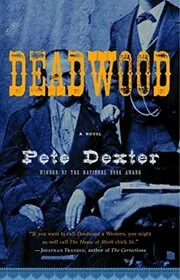
Deadwood
by Pete Dexter
1986
In 1876 Deadwood, Wild Bill Hickok and Charlie Utter ride into a boomtown thick with miners, hustlers, and trouble. Bill wants peace, cards, and whiskey, but the camp's greed, lust, and violence have other plans.
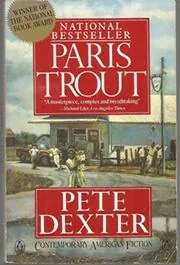
Paris Trout
by Pete Dexter
1988
In postwar Cotton Point, Georgia, store owner Paris Trout murders a Black teenage girl and feels no remorse. The crime and the trial that follows expose a town built on fear, racism, and lies.
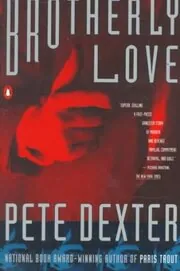
Brotherly Love
by Pete Dexter
1991
After a crash shatters his family, Peter Flood grows up inside South Philadelphia's world of union power and mob ties. His cousin Michael embraces intimidation, and both men are pulled toward loyalty, betrayal, and violence.

The Paperboy
by Pete Dexter
1995
When a sheriff is murdered in Moat County, Florida, reporter Ward James comes home chasing a death-row story. With his younger brother Jack driving and Charlotte Bless pushing the case, the hunt for truth slides into obsession and danger.

Train
by Pete Dexter
2003
In 1950s Los Angeles, Lionel Walk, called Train, works as a caddie at an elite golf club that barely sees him as human. A policeman spots his talent, but race, class, and bad luck keep closing in.

Paper Trails
by Pete Dexter
2007
This collection gathers Pete Dexter's newspaper columns from Philadelphia and Sacramento, showing the reporter behind the novels. Funny, sharp, and often dark, the pieces track crime, family, oddballs, and the rough edges of American life.

Spooner
by Pete Dexter
2009
Warren Spooner grows up wild, accident-prone, and hard to love, while his stepfather Calmer Ottosson keeps trying to save him. Funny, bruised, and deeply personal, the novel follows a life shaped by chaos, family, and second chances.
Where to start with Pete Dexter
If you want his darkest Southern novel: Paris Trout
If you want Florida noir: The Paperboy
If you want Philadelphia grit: God's Pocket → Brotherly Love
If you want a Western: Deadwood
If you want the most personal route in: Spooner → Paper Trails
Pete Dexter collections, short stories, and related book types
Non-Fiction
Standalone Pete Dexter books
Author bio
Pete Dexter was born in Pontiac, Michigan, in 1943. His father died when he was four, and his mother moved him to Milledgeville, Georgia, where she remarried a college physics professor. He later lived in Georgia, Illinois, and eastern South Dakota. That mix of Southern memory, Plains distance, and working-class detail stayed with him, and it runs through his fiction.
He did not grow up planning to become a novelist.
At the University of South Dakota, he took creative writing classes mostly because math was not working out. He later joked that writing looked like the easiest way to pick up credits. He was not yet a deep reader of serious fiction, but he already had the two things his books would lean on most, a sharp ear for talk and a habit of noticing exactly how people behave when pride, fear, or bad luck corners them.
That eye first found a home in newspapers. Dexter worked in Florida, then at the Philadelphia Daily News, where he became a columnist, and later at the Sacramento Bee. His pieces were built around bartenders, boxers, small-time crooks, worn-out neighborhoods, stray dogs, and ordinary people who usually get pushed to the edge of the story. He was especially good at hearing how a place talks, the jokes, boasts, pauses, and threats that tell you who has power and who only thinks they do. He also wrote for magazines and later worked on screenplays, including Rush and Mulholland Falls.
In 1981, after a column about a South Philadelphia killing, he was badly beaten by men with baseball bats. The attack left him facing years of surgeries and recovery. It also changed the shape of his writing life. Not long after, he turned more fully to fiction, and God's Pocket arrived in 1983.
After that, the books came with a hard stare and a crooked grin.
Deadwood took western legend and stripped away the polish, giving readers Wild Bill Hickok, Charlie Utter, and Calamity Jane in a town driven by money, appetite, and rumor. Paris Trout, set in postwar Georgia, won the National Book Award in 1988 and is still the novel many readers start with. Brotherly Love returned to South Philadelphia, where family ties, union muscle, and mob influence pull people toward betrayal. The Paperboy heads into a Florida murder case full of reporters, ambition, sex, and bad judgment, while Train moves to 1950s Los Angeles and follows a young Black caddie with a rare gift for golf.
Then came Spooner, a looser, sadder, funnier novel that borrows from Dexter's own life without becoming a straight memoir. At its center is Warren Spooner and the patient stepfather trying, over many years, to keep him from wrecking himself. There is real affection in that book, and a clear debt to the man who helped raise Dexter. Readers who want Dexter in nonfiction form can turn to Paper Trails, which gathers his columns from the 1970s through the 1990s and shows how much of the fiction grew out of reporting, timing, and a reporter's instinct for where the real trouble is.
Readers tend to come to Dexter for the mix of menace and dark humor. His books are full of bluffers, bullies, hustlers, husbands, wives, and damaged decent people trying, often badly, to hold on to some scrap of dignity. He wrote often about violence, but also about class, race, loyalty, marriage, male ego, and the little codes that hold neighborhoods together until they suddenly don't. Several books were adapted for film, and in recent years he has served as writer in residence at the University of South Dakota, after long stretches of life in the Pacific Northwest. The voice never got softer, but it did get deeper.












Edited by
Software engineer whose passion for tracking book recommendations from podcasts inspired the creation of MRB.
Lead investor at 3one4 Capital whose startup expertise and love for books helped shape MRB and its growth.
Comments
Did we miss something? Have feedback?
Help us improve this page by sharing your thoughts