
Dexter Palmer Books in Order
Explore Dexter Palmer books in order, with quick summaries, reading guidance, and where to start with his speculative and historical novels.
Last updated:
As an Amazon Associate, we earn from qualifying purchases (at no extra cost to you).
Dexter Palmer books in publication order
3 books
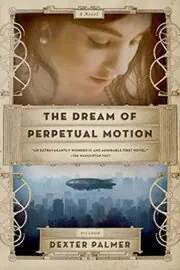
The Dream of Perpetual Motion
by Dexter Palmer
2010
Greeting-card writer Harold Winslow is imprisoned aboard a zeppelin, watched over by the voice of Miranda Taligent and the frozen body of her father. His memoir becomes a strange retrofuturist love story about obsession, invention, and a world remade by machines.
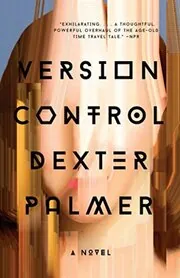
Version Control
by Dexter Palmer
2016
Rebecca Wright has rebuilt her life after tragedy, yet the world keeps feeling subtly wrong. As her husband Philip pushes his causality violation device toward a breakthrough, this near-future novel turns marriage, grief, and time travel into one unsettling story.
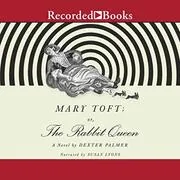
Mary Toft; or, the Rabbit Queen
by Dexter Palmer
2019
In 1726 England, surgeon's apprentice Zachary Walsh is pulled into the uproar when Mary Toft appears to give birth to rabbits. What begins as a rural mystery grows into a London spectacle about belief, ambition, and the cost of a lie.
Where to start with Dexter Palmer
If you want to read him in publication order: The Dream of Perpetual Motion → Version Control → Mary Toft; or, the Rabbit Queen
If you want retrofuturist, dreamlike science fiction: The Dream of Perpetual Motion
If you want near-future tech, grief, and marriage drama: Version Control
If you want historical fiction built on a real hoax: Mary Toft; or, the Rabbit Queen
Standalone Dexter Palmer books
Author bio
Dexter Palmer writes the kind of novels that look one way on the shelf and then do something more slippery once you start reading. A steampunk fever dream, a near-future time-slip marriage story, a historical novel about a famous medical hoax, his books move across genres but stay focused on people trying to make sense of strange worlds.
Public Princeton alumni notes list Lutz, Florida, as his hometown. Palmer earned a bachelor's degree from Stetson University, then went on to Princeton University for both his master's and doctorate in English literature, completing his Ph.D. in 2001.
At Princeton, he studied writers such as James Joyce, William Gaddis, and Thomas Pynchon, and he also helped organize an early academic conference on video-game criticism. That combination, serious literary study on one side, curiosity about technology and popular forms on the other, helps explain the shape of his fiction.
He began writing The Dream of Perpetual Motion in 1996 while he was in graduate school. The spark came from an old book of illustrations imagining what the year 2000 might look like, which sent him toward a retrofuturist story full of zeppelins, mechanical servants, and a narrator trapped inside his own memories. The novel took him fourteen years to finish and was later selected as one of the best fiction debuts of 2010 by Kirkus Reviews. Readers who warm to it tend to like its dream logic, dark humor, and sad love story as much as its machinery.
He is not a fast writer.
His second novel, Version Control, took shape over years of reworking as the present kept catching up with the future he was trying to imagine. The book follows Rebecca Wright and her physicist husband, Philip, in a world only slightly more advanced than our own, with self-driving cars, internet dating, and a machine Philip insists is not a time machine. What makes the novel stick is that Palmer keeps the science close to everyday life: marriage, grief, work, memory, and the eerie feeling that reality has shifted a few inches to the left. The book landed on several best-of-2016 lists.
Then came Mary Toft; or, the Rabbit Queen, which grew from an idea he first encountered in a Princeton seminar on 18th-century literature called Representations of the Improbable. He spent years collecting material related to the case of Mary Toft, the English woman who convinced prominent doctors she was giving birth to rabbits, before turning it into a novel. The result uses a bizarre real episode to ask plain human questions about truth, authority, spectacle, and why people believe what they want to believe.
Those questions run through all of Palmer's work. His books often circle belief and misreading, the gap between what is true and what feels true, and the way technology or institutions can press on ordinary private lives. Even when the settings are strange, an airborne prison, a New Jersey lab, Georgian England, the emotional pressure stays close to the bone.
Outside fiction, Palmer has worked in educational testing, including writing questions for the SAT and, earlier, for the GRE and AP exams. It is a day job built around precision, ambiguity, and the ways people can misread a sentence, which feels very much in conversation with the novels.
He lives in Princeton, New Jersey, and recent public bios also place him on the board of Princeton Arts Alumni.




Edited by
Software engineer whose passion for tracking book recommendations from podcasts inspired the creation of MRB.
Lead investor at 3one4 Capital whose startup expertise and love for books helped shape MRB and its growth.
Comments
Did we miss something? Have feedback?
Help us improve this page by sharing your thoughts