
Pentagram Chronicles Books in Order
Part ofAnthony Horowitz Books in OrderExplore the Pentagram Chronicles by Anthony Horowitz in order, with short summaries, series context, and where to begin with this earlier supernatural saga.
Last updated:
As an Amazon Associate, we earn from qualifying purchases (at no extra cost to you).
Pentagram Chronicles books in publication order
4 books

The Devil's Door Bell
by Anthony Horowitz
1983
Thirteen-year-old Martin Hopkins is sent to live on a remote farm in Yorkshire and hears warnings about a sinister bell. As the village’s secrets surface, Martin discovers he’s connected to a buried evil, and the fight to stop it is personal.

The Night of the Scorpion
by Anthony Horowitz
1985
In Peru, journalist Richard Cole finds himself responsible for Pedro, a boy who seems tied to a dangerous prophecy. Pursued by people who want Pedro for their own ends, they race for answers before an ancient force breaks loose.
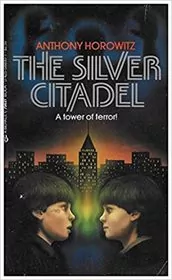
The Silver Citadel
by Anthony Horowitz
1986
Teenager Nicholas senses his twin brother Jeremy calling for help through a strange mental link. The trail leads to the Silver Citadel, a hidden stronghold where an ancient power is gathering strength, and Nicholas must act before Jeremy is lost for good.
Day of the Dragon
by Anthony Horowitz
1989
A teen is drawn into a web of strange symbols and secret groups, where an old evil is preparing to return. As the clues point toward a coming catastrophe, the only way to survive is to face what’s been hidden for years and choose a side.
Pentagram Chronicles books in chronological order
Series background & context
The Pentagram Chronicles are an earlier, darker set of supernatural adventures, written before Horowitz later revisited similar ideas in The Power of Five. Each book follows a different young protagonist who gets pulled into something far older than they are, with strange symbols, half-glimpsed cults, and a sense that the normal world is sitting on top of a trapdoor.
It begins with The Devil's Door Bell, where a thirteen-year-old boy, Martin Hopkins, is sent to live on a remote farm in Yorkshire. The place feels wrong from the start, and the mystery quickly turns into a fight against an ancient evil that is waking up again. The horror here isn’t gore, it’s atmosphere, the feeling that you can’t quite trust the adults, the landscape, or even your own dreams.
Then the series starts to widen. Later books move beyond England, pulling in new characters and new settings, including a story that heads to Peru in The Night of the Scorpion. There are journalist characters who keep stumbling into the supernatural alongside the kids, trying to make sense of what they’re seeing and (sometimes) trying to protect them. The pattern stays the same, a young person discovers they are connected to a much bigger conflict, and every clue they uncover makes the danger feel closer.
This is the kind of series where the questions matter as much as the answers.
Each installment has its own cast and its own central threat, so you can read one as a stand-alone thriller. But there’s also a slow-building arc, hints that the same force is pushing from behind the scenes, looking for ways back into the world. As the books progress, you meet different “gatekeeper” type characters, including kids linked by unusual abilities and by a sense that their lives have been steered toward this fight.
If you like your fantasy with a horror edge, this is a good fit. Horowitz writes quick chapters, sharp cliffhangers, and villains who do not announce themselves, they blend in. The books are eerie, but they’re also adventurous, with chases, hidden rooms, and puzzles that feel like they belong in a cursed scrapbook.
Read them in order if you can, because the connections hit harder that way. And if you’ve already read Raven's Gate and its sequels, it’s fascinating to see the early version of those ideas, rougher, stranger, and still very effective.










Edited by
Software engineer whose passion for tracking book recommendations from podcasts inspired the creation of MRB.
Lead investor at 3one4 Capital whose startup expertise and love for books helped shape MRB and its growth.
Comments
Did we miss something? Have feedback?
Help us improve this page by sharing your thoughts