
Paul Scott Books in Order
Browse Paul Scott books in order, with quick summaries, Raj Quartet background, and straightforward advice on where to start reading his work.
Last updated:
As an Amazon Associate, we earn from qualifying purchases (at no extra cost to you).
Paul Scott books in publication order
21 books

Johnnie Sahib
by Paul Scott
1952
Set around an air supply unit serving the Burma campaign, this early novel follows officers and men under strain as duty, class, and command collide. Scott turns wartime routine into a sharp study of leadership, loyalty, and pressure.
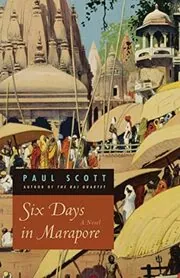
Six Days in Marapore
by Paul Scott
1953
A young American arrives in Marapore looking for the woman his dead brother left behind. What begins as a personal search becomes a tense look at race, power, and British India on the edge of independence.

The Alien Sky
by Paul Scott
1953
An American outsider arrives in India searching for a woman tied to his dead brother. As tensions rise around him, Scott turns the hunt into a restless novel about identity, violence, and a country on the verge of change.

A Male Child
by Paul Scott
1956
Back in England after illness and war, Ian Canning drifts into the troubled Hurst household. Scott turns family grief, broken marriages, and the hope of a coming child into an intimate story about damage, dependency, and starting over.
The Chinese Love Pavilion
by Paul Scott
1960
Tom Brent goes to Malaya to find a former friend who may be a murderer. The search pulls him into jungle danger, colonial tension, and a haunting love affair centered on the Chinese Love Pavilion.
The Birds of Paradise
by Paul Scott
1962
In Raj-era India, a boy grows up alongside a diplomat's daughter and a raja's son. Their friendship, and the fading world around it, gives this coming-of-age novel its sense of wonder, memory, and loss.
The Bender
by Paul Scott
1963
George Lisle-Spruce, jobless and short of money, drifts through a day of family demands and old disappointments. Set in postwar London, this is Scott at his sharpest on class, loneliness, and the small humiliations of living on.
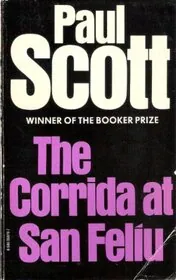
The Corrida at San Feliu
by Paul Scott
1964
When a novelist dies, the papers he leaves behind turn into a story about Spain, bullfighting, and the shaky line between life and art. It is one of Scott's most experimental books, part narrative, part meditation on how stories get made.
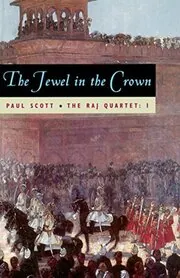
The Jewel in the Crown
by Paul Scott
1966
In 1942 India, Daphne Manners falls in love with Hari Kumar just as riots and fear sweep the country. After a brutal night in Bibighar Gardens, Ronald Merrick turns jealousy into accusation, and private lives become tangled with the collapse of empire.
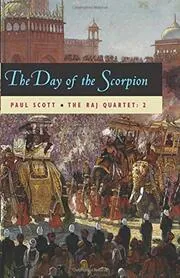
The Day of the Scorpion
by Paul Scott
1968
As the war moves on and British power weakens, the Layton family and those around them try to hold their place in a world that is slipping away. Old loyalties, repression, and private grief deepen the damage begun in the first novel.
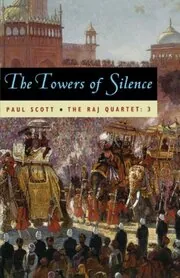
The Towers of Silence
by Paul Scott
1971
In the hill station of Pankot, British routines continue while the empire quietly breaks apart. Through Barbara Batchelor, the Laytons, and Ronald Merrick, Scott shows grief, cruelty, and divided loyalties spreading through both public life and private relationships.
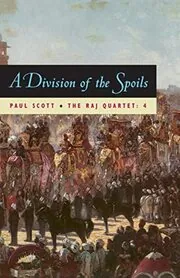
A Division of the Spoils
by Paul Scott
1975
As independence and Partition arrive, the last years of the Raj turn violent and uncertain. Old relationships splinter, new alliances form, and one final love story plays out against flight, fear, and the hurried British withdrawal.
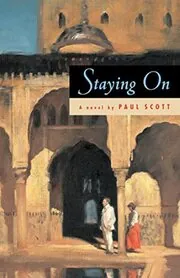
Staying On
by Paul Scott
1977
Tusker and Lucy Smalley are among the few British holdouts still living in Pankot after independence. Funny, sad, and exact about marriage, the novel shows what remains when empire has gone but habit has not.

After the Funeral
by Paul Scott
1979
This brief posthumous piece retells Cinderella in a darker, more reflective key. Small in scale but revealing, it shows Scott reworking a familiar story into something stranger, sadder, and more adult.
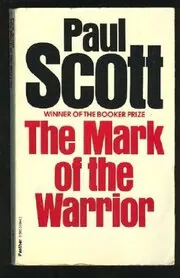
The Mark of the Warrior
by Paul Scott
1979
In Burma, Bob Ramsay serves under the officer who blames himself for his brother's death. Their clash becomes a fierce wartime study of courage, guilt, and the dangerous stories men tell about being warriors.
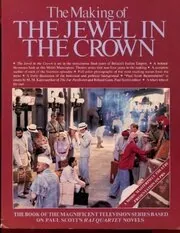
The Making of the Jewel in the Crown
by Paul Scott
1983
This companion volume follows the making of the television adaptation of The Raj Quartet, from casting and locations to the challenge of bringing Scott's large, layered story to the screen.
My Appointment with the Muse
by Paul Scott
1986
This collection gathers Scott's essays, talks, and reflections on fiction, India, and the work of writing. It is a useful way to hear him explain his themes, methods, and doubts in his own voice.
On Writing and the Novel
by Paul Scott
1987
These essays bring together Scott's thoughts on imagination, craft, and the novelist's job, along with pieces on Britain, India, and reading. It is the clearest place to see how he thought about making fiction work.
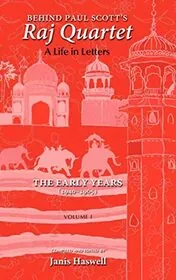
Behind Paul Scott's Raj Quartet: A Life in Letters: Volume I
by Paul Scott
2011
This first volume of Scott's letters covers 1940 to 1965, from army service and literary-agency work to the years before The Raj Quartet. It gives a clear, unpolished view of the working writer behind the novels.
Behind Paul Scott's Raj Quartet: A Life in Letters: Volume II
by Paul Scott
2011
This second volume covers 1966 to 1978, taking in The Raj Quartet, Staying On, teaching in the United States, and Scott's final years. The letters show how he thought about structure, India, criticism, and the cost of writing.
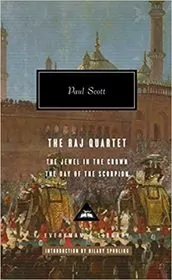
The Raj Quartet
by Paul Scott
This volume combines The Jewel in the Crown and The Day of the Scorpion. Daphne Manners and Hari Kumar's relationship, and policeman Ronald Merrick's ambitions, unfold amid wartime India, racial prejudice and mounting pressure for independence.
Recommended by
1 person Christopher Hitchens recommended this book
Christopher Hitchens
"Had spoken to my depths because it understood that the treason at midnight in 1947, and the monstrous birth of a spoiled theocracy in Pakistan, was a tragedy for the English too." - Christopher Hitchens
Christopher Hitchens's recommendation of this book
Where to start with Paul Scott
If you want Paul Scott's major work: The Jewel in the Crown → The Day of the Scorpion → The Towers of Silence → A Division of the Spoils
If you want the Booker winner after the quartet: Staying On
If you want pre-Quartet India fiction: Six Days in Marapore → The Chinese Love Pavilion
If you want wartime military fiction: Johnnie Sahib → The Mark of the Warrior
If you want a coming-of-age novel: The Birds of Paradise
Paul Scott sub-series and character series
Paul Scott collections, short stories, and related book types
Non-Fiction
Behind Paul Scott's Raj Quartet: A Life in Letters: Volume I
by Paul Scott
2011The Early Years: 1940-1965
Behind Paul Scott's Raj Quartet: A Life in Letters: Volume II
by Paul Scott
2011The Quartet and Beyond: 1966-1978
Standalone Paul Scott books
Author bio
Paul Scott was born in Palmers Green, North London, on March 25, 1920, and grew up in the kind of suburb where class could be felt in small daily ways. His father was a commercial artist, his mother had strong artistic ambitions, and Scott later said he felt pulled between those two temperaments. Money problems forced him to leave school at 14, so he went to work early, took bookkeeping classes at night, and wrote poetry when he could.
Then the war blew his world open.
Called up in 1940, he served first in Britain and later in India, with further wartime experience tied to Burma and Malaya. India shocked him at first, the heat, dust, poverty, disease, and the easy assumptions of empire. But it also became the place that mattered most in his fiction. Much of what readers now think of as Paul Scott territory, class tension, divided loyalties, uneasy intimacy between rulers and ruled, started there.
After demobilization in 1946, he worked in publishing at Falcon Press and Grey Walls Press, then became a literary agent at Pearn, Pollinger & Higham. He was good at that job and looked after a remarkable list of writers, including Muriel Spark, Arthur C. Clarke, M. M. Kaye, and John Fowles. He also reviewed books, kept writing, and tried to build a career of his own beside the day job.
His first novel, Johnnie Sahib, appeared in 1952 and drew on the wartime world he knew at close range. Other early books followed, including Six Days in Marapore, A Male Child, The Mark of the Warrior, The Chinese Love Pavilion, and The Birds of Paradise. Readers who like these novels usually respond to the same things that later define his best-known work, careful social observation, damaged friendships, moral pressure, and the sense that history is always pushing into private life.
In 1960 he took the risky step of leaving agency work to write full time. The real turning point came after a return trip to India in 1964. Out of that visit grew The Raj Quartet: The Jewel in the Crown, The Day of the Scorpion, The Towers of Silence, and A Division of the Spoils. These books follow the last years of British rule in India through characters such as Hari Kumar, Daphne Manners, Ronald Merrick, Sarah Layton, Susan Layton, and Guy Perron. Readers still come to them for their scale, but also for how personal they feel.
He saved his Booker winner for late.
Staying On, published in 1977, returns to that world through Tusker and Lucy Smalley, a British couple living on in independent India. It is shorter than the quartet, funnier in places, and quietly brutal about marriage, habit, and loss. The book won the Booker Prize in 1977, only months before Scott's death, and it remains one of the clearest ways to see how sharp and unsentimental he could be.
His life off the page was harder than the calm prose might suggest. He married Penny, born Nancy Edith Avery, in 1941, and they had two daughters, Carol and Sally. For years he dealt with illness, heavy drinking, and money worries, even while writing with enormous discipline. In his final years he also taught for a time at the University of Tulsa, where part of his archive would later be kept.
Scott died in London on March 1, 1978, just short of his fifty-eighth birthday. By then he had written a body of work that keeps drawing readers back not because it flatters the past, but because it makes power, love, embarrassment, and political change feel painfully human. If you start anywhere with him, you quickly see the same gift at work, a sharp ear for talk, a steady eye for class, and real sympathy for people who do not fully understand themselves.



Edited by
Software engineer whose passion for tracking book recommendations from podcasts inspired the creation of MRB.
Lead investor at 3one4 Capital whose startup expertise and love for books helped shape MRB and its growth.
Comments
Did we miss something? Have feedback?
Help us improve this page by sharing your thoughts