
Patrick Modiano Books in Order
This page lists Patrick Modiano books in order, with short summaries, series background, reading paths, and clear tips on where to start.
Last updated:
As an Amazon Associate, we earn from qualifying purchases (at no extra cost to you).
Patrick Modiano books in publication order
30 books
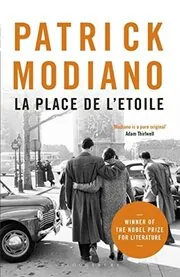
La Place de l'Étoile
by Patrick Modiano
1968
Modiano’s debut follows Raphaël Schlemilovitch, a Jewish narrator trapped in a whirl of masks, fantasies, and poisonous stereotypes. It is a fierce, unsettling attack on French antisemitism and the lingering sickness of the Occupation.

Night Rounds
by Patrick Modiano
1969
In Occupied Paris, a young opportunist is pulled into the French Gestapo while posing among Resistance fighters. Modiano turns double-dealing into a tense study of fear, guilt, and survival without clean choices.

The Night Watch
by Patrick Modiano
1969
A young man in Occupied Paris becomes both collaborator and go-between, working near the French Gestapo while moving among Resistance contacts. Every role he plays makes escape more difficult.

Ring Roads
by Patrick Modiano
1972
A young narrator searches for his absent Jewish father and finds him moving among dubious men on the margins of wartime France. The mystery is personal, but the danger around them feels political, criminal, and deeply sad.
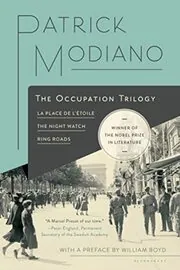
The Occupation Trilogy
by Patrick Modiano
1972
This volume gathers Modiano’s first three novels, all circling wartime France, collaboration, black markets, and damaged memory. Read together, they show the raw beginnings of the questions that shaped his later work.

Lacombe Lucien
by Patrick Modiano
1974
Co-written with Louis Malle, this screenplay follows Lucien, a rural teenager rejected by the Resistance who joins the German police. His relationship with France Horn, a Jewish tailor’s daughter, makes his choices harder to ignore.
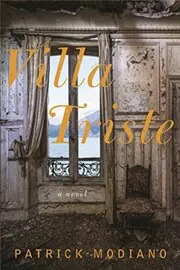
Villa Triste
by Patrick Modiano
1975
An eighteen-year-old hiding under the name Victor Chmara drifts through a lakeside resort near Switzerland. His summer with actress Yvonne and the elusive Dr. Meinthe becomes a memory of youth, fear, and false escape.
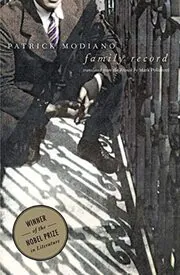
Family Record
by Patrick Modiano
1977
In interlocking autobiographical vignettes, Modiano revisits his parents’ wartime courtship, shady family circles, early loves, and fatherhood. The book reads like a family album with many missing captions.
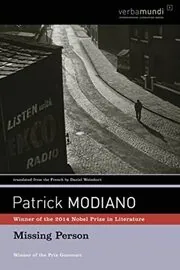
Missing Person
by Patrick Modiano
1978
Guy Roland, an amnesiac former detective, uses old files and chance clues to recover the identity he lost during the Occupation. Each lead promises an answer, then opens another corridor of uncertainty.
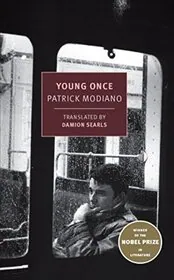
Young Once
by Patrick Modiano
1981
Odile and Louis seem settled in the countryside, but the story turns back to their risky youth in Paris. Shady employers, failed dreams, and a suitcase of money test their hope of making a life together.
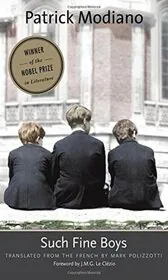
Such Fine Boys
by Patrick Modiano
1982
Linked stories follow former pupils of the exclusive Valvert School, boys of privilege who were also neglected and adrift. Their adult lives reveal how early loneliness can harden into damage, secrecy, and regret.

A Trace of Malice
by Patrick Modiano
1984
Returning to Paris after twenty years, detective novelist Ambrose Guise confronts the life he once lived as Jean Dekker. Old acquaintances and a buried crime pull him through a city that has not forgotten him.
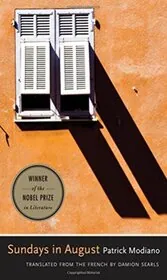
Sundays in August
by Patrick Modiano
1986
In sunlit Nice, a young couple in hiding guards a famous diamond necklace called the Southern Cross. Its value draws them into a noirish world of stolen jewels, false names, and danger that keeps closing in.
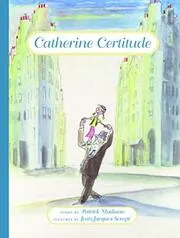
Catherine Certitude
by Patrick Modiano
1988
Adult dancer Catherine remembers her Paris childhood with her gentle, mysterious father, their shared glasses, and her ballet lessons. This illustrated story turns blurred vision into a tender way of seeing the past.
Honeymoon
by Patrick Modiano
1990
Documentary filmmaker Jean B. vanishes from his own life and follows the traces of Ingrid and Rigaud, a refugee couple he once knew. Their wartime story becomes a mirror for his own urge to disappear.
After the Circus
by Patrick Modiano
1992
Jean, not yet legally an adult, meets the older Gisèle while both are being questioned by police. Their romance draws him through mid-1960s Paris and into the orbit of her troubling, half-hidden associates.
Out of the Dark
by Patrick Modiano
1995
A middle-aged narrator looks back to his affair with Jacqueline, a young drifter he followed from Paris to London. Her disappearances leave him chasing the blurred line between memory, love, and invention.
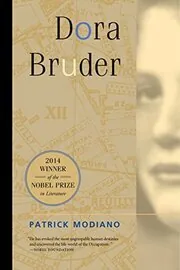
Dora Bruder
by Patrick Modiano
1997
After finding a 1941 missing-person notice, Modiano searches for traces of Dora Bruder, a Jewish teenager in occupied Paris. The book blends investigation, memoir, and history to recover what can still be known.
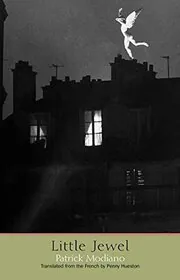
Little Jewel
by Patrick Modiano
2001
Nineteen-year-old Thérèse spots a woman in a yellow coat who may be the mother who abandoned her. Her pursuit through Paris becomes a quiet, painful search for identity and connection.
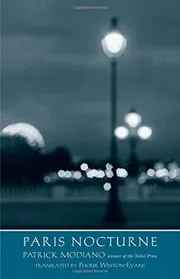
Paris Nocturne
by Patrick Modiano
2003
A young man is struck by a car at night, then urged to forget the accident and accept hush money. Instead, he searches for the mysterious woman involved and the memories the crash has awakened.
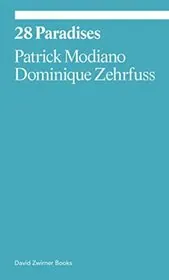
28 Paradises
by Patrick Modiano
2005
Created with illustrator Dominique Zehrfuss, this small collaboration pairs twenty-eight painted visions with Modiano’s poems. It is less a novel than a shared dream of color, refuge, art, and tenderness.
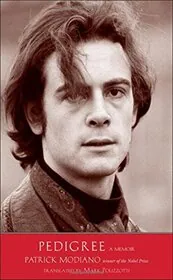
Pedigree
by Patrick Modiano
2005
Modiano’s only memoir traces his first twenty-one years: absent parents, boarding schools, his brother Rudy, and the writer Raymond Queneau. It is a plain, unsettling key to the personal material behind the fiction.
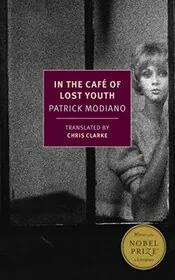
In the Café of Lost Youth
by Patrick Modiano
2007
In 1950s Paris, the elusive Louki haunts the Condé café, drawing the attention of students, drifters, a detective, and a lover. Four voices circle her life, but none can fully hold it.
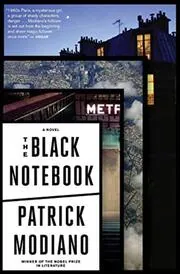
The Black Notebook
by Patrick Modiano
2012
Writer Jean looks back through an old notebook and remembers Dannie, a woman tied to the shadowy Unic Hotel crowd. The names on the page pull him toward a vanished Paris and an unresolved crime.
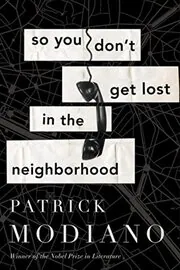
So You Don't Get Lost in the Neighborhood
by Patrick Modiano
2014
When reclusive writer Jean Daragane loses his address book, a stranger returns it with questions about a forgotten name. The inquiry opens a 1950s murder file and memories Jean has spent years avoiding.

Sleep of Memory
by Patrick Modiano
2017
An older narrator revisits his youth through several enigmatic women and the uneasy pull of his parents. Fragment by fragment, the book explores how love, loss, and memory keep changing shape.
Invisible Ink
by Patrick Modiano
2019
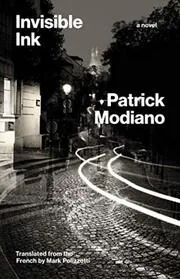
Private detective Jean Eyben is assigned to find the missing Noëlle Lefebvre, but the case goes nowhere. Thirty years later, the old clues still bother him, and he resumes the search for himself.
The Search Warrant
by Patrick Modiano
2020
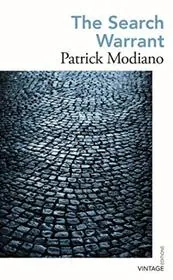
Also published as Dora Bruder, this investigation begins with a wartime notice for a missing Jewish girl. Modiano follows addresses, records, and silences through occupied Paris, asking what can be rescued from erasure.
Scene of the Crime
by Patrick Modiano
2021
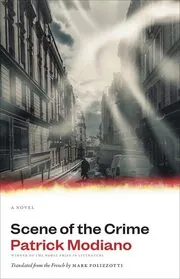
Jean Bosmans is drawn back by the word Chevreuse, a place tied to both childhood and risky young adulthood. As faces reappear, he tries to sort real memory from the screens that protect it.

Ballerina
by Patrick Modiano
2025
In 1960s Paris, a young dancer and single mother tries to escape menacing figures from her past. The narrator’s memory of her moves through ballet studios, desire, aging, and the ache of lost time.
Where to start with Patrick Modiano
If you want the best doorway in: Missing Person → Dora Bruder → Honeymoon.
If you want the Occupation books: La Place de l'Étoile → The Night Watch → Ring Roads.
If you prefer Paris memory mysteries: After the Circus → In the Café of Lost Youth → The Black Notebook → Invisible Ink.
If you want the life behind the fiction: Pedigree → Family Record.
Patrick Modiano sub-series and character series
Patrick Modiano collections, short stories, and related book types
Chapter Books
Short Stories/Novellas
Plays
Non-Fiction
Standalone Patrick Modiano books
Author bio
Patrick Modiano was born on July 30, 1945, in Boulogne-Billancourt, just outside Paris. His father, Albert Modiano, was a Jewish businessman with Italian and Greek family roots. His mother, Louisa Colpeyn, was a Flemish actress. They had met in occupied Paris during the Second World War, and that shadow sits close to almost everything he later wrote.
His childhood was restless. For his first years he was raised by his Flemish maternal grandparents, and Flemish was his first language. He and his younger brother, Rudy, were moved between relatives, caregivers, Paris apartments, Biarritz, Jouy-en-Josas, and boarding schools while their parents were often absent. Rudy died as a child, a loss Modiano carried for years and marked in the dedications of his early books.
The past does not stay put.
At the Lycée Henri-IV in Paris, Modiano took private geometry lessons from Raymond Queneau, the writer who became an important guide for him. Queneau helped open the door to the literary world, and Modiano began writing young. His first novel, La Place de l'Étoile, appeared in 1968, when he was only in his early twenties. It was sharp, strange, and furious about French antisemitism and the unclean memories of the Occupation.
His first three novels, later gathered as The Occupation Trilogy, showed the ground he would keep returning to: occupied Paris, false names, compromised fathers, black-market deals, and people trying to survive in morally dirty rooms. Ring Roads won the Grand Prix du Roman de l'Académie française in 1972. A few years later, Missing Person won the Prix Goncourt, with its amnesiac detective searching for the identity he lost during the Occupation.
Paris is the map.
Many readers come to Modiano through Dora Bruder, his spare investigation into a missing Jewish teenage girl he first found in an old newspaper notice. Others start with Honeymoon, In the Café of Lost Youth, or The Black Notebook, where a chance name, address, photograph, or notebook pulls a narrator back toward a life that almost vanished. His books are short, but they rarely feel simple. They move like memory does, sideways, in fragments, with street names doing half the talking.
His recurring themes are easy to name and hard to exhaust: memory, disappearance, guilt, childhood, identity, and the way a city keeps records even when people do not. He often writes about young men adrift, mysterious women, absent parents, old hotels, cafés, police files, and addresses that may no longer exist.
In 2014, Modiano received the Nobel Prize in Literature. He has also written screenplays, including Lacombe Lucien with Louis Malle, and a children’s book, Catherine Certitude, illustrated by Sempé. He married illustrator Dominique Zehrfuss in 1970, and they have two daughters, Zina and Marie. He has long lived and worked in Paris, the city his books keep walking through, one half-remembered street at a time.









Edited by
Software engineer whose passion for tracking book recommendations from podcasts inspired the creation of MRB.
Lead investor at 3one4 Capital whose startup expertise and love for books helped shape MRB and its growth.
Comments
Did we miss something? Have feedback?
Help us improve this page by sharing your thoughts