
Pat Cadigan Books in Order
Explore Pat Cadigan's books in order, with quick summaries, series links, cyberpunk highlights, and straightforward advice on where to start.
Last updated:
As an Amazon Associate, we earn from qualifying purchases (at no extra cost to you).
Pat Cadigan books in publication order
33 books
Mindplayers
by Pat Cadigan
1987
After using illegal mind-altering tech, Allie Haas is caught and forced to choose between prison and training as a Mindplayer. The job sends her into other people's psyches, where therapy, control, and exploitation are never far apart.

My Brother's Keeper
by Pat Cadigan
1988
A young woman trying to save her brother from heroin addiction finds herself pulled into something even more predatory in the city around them. Cadigan blends urban horror with family desperation, making the story feel raw, angry, and close to the bone.

Fool to Believe
by Pat Cadigan
1990
Brain Police officer Mersine goes undercover after a rising actor's mind is stolen and sold on the black market. What starts as an investigation into memory crime becomes a twisting identity story where even her own self may not be secure.

Dispatches from the Revolution
by Pat Cadigan
1991
Told through letters and documents, this alternate-history novella imagines a United States reshaped by violence at the 1968 Democratic convention. Cadigan turns political upheaval into a sharp, uneasy story about myth, memory, and who gets to write history.

Patterns
by Pat Cadigan
1991
Cadigan's first collection gathers early stories that mix science fiction, horror, and psychological unease. Across the book, memory, media, addiction, and desire keep nudging ordinary lives into unnerving new shapes.
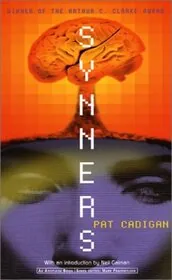
Synners
by Pat Cadigan
1991
Artists, hackers, and media workers plug their minds directly into entertainment systems in a wired near future. When a new neural technology starts spreading something like a mental virus, the boundary between human thought and machine signal breaks down.
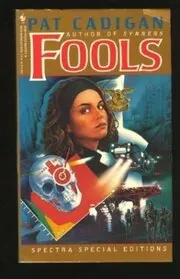
Fools
by Pat Cadigan
1992
When actress Marva wakes with a murder memory that may not be hers, she has to figure out whose identity she is wearing. The chase that follows turns into a slippery thriller about mind theft, personality overlays, and survival.
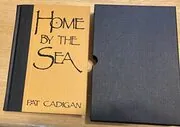
Home by the Sea
by Pat Cadigan
1992
This short story collection moves between science fiction, horror, and dark fantasy with Cadigan's usual taste for warped perception. The stories are intimate, unsettling, and full of people discovering that ordinary life has stranger edges than they expected.

True Faces
by Pat Cadigan
1992
A murder at an alien embassy draws investigator Farber into a case built on secrecy, custom, and the danger of seeing too much. It reads like a detective story first, but the deepest mystery is what identity looks like across species.

Dirty Work
by Pat Cadigan
1993
This later collection shows Cadigan ranging across science fiction, horror, and dark fantasy with a steady eye for human weakness. The stories are witty, unsettling, and interested in what happens when love, fear, or technology distorts the rules.

Avatar
by Pat Cadigan
1998
Paralyzed after a diving accident, Max uses Web link-ups to experience Realworld from a distance. What begins as escape becomes a thoughtful story about embodiment, risk, and what virtual freedom can and cannot replace.

Making of Lost in Space
by Pat Cadigan
1998
Cadigan goes behind the scenes of the 1998 *Lost in Space* film, talking to cast and crew and digging into the production. It's a brisk making-of book about sets, effects, design problems, and how a big studio sci-fi movie comes together.
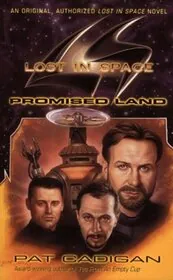
Lost in Space
by Pat Cadigan
1999
Still stranded after the film, the Robinson family and their uneasy companions are pulled aboard a colossal alien vessel where dreams seem possible. The apparent refuge quickly starts to look like a trap, and the Jupiter 2 crew must decide whom to trust.
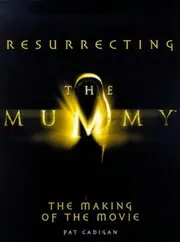
Resurrecting the Mummy
by Pat Cadigan
1999
This behind-the-scenes companion follows the making of the 1999 *The Mummy* film. Cadigan covers the cast, creature work, visual effects, and the practical business of turning old-school adventure horror into a modern blockbuster.
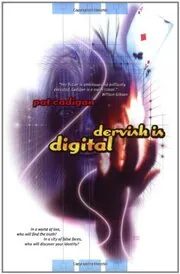
Dervish is Digital
by Pat Cadigan
2001
Detective Dore Konstantin investigates claims that a powerful man is stalking his ex-wife from inside Artificial Reality itself. The case pushes her into a world where money, identity, and even physical presence can be faked or traded.
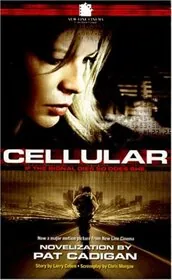
Cellular
by Pat Cadigan
2004
A kidnapped woman reaches a random stranger on a damaged cell phone and begs for help. As he races across Los Angeles to save her family, a corruption plot closes in and every dropped call starts to matter.
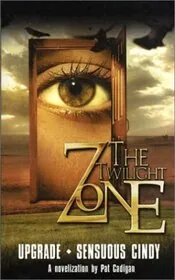
Upgrade / Sensuous Cindy
by Pat Cadigan
2004
This tie-in pairs two Twilight Zone tech nightmares: one about a woman whose family no longer feels like her own, the other about a virtual fantasy companion who refuses to stay inside the game.
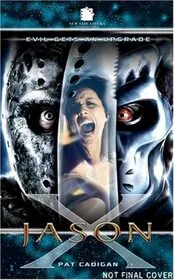
Jason X
by Pat Cadigan
2005
Cryogenically frozen serial killer Jason Voorhees is revived centuries later aboard a spaceship full of students and crew. Cadigan turns the film's gleefully absurd setup into a brisk science-fiction slasher with plenty of blood and panic.
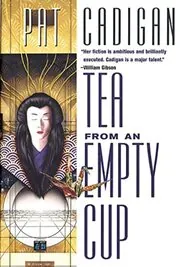
Tea From An Empty Cup
by Pat Cadigan
2005
A young man dies in Artificial Reality and in the physical world at the same time, pulling detective Dore Konstantin into a baffling murder case. Nearby, Yuki searches for a missing friend, and both paths lead toward the unsettling maze of Noo Yawk Sitty.
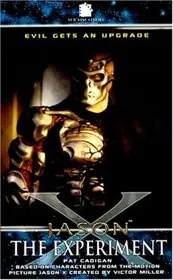
The Experiment
by Pat Cadigan
2005
After Jason crash-lands and is rebuilt yet again, the government drags him into a secret research facility. A scientist hoping to weaponize his regenerative body instead unleashes a fresh round of chaos, clones, and slaughter.

Death in the Promised Land
by Pat Cadigan
2012
Detective Dore Konstantin investigates a teenager killed both in Artificial Reality and in the physical world. The case pulls her deeper into Noo Yawk Sitty, where ownership, identity, and violence all blur together.
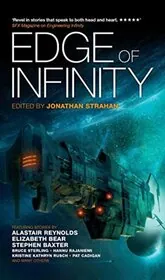
The Girl-Thing Who Went Out for Sushi
by Pat Cadigan
2012
In a future where some space workers remake themselves into sea-creature forms called sushi, an injured human chooses to join them. The change opens questions about desire, status, and who gets to belong in a body built for the stars.

Chalk
by Pat Cadigan
2013
Mary and her friend Dee mark their town with secret chalk symbols, turning childhood territory into a map of danger and refuge. What begins as imaginative play shades into something stranger, sadder, and quietly haunting.
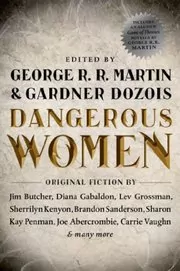
Dangerous Women
by George R. R. Martin, Megan E. Abbott, Cecelia Holland, Melinda Snodgrass, Jim Butcher, Carrie Vaughn, Joe R Lansdale, Robin Hobb, Lawrence Block, Brandon Sanderson, Sharon Kay Penman, Lev Grossman, Nancy Kress, Diana Rowland, Diana Gabaldon, Sherrilyn Kenyon, SM Stirling, Sam Sykes, Pat Cadigan, Caroline Spencer, Joe Abercrombie & Gardner Dozois
2013
A cross-genre anthology edited by George RR Martin and Gardner Dozois, built around women who are dangerous in different ways. The lineup ranges from fantasy and science fiction to historical and crime tales, each centered on agency, risk, and consequences.

The Christmas Show
by Pat Cadigan
2013
Two sisters travel from town to town staging local Christmas productions as part of a family curse. Cadigan turns that odd setup into a ghostly, darkly funny holiday story about theater, obligation, and finding connection in unlikely places.

AI and the Trolley Problem
by Pat Cadigan
2018
At a British airbase, a lethal incident forces people to question the judgment of the AI security system meant to protect them. The story uses a classic ethics puzzle to ask what machine responsibility might really look like.
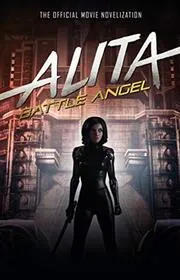
Alita
by Pat Cadigan
2018
In Iron City, a cyborg girl wakes with no memory and a buried talent for combat. As Alita pieces together her past, she finds friends, enemies, and a power that the city's rulers desperately want to control.
Harley Quinn
by Pat Cadigan
2018
Dr. Harleen Quinzel believes she can understand the Joker better than anyone else. This prose version of *Mad Love* follows her fall from Arkham psychiatrist to Harley Quinn, tracing obsession, manipulation, and the cost of mistaking chaos for love.
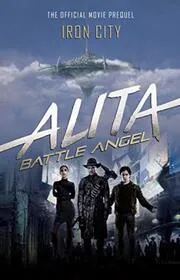
Iron City
by Pat Cadigan
2018
This prequel explores Iron City before Alita's arrival, following Ido, Hugo, and the ruthless forces that keep the scrapyard world running. It deepens the city's grime, class divide, and the uneasy dreams of people living under Zalem.
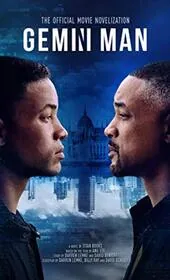
Gemini Man
by Pat Cadigan
2019
Elite assassin Henry Brogan is hunted by an operative who knows his every move before he makes it. The reason is worse than a leak or betrayal, his pursuer is a younger, faster clone of Henry himself.
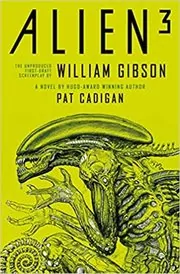
Alien 3: The Lost Screenplay by William Gibson
by Pat Cadigan
2021
This novel adapts William Gibson’s unfilmed Alien 3 script, following Hicks, Bishop, Ripley, and Newt after the Sulaco drifts into contested space. A new strain of xenomorph emerges aboard the Anchorpoint station amid Cold War tensions between rival human factions.
Ultraman
by Pat Cadigan
2023
When a Being of Light merges with Science Patrol pilot Shin Hayata, Earth gains a towering defender against monsters and alien threats. Cadigan retells the classic series as a fast, clean battle between human courage and impossible danger.
Ultraman - Ultraseven
by Pat Cadigan
2025
As Earth faces waves of alien threats, the mysterious Dan Moroboshi fights beside the Terrestrial Defense Force and reveals his true form when humanity runs out of options. This adaptation leans into sacrifice, duty, and giant-scale battles.
Where to start with Pat Cadigan
If you want classic cyberpunk: Mindplayers → Synners → Fools
If you like virtual-world mysteries: Tea From An Empty Cup → Dervish is Digital
If you want short fiction first: The Girl-Thing Who Went Out for Sushi → Patterns → Home by the Sea
If you enjoy movie and TV tie-ins: Alien 3: The Lost Screenplay by William Gibson → Alita → Gemini Man
Pat Cadigan sub-series and character series
Alita: Battle Angel books in order
Explore this seriesArtificial Reality Division books in order
Explore this seriesArtificial Reality Division books in chronological order
Pat Cadigan collections, short stories, and related book types
Short Stories/Novellas
Collections
Non-Fiction
Standalone Pat Cadigan books
by George R. R. Martin, Megan E. Abbott, Cecelia Holland, Melinda Snodgrass, Jim Butcher, Carrie Vaughn, Joe R Lansdale, Robin Hobb, Lawrence Block, Brandon Sanderson, Sharon Kay Penman, Lev Grossman, Nancy Kress, Diana Rowland, Diana Gabaldon, Sherrilyn Kenyon, SM Stirling, Sam Sykes, Pat Cadigan, Caroline Spencer, Joe Abercrombie & Gardner Dozois
2013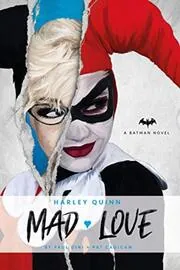


Author bio
Pat Cadigan was born in Schenectady, New York, and grew up in Fitchburg, Massachusetts. Before she became one of the writers most closely linked with cyberpunk, she studied theater at the University of Massachusetts Amherst and later studied science fiction writing at the University of Kansas, where James Gunn was one of her teachers.
That mix matters.
You can feel the sense of performance in her fiction, the way people slip into roles, adopt masks, and talk themselves into new versions of reality. Long before online life made identity feel endlessly editable, Cadigan was writing about personalities that could be copied, traded, manipulated, or lost.
Her path into publishing was not neat or glamorous. After college she became active in science fiction fandom and worked in Kansas City, first around small-press magazine culture and then as a writer for Hallmark Cards. In the late 1970s and early 1980s she also edited small magazines, including Shayol, learned the nuts and bolts of the field, and began selling short fiction. By 1987, writing had become her full-time job.
Her first novel, Mindplayers, laid out territory she would keep returning to for decades: minds as places, memory as technology, and consciousness as something that can be altered almost like software. Then came Synners, still one of her key books, a jagged near-future story about media workers, neural links, and what happens when entertainment gets under the skin. Fools pushed even harder into fractured identity, while Tea From An Empty Cup and Dervish is Digital mixed cyberpunk with detective fiction and artificial reality.
She also writes terrific short fiction.
Readers who start with shorter work often stay there for a while. Stories like The Girl-Thing Who Went Out for Sushi, which won the Hugo Award for Best Novelette, show how flexible she is on the page. The setup can be funny or bizarre, but the emotional questions are usually close to home. Who gets treated as fully human? What happens when technology changes the body faster than culture changes its rules?
Although her name is often attached to cyberpunk, her books are usually less interested in shiny hardware than in the people trying to live inside large systems. She writes artists, addicts, cops, grifters, technicians, and tired survivors. Cities matter in her work. So do subcultures, workarounds, and the nagging sense that reality is never as stable as it claims to be.
In later years she added a long run of film and television tie-ins to her bibliography, including Alita, Iron City, Jason X, Harley Quinn, Gemini Man, and Alien 3: The Lost Screenplay by William Gibson. That part of her career fits her better than you might expect. She has always been very good at voice, narrative momentum, and taking a wild premise seriously enough to make it feel inhabited.
Cadigan moved to London in 1996 and later became a UK citizen. She has continued to write across novels, short fiction, and adaptations, and she has also written openly about illness and survival in personal nonfiction. The through-line across all of it is pretty clear: she is fascinated by the mind, suspicious of easy answers, and very good at finding the human mess inside futuristic ideas.


Edited by
Software engineer whose passion for tracking book recommendations from podcasts inspired the creation of MRB.
Lead investor at 3one4 Capital whose startup expertise and love for books helped shape MRB and its growth.
Comments
Did we miss something? Have feedback?
Help us improve this page by sharing your thoughts