
Outcast (Keri Arthur) Books in Order
Part ofKeri Arthur Books in OrderExplore the Outcast books by Keri Arthur in order, with short summaries, series background, and where to start this dystopian fantasy trilogy.
Last updated:
As an Amazon Associate, we earn from qualifying purchases (at no extra cost to you).
Outcast (Keri Arthur) books in publication order
3 books
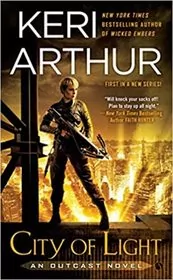
City of Light
by Keri Arthur
2016
A century after war tore holes in the veil between worlds, supersoldier Tiger lives hidden in a city protected by artificial light. When children begin vanishing in daylight, she learns the dark is changing.
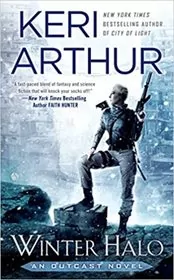
Winter Halo
by Keri Arthur
2016
Tiger cannot ignore the children being abducted and experimented on, and the trail leads straight to Winter Halo. Inside its walls, corporate secrets and a second deadly threat make the mission even worse.
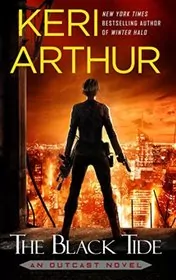
The Black Tide
by Keri Arthur
2017
Winter Halo is gone, but missing children, light-proof vampires, and a shapeshifting mastermind still threaten the city. Tiger has one final race against darkness.
Outcast (Keri Arthur) books in chronological order
Series background & context
The Outcast trilogy is Keri Arthur leaning harder into dystopian fantasy than in most of her other series. The setup is simple and grim. A species war ended when bombs tore holes in the veil between worlds, and those tears let in the Others, demons, wraiths, and death spirits that turned darkness itself into a hunting ground. A century later, the survivors live in cities built around artificial light because light is the only thing keeping the worst of the dark away.
That is a strong premise.
Into it Arthur drops Tiger, a Déchet supersoldier bred for war and almost wiped out by it. Tiger is used to hiding, surviving, and staying apart. She is not trying to save the world. That reluctance is part of what makes her interesting. In City of Light, she gets pulled into the larger conflict by rescuing a child and discovering that children are being taken in daylight by something that should not be able to move that way at all.
From there, the series becomes both an investigation and a survival story. Winter Halo follows the trail into a pharmaceutical company tied to experiments on children and adults. The Black Tide then takes the consequences even further, as the threat shifts from terrible experiments to an enemy capable of changing the old rules entirely. If vampires can walk in light, then the basic bargain protecting the cities is finished.
Arthur does a nice job of making the setting feel truly unstable. This is not just a postwar city with rough edges. It is a world built on damage, old fear, and patched-together systems that may already be failing. Tiger's place in it is equally unstable. She is stronger than most people around her, but she is also an outcast by design, a reminder of the kind of wartime creation that still makes people uneasy.
The trilogy balances that bleakness with forward motion. Tiger is not the sort of heroine who spends pages brooding instead of acting. Once she commits, she moves. She investigates, fights, adapts, and slowly allows herself to care about people and places she once tried to keep at a distance. That emotional shift gives the series more heart than the dystopian pitch might suggest.
There is also a nice mix of supernatural horror and science fiction logic here. Veils between worlds, experimental programs, mutated threats, and city infrastructure all matter. Arthur keeps them from clashing by tying everything back to the same central problem: what happens when a world designed to survive one disaster is hit by the next one?
The answer, in these books, is usually something bad.
But that is what makes Outcast fun. It is dark, fast, and built on a setting where the lights going out is not a metaphor. It is the thing everybody is genuinely afraid of.








Edited by
Software engineer whose passion for tracking book recommendations from podcasts inspired the creation of MRB.
Lead investor at 3one4 Capital whose startup expertise and love for books helped shape MRB and its growth.
Comments
Did we miss something? Have feedback?
Help us improve this page by sharing your thoughts