
Kingdoms of Earth & Air Books in Order
Part ofKeri Arthur Books in OrderBrowse the Kingdoms of Earth & Air books by Keri Arthur in order, with summaries, series background, and where to start this fantasy trilogy.
Last updated:
As an Amazon Associate, we earn from qualifying purchases (at no extra cost to you).
Kingdoms of Earth & Air books in publication order
3 books
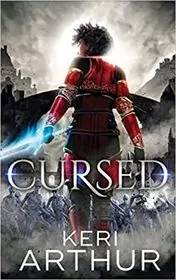
Cursed
by Keri Arthur
2018
Princess Nyx Bel-Hannon draws the kingdom's ancient sword instead of her twin brother and is rewarded with imprisonment. Her unexpected claim to power turns court tradition into open danger.
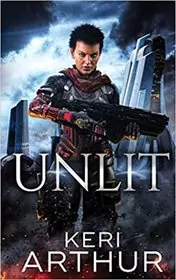
Unlit
by Keri Arthur
2018
In a kingdom divided by magic, power, and freedom, old rules are starting to fail. This opening fantasy sets up political unrest, dangerous loyalties, and a fight over who gets to shape the future.
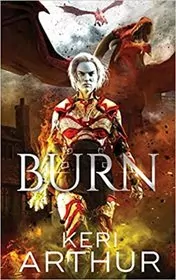
Burn
by Keri Arthur
2019
With the kingdom sliding toward war, the cost of power becomes impossible to ignore. This finale drives the Earth and Air story into battle, sacrifice, and a last stand for the realm.
Kingdoms of Earth & Air books in chronological order
Series background & context
The Kingdoms of Earth and Air books move Keri Arthur away from contemporary urban fantasy and into full secondary-world fantasy. The official setup is a land divided in more ways than one, between those with magic and those without, between those who are free and those who are not. That split gives the trilogy its backbone. Power is never just personal here. It is built into the structure of the world.
That matters from the first page.
The series has a military fantasy edge, but it is not all battlefield spectacle. Arthur is just as interested in succession, legitimacy, old traditions, and what happens when the wrong people inherit authority simply because the rules say they should. By the time you reach Cursed, those tensions are front and center. Princess Nyx Bel-Hannon draws the land's ancient sword instead of her twin brother, an act that should not happen under the kingdom's old assumptions, and the result is not celebration but imprisonment.
That tells you a lot about the books. These are stories where power has ritual attached to it, where kingdoms tell themselves neat stories about destiny, and where reality refuses to cooperate. The fantasy machinery, swords tied to rulership, old laws, royal lines, military pressure, exists to put characters into impossible positions. Arthur likes that kind of strain. It lets her write heroines who have to learn fast and fight harder.
Because this is a trilogy, the books appear to build as one long conflict rather than a chain of self-contained adventures. Unlit opens the world and its divisions. Cursed drives the succession and legitimacy question into the center. Burn suggests an ending shaped by open conflict and the cost of holding power once you have it. Even without every detail spelled out, the movement is clear: from unstable peace, to personal claim, to war-level consequence.
Readers who know Arthur mainly from her supernatural detective work may be surprised by how naturally she handles a broader fantasy frame. The same strengths are still there, brisk pacing, direct prose, heroines under pressure, and plenty of tension between duty and desire, but the scenery changes. The threats are less about hidden creatures in the next alley and more about kingdoms, armies, and the rules entire societies are built on.
There is still romance in the mix, as there often is with Arthur, but this feels like one of her more overtly political fantasy projects. Who gets to rule, who gets silenced, and who pays for old customs are not background questions. They are the story.
So if you want Arthur doing epic stakes instead of urban ones, this is a good choice.
It promises swords, crowns, military pressure, and a world where the balance between magic and power has already gone badly wrong.





Edited by
Software engineer whose passion for tracking book recommendations from podcasts inspired the creation of MRB.
Lead investor at 3one4 Capital whose startup expertise and love for books helped shape MRB and its growth.
Comments
Did we miss something? Have feedback?
Help us improve this page by sharing your thoughts