
Oscar Wilde Books in Order
Explore Oscar Wilde books in order, with quick summaries of the plays, stories, essays, and letters, plus reading guidance and where to start.
Last updated:
As an Amazon Associate, we earn from qualifying purchases (at no extra cost to you).
Oscar Wilde books in publication order
58 books

Ravenna
by Oscar Wilde
1878
Wilde's prize-winning early poem looks back at the Italian city with art, history, and longing on its mind. It offers a young writer already reaching for grandeur and musical language.

Vera or the Nihilists
by Oscar Wilde
1880
Wilde's early play follows Vera, a young revolutionary caught between love and political violence in imperial Russia. It is melodramatic, earnest, and full of plots, betrayals, and impossible choices.

Poems
by Oscar Wilde
1881
This early collection gathers the verse that first introduced Wilde as a published writer. It shows his love of rich surfaces, classical echoes, and mood, even before the mature plays and stories arrived.

The Poetry of Oscar Wilde
by Oscar Wilde
1881
A collected poetry volume that lets readers move beyond the famous prison poem into Wilde's broader verse. You'll find ornate imagery, classical themes, and flashes of the wit that shaped his prose.

Impressions of America
by Oscar Wilde
1882
Drawn from Wilde's reflections after his American lecture tour, this piece records his amused, observant takes on the United States. It mixes travel writing, social commentary, and the polished performance voice he carried onstage.

The Duchess of Padua
by Oscar Wilde
1883
This blood-soaked tragedy follows Guido Ferranti as love, revenge, and court intrigue pull him toward disaster in Padua. Wilde leans into passion, conspiracy, and high dramatic stakes.

Lord Arthur Saville's Crime
by Oscar Wilde
1887
After a palm reader predicts he will commit murder, Lord Arthur decides he must get the deed done before he can marry. Wilde treats fate, duty, and homicide with wonderfully cool absurdity.
The Canterville Ghost
by Oscar Wilde
1887
An American family moves into an English manor and refuses to be frightened by its resident ghost. Wilde turns a haunted-house setup into a funny, oddly tender story about pride, guilt, and mercy.

The Model Millionaire
by Oscar Wilde
1887
Good-hearted Hughie Erskine gives money to an old beggar model and learns he has badly misjudged the situation. Wilde turns the mix-up into a warm, funny story about generosity and class.

The Sphinx Without a Secret
by Oscar Wilde
1887
A woman seems to hide a thrilling secret, and the man who loves her cannot resist the mystery. Wilde turns the whole tale on appearances, fantasy, and the stories people invent around beauty.

The Devoted Friend
by Oscar Wilde
1888
Miller the Linnet tells a bitter little fable about friendship and exploitation. Wilde's story looks charming on the surface, but it lands hard as a satire of selfish people who call themselves generous.

The Happy Prince
by Oscar Wilde
1888
A gilded statue and a swallow join forces to help the poor people below them. Wilde's tale is gentle, sad, and piercing, with real feeling beneath its fairy-tale surface.

The Nightingale and the Rose
by Oscar Wilde
1888
A nightingale gives everything to help a young student win the red rose he needs for love. The story is brief and beautiful, then quietly brutal about sacrifice and how little it may be valued.

The Remarkable Rocket
by Oscar Wilde
1888
At a royal fireworks display, one boastful rocket is convinced he is the true star of the show. Wilde uses the talking fireworks to mock vanity, self-importance, and empty grand talk.

The Selfish Giant
by Oscar Wilde
1888
A giant keeps children out of his garden and finds that winter never leaves. Wilde tells a simple, moving fable about selfishness, kindness, and the grace that arrives when the heart changes.
The Decay of Lying
by Oscar Wilde
1889
In this playful dialogue, Wilde argues that art should not merely copy life. It is witty, provocative criticism, full of paradoxes about beauty, style, imagination, and the uses of make-believe.

A House of Pomegranates
by Oscar Wilde
1891
This collection gathers four of Wilde's darker fairy tales, including The Young King and The Fisherman and His Soul. The stories are ornate, sorrowful, and much stranger than ordinary nursery fare.

Complete Fairy Tales of Oscar Wilde
by Oscar Wilde
1891
This volume brings together Wilde's fairy tales in one place, from The Happy Prince to The Star-Child. They read like children's stories at first, but they carry real sorrow, satire, and moral sting.

Intentions
by Oscar Wilde
1891
Wilde's essay collection brings together some of his boldest arguments about art, criticism, masks, and style. It is witty, contrary, and essential if you want the ideas behind the fiction and plays.

Lord Arthur Savile's Crime
by Oscar Wilde
1891
After a palm reader predicts he will commit murder, Lord Arthur decides he must do the deed before he can marry. Wilde makes destiny and respectable society look equally ridiculous.

Salomé
by Oscar Wilde
1891
In this intense one-act play, Salomé becomes fatally obsessed with Jokanaan while Herod's court spirals toward catastrophe. Wilde's language is lush and ritualistic, and the mood grows stranger by the page.

Star-Child
by Oscar Wilde
1891
A beautiful, proud child falls from grace after rejecting compassion and shaming his own mother. Wilde turns the tale into a stern, magical story about vanity, suffering, and learning mercy.

The Birthday of the Infanta
by Oscar Wilde
1891
At a Spanish princess's birthday celebration, a dwarf performs for a court that sees him as entertainment rather than a person. Wilde builds a fairy tale about cruelty, beauty, and heartbreak.

The Fisherman & His Soul
by Oscar Wilde
1891
A fisherman falls in love with a mermaid and tries to cast off his soul to be with her. The result is one of Wilde's strangest fairy tales, full of temptation, longing, and spiritual unease.
The Picture of Dorian Gray
by Oscar Wilde
1891
Handsome Dorian Gray wishes he could stay forever young while his portrait bears the marks of age and sin. As the wish comes true, Wilde spins a dark, glittering novel about vanity, pleasure, and moral collapse.
Recommended by
4 people Sam Altman recommended this book
Sam Altman
This book was on Sam Altman's bookshelf.
Sam Altman's recommendation of this book  Jenn Im recommended this book
Jenn Im
"I love this book." - Jenn Im
Jenn Im's recommendation of this book  PewDiePie recommended this book
PewDiePie
"A meaningful story with horror elements to it." - PewDiePie
PewDiePie's recommendation of this book  Zack D'Aleo recommended this book
Zack D'Aleo
"Lo rileggerei ogni settimana, ma forse meglio di no. Questo è un libro che ha plasmato la mia anima." - Zac D'Aleo
Zack D'Aleo's recommendation of this book

The Soul of Man Under Socialism
by Oscar Wilde
1891
Wilde's political essay argues that freedom from poverty and drudgery would allow people to become fully themselves. It is bold, surprising, and still sharp on charity, work, and individual liberty.

The Young King
by Oscar Wilde
1891
On the eve of his coronation, a young ruler learns the human cost behind his splendid robes and jewels. Wilde makes a rich fairy tale out of beauty, conscience, and the price of luxury.

An Ideal Husband
by Oscar Wilde
1893
Political blackmail threatens the spotless image of Sir Robert Chiltern and tests his marriage. Wilde mixes sparkling comedy with real moral pressure in a play about secrets, compromise, and forgiveness.

Lady Windermere's Fan
by Oscar Wilde
1893
A birthday party, a scandalous woman, and one forgotten fan set off Wilde's first great stage comedy. Beneath the glittering lines lies a smart drama about marriage, reputation, and mercy.

Teleny, or The Reverse of the Medal
by Oscar Wilde
1893
Often linked to Wilde, this fin de siècle novel follows an intense, taboo love affair between Camille Des Grieux and the musician Teleny. It is frank, feverish, and far darker than Wilde's stage comedies.

A Woman of No Importance
by Oscar Wilde
1894
At a country-house gathering, drawing-room wit gives way to a painful story of seduction, abandonment, and double standards. Wilde's comedy is sharp, but its anger at social hypocrisy runs deep.

Poems in Prose
by Oscar Wilde
1894
These six short prose poems compress parable, symbol, and lyric intensity into tiny spaces. They are strange, polished pieces, closer to miniature visions than to ordinary stories.

The Sphinx
by Oscar Wilde
1894
In this decadent dramatic poem, a speaker addresses a mysterious sphinx and drifts through feverish visions of desire, myth, and religion. It is ornate, strange, and unlike anything else Wilde wrote.
Oscariana
by Oscar Wilde
1895
A compact gathering of Wilde's epigrams and sharp one-liners, drawn from his plays, fiction, and essays. It's the quickest way to dip into the wit that made him unforgettable.
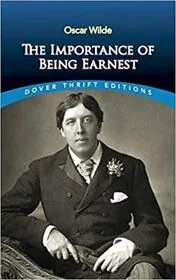
The Importance of Being Earnest
by Oscar Wilde
1895
Two men invent false identities and stumble into a maze of courtship, mistaken names, and perfect nonsense. Wilde's most famous comedy is light on its feet and ruthless about social pretence.
Recommended by
1 person Christopher Hitchens recommended this book
Christopher Hitchens
"One of the few faultless three-act plays ever written." - Christopher Hitchens
Christopher Hitchens's recommendation of this book
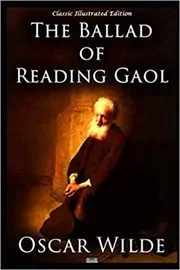
Ballad of Reading Gaol
by Oscar Wilde
1896
Wilde's great prison poem watches a condemned man and turns that spectacle into a meditation on punishment, pity, and shared guilt. The language is direct by his standards, and all the stronger for it.
Recommended by
1 person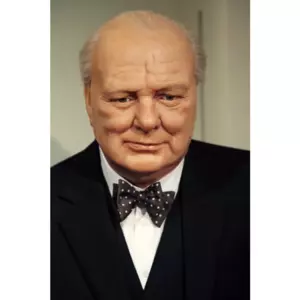 Winston Churchill recommended this book
Winston Churchill
One of Winston Churchill's favorite books.
Winston Churchill's recommendation of this book

The Ballad of Reading Gaol and Other Poems
by Oscar Wilde
1896
Centered on Wilde's prison poem about punishment, grief, and shared human guilt, this collection also includes verse from across his career. It shows both the showman and the wounded later poet.

De Profundis
by Oscar Wilde
1897
Written after prison as a long letter to Lord Alfred Douglas, this is Wilde at his rawest and most reflective. He looks back on love, ruin, suffering, art, and what remained of himself.

The Picture of Dorian Gray and Other Writings
by Oscar Wilde
1898
A strong one-volume sampler of Wilde's work, built around his only novel and accompanied by other major prose. It is a good choice if you want Dorian Gray in a broader Wilde context.
The Portrait of Mr. W. H.
by Oscar Wilde
1904
A portrait, a Shakespeare theory, and a dangerous obsession drive this strange, elegant tale. Wilde follows men who become consumed by the question of who the mysterious Mr. W. H. really was.

A Florentine Tragedy
by Oscar Wilde
1906
Set in Renaissance Florence, this fierce fragment centers on a merchant, his unfaithful wife, and her princely lover. Even unfinished, it crackles with jealousy, power, and theatrical menace.

Complete Works of Oscar Wilde
by Oscar Wilde
1908
This large collection spans Wilde's novel, plays, stories, poems, essays, and prison writing. It is the place to go if you want the full range, from social comedy to fairy tale to fierce self-examination.

Reviews
by Oscar Wilde
1908
These reviews gather Wilde's journalism on books, art, and culture. Even when he is judging other people's work, his style is quick, amused, and full of ideas about taste and criticism.

The Prose of Oscar Wilde
by Oscar Wilde
1909
A broad prose collection that lets you move from fairy tales and fiction to criticism, essays, and reflections. It is a handy way to see how the same wit works in very different forms.

The Harlot's House
by Oscar Wilde
1929
This dark, musical poem follows two lovers pausing outside a brothel where the dancers seem almost mechanical and ghostlike. It is brief, eerie, and one of Wilde's most memorable poetic pieces.

Only Dull People Are Brilliant at Breakfast
by Oscar Wilde
1946
A tiny book of Wildean quotations and epigrams on love, society, sincerity, art, and ego. It is less a narrative than a pocket dose of his wit at full strength.
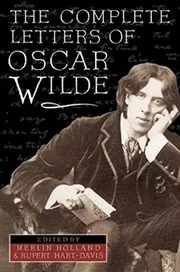
The Complete Letters of Oscar Wilde
by Oscar Wilde
1962
This large collection traces Wilde's life through his own correspondence, from student days to prison and exile. The letters show the public wit, the working writer, and the private man in one place.

The Selfish Giant & Other Classic Tales
by Oscar Wilde
1967
A reader-friendly selection of Wilde's best-loved tales, led by The Selfish Giant. These stories are simple to enter, but they stay with you for their sadness, mercy, and sharp moral edges.

Sixteen Letters from Oscar Wilde
by Oscar Wilde
1974
A slim selection of Wilde's correspondence that captures his charm, intelligence, and changing fortunes. These letters offer a close look at how he joked, argued, and presented himself on the page.

Fairy Tales and Stories
by Oscar Wilde
1980
This collection brings together Wilde's shorter fiction and fairy tales in one volume. It is a good way to sample the range, from comic ghost story to tender fable to darker fantasy.

Stories For Children
by Oscar Wilde
1986
A child-focused selection of Wilde's fairy tales, often led by The Happy Prince and The Selfish Giant. The language is graceful and clear, though the emotions run deeper than the label might suggest.

The Complete Illustrated Stories, Plays and Poems of Oscar Wilde
by Oscar Wilde
1991
An illustrated omnibus that samples Wilde across genres, pairing major stories, plays, and poems in one large volume. Good for readers who want breadth and a handsome browsing copy.
Nothing... Except My Genius
by Oscar Wilde
1997
This is a curated selection of Wilde's wit, epigrams, and offhand brilliance. Perfect for browsing, it gathers the lines on art, love, society, and self-invention that readers quote again and again.

Oscar Wilde : A Life in Letters
by Oscar Wilde
2003
This volume tells Wilde's story through letters, quotations, and carefully chosen writings from across his life. It brings the charm, ambition, scandal, and sorrow into a more personal frame.

Selected Plays
by Oscar Wilde
2004
A useful introduction to Wilde the dramatist, this volume gathers some of his best-known stage work. Expect brilliant dialogue, social comedy, and plots built on secrets, masks, and reputation.

Oscar Wilde’s Stories for All Ages
by Oscar Wilde
2009
This selection gathers Wilde's tales in a format meant to welcome younger and older readers alike. Expect fairy tales, fables, and sad little moral shocks told with great ease.

Lies
by Oscar Wilde
2020
This short themed selection pulls together Wilde on deception, false names, invented selves, and the creative uses of untruth. It is a brisk, clever sampler built around one of his favorite subjects.
The Happy Prince
by Oscar Wilde
From above the city, a jeweled statue sees suffering that escaped the prince during his sheltered life. He asks a migrating swallow to carry his riches to people in need, drawing the bird into difficult acts of generosity.
Where to start with Oscar Wilde
If you want the classic novel: The Picture of Dorian Gray
If you want Wilde at his funniest: The Importance of Being Earnest → Lady Windermere's Fan → An Ideal Husband
If you want fairy tales with real bite: Complete Fairy Tales of Oscar Wilde → A House of Pomegranates
If you want his ideas about art and society: Intentions → The Soul of Man Under Socialism
If you want the most personal late writing: De Profundis → The Ballad of Reading Gaol and Other Poems
Oscar Wilde collections, short stories, and related book types
Short Stories/Novellas
Plays
Collections
Non-Fiction
Children's Books
Poetry Collections
Standalone Oscar Wilde books
Author bio
Oscar Wilde was born in Dublin on October 16, 1854, into a household where talk, books, and performance were part of daily life. His father, Sir William Wilde, was a well-known eye and ear surgeon. His mother, Jane Wilde, wrote nationalist poetry under the name Speranza. He grew up in that mix of intellect, style, and argument, and it clearly suited him.
At school and then at Trinity College in Dublin, Wilde stood out as a classics student. He went on to Magdalen College, Oxford, where he won the Newdigate Prize for his poem Ravenna. Oxford also brought him into contact with John Ruskin and Walter Pater, whose ideas about art, beauty, and culture stayed with him for the rest of his life.
He moved to London in the late 1870s and learned how to turn wit into work. His first book, Poems, appeared in 1881, and in 1882 he toured the United States and Canada lecturing on art and decoration. He also reviewed books and art, and later edited Woman's World, sharpening the mix of criticism, performance, and social observation that runs through so much of his writing.
Then came the books people still return to.
Some readers start with The Picture of Dorian Gray, his only novel, with its beautiful surfaces and rotten center. Others come through the fairy tales, especially The Happy Prince, The Selfish Giant, and The Fisherman and His Soul, where kindness, cruelty, vanity, and sacrifice sit side by side. Even The Canterville Ghost, which begins as a joke about an American family and an old English haunting, ends up stranger and more touching than you expect.
His greatest popular success came in the theater. In the early 1890s he wrote a run of plays that still feel fast, bright, and oddly modern, including Lady Windermere's Fan, A Woman of No Importance, An Ideal Husband, and The Importance of Being Earnest. Readers and audiences come for the one-liners, but what lasts is the pressure underneath them: class nerves, social masks, moral double standards, and the comedy of people trying to look respectable.
He made elegance sound dangerous.
Wilde married Constance Lloyd in 1884, and they had two sons. But by the mid-1890s his relationship with Lord Alfred Douglas, and the brutal laws of the time, brought his public life crashing down. After the failed libel case against the Marquess of Queensberry, Wilde was tried and sentenced in 1895 to two years' hard labor. Prison changed his writing. De Profundis, written there, is searching and wounded. The Ballad of Reading Gaol, published after his release, speaks with a new directness about punishment, shame, and fellow feeling.
After prison he lived mostly in France under the name Sebastian Melmoth. Exile was lonely, poor, and far smaller than the life he had once led in London. He died in Paris on November 30, 1900, at the age of forty-six.
What keeps Wilde alive is not only the wit, though the wit is real. It is the range. He could write social comedy, Gothic fiction, fairy tale, criticism, prison letter, and poem, and in each form he kept circling the same big human problems: beauty and corruption, freedom and constraint, mercy and judgment, the cost of being seen, and the cost of hiding. He could be funny, sad, sharp, and tender in the space of a paragraph. Few writers move that quickly between glitter and pain.








Edited by
Software engineer whose passion for tracking book recommendations from podcasts inspired the creation of MRB.
Lead investor at 3one4 Capital whose startup expertise and love for books helped shape MRB and its growth.
Comments
Did we miss something? Have feedback?
Help us improve this page by sharing your thoughts