
Noel Barber Books in Order
Explore Noel Barber books in order, with short summaries, reading guidance, and notes on his historical novels, travel books, and where to start.
Last updated:
As an Amazon Associate, we earn from qualifying purchases (at no extra cost to you).
Noel Barber books in publication order
29 books
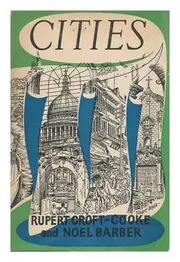
Cities
by Noel Barber
1951
A travel book with a reporter's eye, moving through famous urban places for their atmosphere as much as their landmarks. Noel Barber and Rupert Croft-Cooke mix history, observation, and the details that make a city feel lived in.
Fires of Spring
by Noel Barber
1952
Part autobiography, part travel memoir, this early Noel Barber book looks back on the restless years that shaped him. It has the feel of a young reporter learning his trade while the wider world keeps catching fire.
Strangers in the Sun
by Noel Barber
1955
A mid-century travel book about hot countries, unfamiliar places, and the people a roaming correspondent remembers longest. Barber writes less like a guidebook compiler and more like someone who likes getting out into the glare and confusion.
A Handful of Ashes
by Noel Barber
1957
Barber's eyewitness account of the 1956 Hungarian uprising captures Budapest in confusion, hope, and terror. It is personal, immediate history, written by a correspondent who was there while the city was fighting for breath.
The White Desert
by Noel Barber
1958
An account of the Commonwealth Trans-Antarctic Expedition, told with cold, scale, and danger always close at hand. Barber turns the Antarctic journey into an adventure story without losing the hard facts of survival and exploration.
Distant Places
by Noel Barber
1959
A collection of travel writing from the far edges of Barber's reporting life, full of restless movement and sharp observation. The appeal is the sense of being taken somewhere strange by someone who notices the human detail.

The Flight of the Dalai Lama
by Noel Barber
1960
Barber follows the 1959 Tibetan uprising and the Dalai Lama's escape into exile. Reportage, politics, and on-the-ground encounters give the book its urgency as he pieces together a fast-moving historic crisis.
Life with Titina
by Noel Barber
1961
A personal memoir with travel, domestic comedy, and the odd turns that seem to find Noel Barber wherever he goes. The title figure sits at the center, but the real pleasure is Barber's anecdotal, lived-in way of telling a life.
Adventures at Both Poles
by Noel Barber
1963
A short, accessible book for younger readers about polar exploration in the Arctic and Antarctic. Barber keeps the focus on danger, endurance, discovery, and the sheer strangeness of the coldest places on earth.
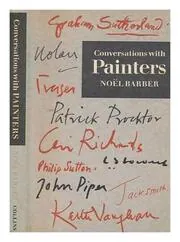
Conversations with Painters
by Noel Barber
1964
Barber sits down with leading postwar painters and lets them talk plainly about drawing, color, studios, and how they see. It is part interview collection, part snapshot of British art at work.

The Black Hole of Calcutta
by Noel Barber
1965
Barber reconstructs the 1756 siege of Fort William and the night in the Black Hole of Calcutta. The book follows the personalities, bad decisions, and fear that turned a military defeat into a lasting imperial legend.

From the Land of Lost Content
by Noel Barber
1969
A vivid account of Tibet on the edge of catastrophe, from Khamba resistance to the Dalai Lama's flight. Barber writes with sympathy for a world under pressure and a reporter's taste for tense, decisive moments.
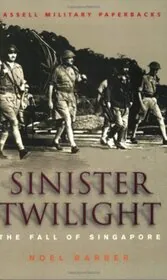
Sinister Twilight
by Noel Barber
1970
This history of the fall of Singapore tracks how complacency, bad planning, and Japanese speed brought disaster in 1942. Barber keeps the focus on the human cost as Britain's supposedly secure fortress collapses.

Let's Visit the USA
by Noel Barber
1971
A children's travel guide that introduces the United States through its regions, history, people, and major landmarks. It is designed to make a big country feel readable, broad enough for curiosity and clear enough for school use.
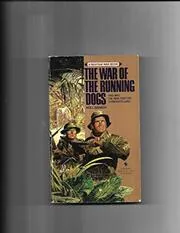
The War of the Running Dogs
by Noel Barber
1971
Barber tells the story of the Malayan Emergency, when Britain and local forces fought communist guerrillas from 1948 to 1960. It blends military history with plantation life, politics, and the struggle over Malaya's future.
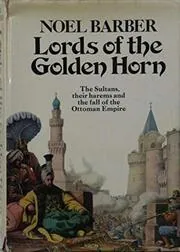
The Lords of the Golden Horn
by Noel Barber
1973
A broad history of the Ottoman Empire from Suleiman the Magnificent to Ataturk. Barber moves between palace intrigue, war, religion, and decline, keeping one eye on rulers and the other on the empire they shaped.
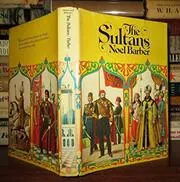
The Sultans
by Noel Barber
1973
Barber surveys the Ottoman sultans in all their power, excess, fear, and fragility. The book is history written for narrative drive, with court life and imperial decline carrying almost as much weight as battles and policy.
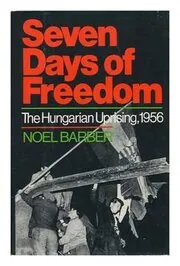
Seven Days of Freedom
by Noel Barber
1974
Drawing on his own reporting, Barber recounts the 1956 Hungarian uprising day by day. The book captures the rush of revolt, the chaos of street fighting, and the brutal force of the Soviet response.

The Week France Fell
by Noel Barber
1976
A tight history of the decisive days in June 1940 when France collapsed under German attack. Barber narrows the frame to one terrible week and shows how panic, politics, and military failure fed each other.

The Natives Were Friendly So We Stayed The Night
by Noel Barber
1977
An anecdotal memoir of foreign correspondence, travel, and the improbable people Noel Barber met along the way. The stories jump across countries and decades, held together by his taste for trouble and absurdity.
The Fall Of Shanghai
by Noel Barber
1979
Barber examines the Communist takeover of Shanghai in 1949 and the end of an era for the great treaty-port city. Politics, business, and ordinary fear meet as one world shuts down and another takes over.
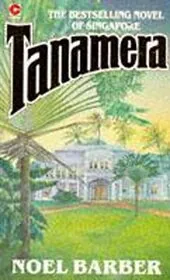
Tanamera
by Noel Barber
1981
In colonial Singapore, John Dexter and Julie Soong fall in love across family power, racial boundaries, and rigid social rules. Their romance survives war, separation, and betrayal in a sweeping saga shaped by Malaya's turbulent decades.

The Singapore Story
by Noel Barber
1981
A brisk history of Singapore from Stamford Raffles to Lee Kuan Yew. Barber tracks trade, empire, war, and self-government, showing how a small port became one of the region's central political and commercial hubs.

A Farewell to France
by Noel Barber
1983
Larry Astell, heir to a champagne fortune, is bound to the irresistible Sonia Riccardi as France slides toward war. From glittering 1930s Paris to Nazi occupation and resistance, their love is tested by history at its harshest.

A Woman of Cairo
by Noel Barber
1984
Mark Holt and Serena grow up in the privileged world of old Cairo, only to find love complicated by family expectations and politics. As war and nationalist unrest close in on Egypt, private passion becomes a dangerous thing.
Sakkara
by Noel Barber
1984
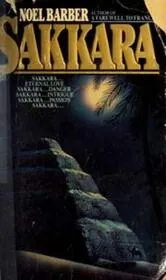
Set in Cairo from 1919 through war and upheaval, this novel follows Mark Holt and Serena as Egypt changes around them. Espionage, royal intrigue, and independence politics give the love story real pressure.
The Weeping and the Laughter
by Noel Barber
1984
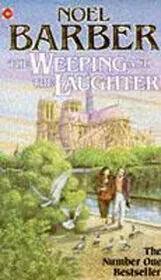
When revolution tears apart the Korolev family in 1919, the survivors scatter from Russia to Paris and beyond. Ballet, war, lost relatives, and old loyalties shape a big, emotional saga about exile and endurance.

The Other Side of Paradise
by Noel Barber
1986
Young doctor Kit Masters starts over on a remote South Sea island after trouble in England. He finds love, illness, intrigue, and the threat of war while trying to build a useful life in a place that feels both idyllic and exposed.

The Daughters Of The Prince
by Noel Barber
1990
In 1938 Florence, three daughters of Prince Giorgio Caiseri draw artists, dreamers, and outsiders into their orbit. Love and ambition bloom in a golden world already darkened by Fascism, war, and a scandalous painting.
Where to start with Noel Barber
If you want his best-known historical saga: Tanamera → A Woman of Cairo → A Farewell to France
If you want South Pacific adventure and island drama: The Other Side of Paradise
If you want exile, ballet, and Russian family drama: The Weeping and the Laughter
If you want the eyewitness historian first: The Flight of the Dalai Lama → Sinister Twilight → The War of the Running Dogs
Noel Barber sub-series and character series
Noel Barber collections, short stories, and related book types
Non-Fiction
Standalone Noel Barber books
Author bio
Noel Barber was born in England in 1909 and spent much of his working life looking outward. Before readers knew him as the author of sweeping historical novels, he was a newspaper man, the kind who went where the story was and stayed long enough to smell the dust, the smoke, and the fear. His mother was Danish, his father English, and his career ended up feeling just as cross-border as that family background.
For years he worked as a foreign correspondent for the Daily Mail. That job took him across Europe, North Africa, Asia, and the South Pacific, and it was not safe work. He was stabbed while reporting in Morocco, shot in the head by a Soviet sentry during the 1956 Hungarian uprising, and still kept filing copy. He also wrote about Tibet, Singapore, Malaya, and Antarctica with the eye of someone who had actually been there.
He wrote first as a journalist and historian.
Books like A Handful of Ashes, The Flight of the Dalai Lama, From the Land of Lost Content, Sinister Twilight, and The War of the Running Dogs grew straight out of that reporting life. They are fast, readable histories, but they also carry the pressure of witness. Even when Barber is writing about politics, armies, or collapsing empires, he keeps bringing the story back to people on the ground.
Then his career took a late turn. After a car crash ended his years as a roaming correspondent, he moved into fiction, and he did it late, publishing his first novel when he was already in his seventies. That late start did not slow him down much.
Tanamera changed everything.
Set in Singapore and Malaya, Tanamera gave readers the thing Barber did best: big history seen through private lives. He followed it with A Farewell to France, A Woman of Cairo, The Other Side of Paradise, and The Weeping and the Laughter, novels that move through Paris, Cairo, the South Pacific, and revolutionary Russia. Readers tend to come to these books for the romance and drama, then stay for the detailed settings, the political tension, and the feeling that history is pressing on every page.
Barber was not a cool, distant chronicler. His writing likes movement, danger, and sudden reversals. That makes sense when you look at the life behind it. He had seen revolutions, fragile truces, colonial pomp, evacuations, and war zones up close, and his fiction often asks what happens when comfortable worlds discover they are not permanent.
Place mattered to him. His books are full of ports, palaces, plantations, colonial clubs, mountain borders, and islands that seem beautiful right up until trouble arrives. He liked writing about people caught between worlds, old families and newcomers, local elites and foreign rulers, lovers divided by class, empire, or war. Even when the plots are large, there is usually one clear human thread pulling the reader forward.
Two of his best-known novels were later adapted for television, Tanamera and The Other Side of Paradise, which says something about how visual his storytelling could be. He died in London in 1988. His final novel, The Daughters of the Prince, was completed after his death by Alan Wykes, a fitting coda for a writer who seemed to have more stories than time.













Edited by
Software engineer whose passion for tracking book recommendations from podcasts inspired the creation of MRB.
Lead investor at 3one4 Capital whose startup expertise and love for books helped shape MRB and its growth.
Comments
Did we miss something? Have feedback?
Help us improve this page by sharing your thoughts