
Nick Carter: Killmaster Books in Order
Part ofMartin Cruz Smith Books in OrderExplore the Nick Carter: Killmaster novels by Martin Cruz Smith in order, with story notes, series background on agent N3, and how these adventures fit into the wider Carter saga.
Last updated:
As an Amazon Associate, we earn from qualifying purchases (at no extra cost to you).
Nick Carter: Killmaster books in publication order
3 books
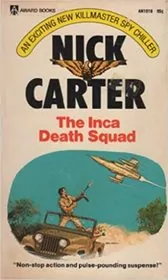
The Inca Death Squad
by Martin Cruz Smith
1972
AXE agent Nick Carter is “loaned out” to the KGB to guard a Soviet minister touring Chile, along with a new bulletproof evening suit. What looks like glorified bodyguard duty becomes a frantic race to stop a coup that could set South America ablaze.
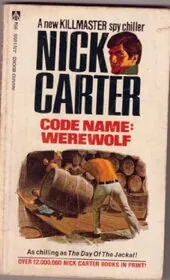
Code Name: Werewolf
by Nick Carter
1973
A message recovered from a plane crash reveals plans to assassinate Spain's ruler, General Franco. Nick Carter must track the professional killer known as Werewolf before the plot can turn political tension into a crisis.
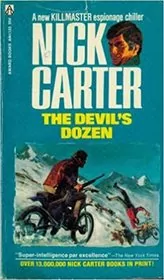
The Devil's Dozen
by Martin Cruz Smith
1973
Nick Carter, code-named N3, is sent to smash an international opium pipeline nicknamed the Devil’s Dozen. Chasing smugglers from seedy ports to chic resorts, he battles traffickers and traitors whose drug profits are funding a much wider and deadlier political game.
Nick Carter: Killmaster books in chronological order
Series background & context
Nick Carter: Killmaster is a long‑running shared‑world spy series about an American agent known only as N3. The books were written by many hands under the house name Nick Carter, and Martin Cruz Smith contributed a small but memorable handful in the early 1970s. On this page you will find the Carter adventures he wrote, alongside context for how they fit into the larger saga.
In the series mythology, Carter is a top field man for AXE, a shadowy U.S. intelligence agency that operates in the cracks between the CIA, State Department, and military. He is a classic Cold War hero, tough, resourceful, and unencumbered by much bureaucracy. Each assignment sends him to a different flashpoint, where he relies on a small arsenal of weapons, improvised gadgets, and whatever allies he can scrounge up.
The Inca Death Squad throws Carter into South American politics. Officially he is being “loaned” to the KGB to protect a visiting Soviet minister in Chile and to demonstrate a new bulletproof formal suit. Unofficially he is expected to keep the visit from triggering a coup that could tip the whole region into chaos. The set‑up lets Smith play with double games, awkward alliances, and the uneasy overlap between U.S. and Soviet interests.
The Devil’s Dozen follows an opium pipeline known as the “devil’s dozen,” with Carter tracking smugglers and middlemen whose drug profits are bankrolling broader campaigns of violence. Here the emphasis is on border crossings, seedy ports, and the way organized crime and intelligence work sometimes blur together. The pace is quick, the violence frank, and the tone closer to a men’s adventure novel than to a puzzle mystery.
Compared with the Arkady Renko books, these Carter entries are leaner and more openly pulpy, but you can still feel Smith’s eye for setting and secondary characters. Embassy staffers, small‑time cops, and local fixers all get a line or two that makes them feel specific instead of generic. There is also a hint of skepticism about official narratives, even when the plot moves in lockstep with Cold War expectations.
If you are curious about how a major crime writer handled shared‑universe spy fiction, these titles offer a brisk glimpse. They stand alone as self‑contained missions for Nick Carter, while also showing some of the skills Smith later used to such effect in his own series work.









Edited by
Software engineer whose passion for tracking book recommendations from podcasts inspired the creation of MRB.
Lead investor at 3one4 Capital whose startup expertise and love for books helped shape MRB and its growth.
Comments
Did we miss something? Have feedback?
Help us improve this page by sharing your thoughts