
Nicholas Everard Saga Books in Order
Part ofAlexander Fullerton Books in OrderThis page lists the Nicholas Everard Saga by Alexander Fullerton in order, with summaries, historical context, and simple reading guidance.
Last updated:
As an Amazon Associate, we earn from qualifying purchases (at no extra cost to you).
Nicholas Everard Saga books in publication order
9 books
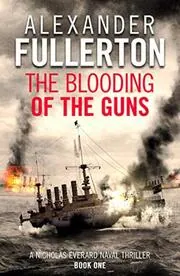
The Blooding of the Guns
by Alexander Fullerton
1976
At Jutland in 1916, young Nick Everard faces his first great test as the Royal Navy meets the German High Sea Fleet. The battle is vast, but Fullerton keeps it personal through fear, duty, and split-second decisions.
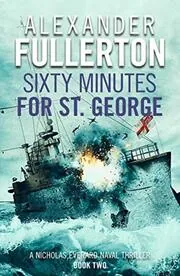
Sixty Minutes for St. George
by Alexander Fullerton
1977
After hard winter patrols in the Dover Strait, Nick Everard is pulled into the planning for the Zeebrugge Raid. The assault lasts only an hour, but Fullerton makes that hour feel enormous.
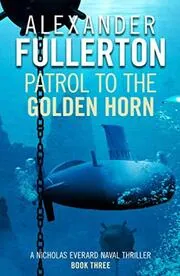
Patrol to the Golden Horn
by Alexander Fullerton
1978
Near the end of the First World War, Nick Everard is ordered on a near-suicidal submarine mission through the Dardanelles. The target is the German battlecruiser Goeben, and failure is almost easier to imagine than success.
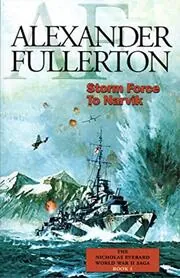
Storm Force To Narvik
by Alexander Fullerton
1979
During the German invasion of Norway, Nick Everard's destroyer is crippled under heavy fire and hidden in a fjord for repairs. As the war widens, father and son are drawn toward the same Arctic battle.
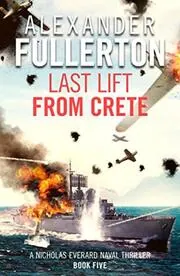
Last Lift from Crete
by Alexander Fullerton
1980
In May 1941, Nick Everard takes the destroyer Tuareg into waters ruled by Stuka bombers to evacuate troops, nurses, and a field hospital from Crete. The job is desperate, and miracle feels like the only plan left.
All the Drowning Seas
by Alexander Fullerton
1981
At Surabaya in 1942, Nick Everard commands the damaged cruiser Defiant in a battle he cannot win. Wounded, trapped, and responsible for a battered American destroyer as well, he has to find a way out of the Japanese net.

A Share of Honour
by Alexander Fullerton
1983
Paul Everard serves in the Mediterranean submarine Ultra, striking Axis shipping in a brutal undersea war. But the danger is not only his, as the wider Everard family is scattered across missions that could destroy them all.
The Torch Bearers
by Alexander Fullerton
2001
Nick Everard escorts a slow, vulnerable convoy in autumn 1942 with only a thin screen of protection around it. What the waiting U-boats do not know is that the convoy itself is bait in a much larger Allied plan.
The Gatecrashers
by Alexander Fullerton
2002
Mini-submarines head for Norway on a near-impossible mission to cripple the Tirpitz and other German warships. Commander Paul Everard faces the operation itself, while his father Nick knows failure could doom the convoys behind him.
Nicholas Everard Saga books in chronological order
Series background & context
The Nicholas Everard books are the heart of Alexander Fullerton's naval fiction. Across nine novels, the series follows Nick Everard from a young officer in the First World War into the much wider and harsher naval struggle of the Second. As the story grows, so does the cast around him, until the books become not just one man's career but a family war story told across decades.
It starts big and stays big.
The early novels, beginning with The Blooding of the Guns, place Nick in the middle of the great set-piece naval actions of 1916 to 1918. Jutland, the Zeebrugge Raid, and the dangerous waters around the Dardanelles give the series its first shape. In these books Nick is still learning what command feels like when real men may die because of one order, one hesitation, or one bit of bad luck.
Then the scope widens. When the series moves into the Second World War, the settings change fast and the pressure rises with them. Narvik, Crete, the Java Sea, the Mediterranean, convoy work, submarine warfare, and the Norwegian fjords all come into play. Nick is older by then, carrying more authority and also more weight. The books begin to include the next generation as well, especially Paul and Jack Everard, so the emotional center shifts from individual testing to family endurance.
That family angle is important. These are not nine disconnected battle novels with the same name on the cover. They are linked by the way war keeps touching the same people in different forms. One man may be escorting convoys while another serves below the surface, and both are still living under the same long strain. Fullerton uses that structure well because it lets him show how naval war changes over time, from dreadnought actions to submarines, aircraft, deception, and combined operations.
The ships change. The pressure does not.
Another strength of the series is how concrete it feels. Fullerton is very good on charts, damage, gunnery, fuel, repairs, convoy spacing, poor weather, and the exhausting business of keeping men effective when they are cold, frightened, and sleep-starved. He never loses sight of the technical side, but it rarely feels like research for its own sake. The detail is there because it is part of the danger.
The tone is serious, steady, and grounded in professional competence. Nick Everard is brave, but he is not written as a superhero. He wins by judgment, stamina, and an ability to keep functioning when almost everybody around him is under too much pressure. If you want Fullerton at full stretch, this is the series that shows why so many readers stayed with him for years.











Edited by
Software engineer whose passion for tracking book recommendations from podcasts inspired the creation of MRB.
Lead investor at 3one4 Capital whose startup expertise and love for books helped shape MRB and its growth.
Comments
Did we miss something? Have feedback?
Help us improve this page by sharing your thoughts