
Nathaniel Hawthorne Books in Order
Explore Nathaniel Hawthorne books in order, with quick summaries of the novels, tales, and notebooks, plus help choosing the best place to start.
Last updated:
As an Amazon Associate, we earn from qualifying purchases (at no extra cost to you).
Nathaniel Hawthorne books in publication order
93 books
Fanshawe
by Nathaniel Hawthorne
1828
Hawthorne's first novel, set at a college modeled on Bowdoin, follows shy scholar Fanshawe, spirited Ellen Langton, and a looming abduction plot. You can already see his interest in secrecy, moral testing, and brooding atmosphere.

My Kinsman Major Molineux
by Nathaniel Hawthorne
1831
A young man comes to the city expecting help from his powerful relative, only to walk into a night of confusion, humiliation, and political unrest. The story is funny, cruel, and strangely dreamlike.
The Devil in Manuscript
by Nathaniel Hawthorne
1835
A darkly comic story about a frustrated writer who tries to destroy an unpublishable manuscript, only for the act to unleash chaos. It is Hawthorne poking fun at authorship, pride, and the strange life of fiction.

Young Goodman Brown
by Nathaniel Hawthorne
1835
Goodman Brown enters the forest one night and begins to suspect that evil runs through every corner of his community. It is one of Hawthorne's darkest tales about faith, hypocrisy, and the terror of losing trust.

The Minister's Black Veil
by Nathaniel Hawthorne
1836
When Reverend Hooper suddenly begins wearing a black veil over his face, his whole town turns uneasy. Hawthorne uses the simple image to explore hidden sin, fear, and the distance between people who think they know one another.
Dr. Heidegger's Experiment
by Nathaniel Hawthorne
1837
Four elderly guests drink water said to restore youth, and their brief transformation reveals how little wisdom age has taught them. It is a sharp, eerie fable about vanity, regret, and second chances.

Dr. Heidegger's Experiment and Other Stories
by Nathaniel Hawthorne
1837
This collection centers on Hawthorne's famous tale of restored youth and rounds it out with other stories of vanity, secrecy, and moral testing. It is a solid sampler of his shorter work.
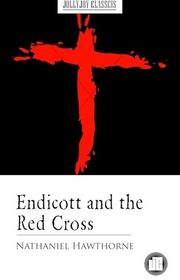
Endicott and the Red Cross
by Nathaniel Hawthorne
1837
In colonial Massachusetts, the stern John Endicott tears the English cross from a royal flag before a charged public crowd. Hawthorne turns the moment into a fierce study of rebellion, zeal, and Puritan resolve.

Twice-Told Tales
by Nathaniel Hawthorne
1837
Hawthorne's first major collection gathers many of his essential early stories and sketches, from historical legends to moral parables. It is the best place to see his short fiction taking shape.
Biographical Stories
by Nathaniel Hawthorne
1842
This collection introduces younger readers to notable historical figures through short, readable life sketches. Hawthorne keeps the tone lively and clear, making biography feel closer to storytelling than classroom recitation.

The Birthmark
by Nathaniel Hawthorne
1843
A gifted scientist becomes obsessed with removing the tiny mark on his wife's face that he sees as her one imperfection. Hawthorne turns that obsession into a chilling story about control, beauty, and the danger of idealizing perfection.

Earth's Holocaust
by Nathaniel Hawthorne
1844
Humanity gathers for a vast bonfire meant to burn away old institutions, customs, and sins. Hawthorne's strange allegory asks whether evil can really be destroyed by reforming the world around us.

Rappaccini's Daughter
by Nathaniel Hawthorne
1844
In Padua, a young student falls for Beatrice, the secluded daughter of a scientist who has filled his garden with poisonous plants. Love, science, and innocence all curdle in this haunting gothic tale.

Mosses from an Old Manse
by Nathaniel Hawthorne
1846
Written around his Concord years, this collection includes some of Hawthorne's best tales, mixing village sketches, allegories, and darker stories. It is quieter than a novel but just as revealing of his world.

Tales of the White Mountains
by Nathaniel Hawthorne
1846
These stories and sketches draw on the White Mountains as a place of awe, danger, and legend. Hawthorne uses the landscape to frame ambition, fear, and the sublime.
The New Adam and Eve
by Nathaniel Hawthorne
1846
After an unexplained catastrophe empties the world, a new man and woman wander through the remains of civilization. Hawthorne uses the premise to ask what human life looks like when society starts over.
The Scarlet Letter
by Nathaniel Hawthorne
1850
In rigid Puritan Boston, Hester Prynne is forced to wear the scarlet A after bearing an illegitimate child. Hawthorne turns her public shame into a powerful story about guilt, hypocrisy, and moral courage.

A Wonder-Book for Girls and Boys
by Nathaniel Hawthorne
1851
Hawthorne retells Greek myths for young readers, turning old stories into warm, conversational adventures. It remains one of his most approachable and family-friendly books.

Greek Myths
by Nathaniel Hawthorne
1851
This volume gathers Hawthorne's child-friendly retellings of classical myths, including Midas, Pandora, Persephone, and more. They are simpler than the originals but still full of wonder.

Tanglewood Tales
by Nathaniel Hawthorne
1851
In this sequel to his earlier myth book, Hawthorne retells Greek legends for children with a lighter touch and a relaxed storytelling frame. Adventure and moral lessons sit side by side.
The Blithedale Romance
by Nathaniel Hawthorne
1851
Narrated by Miles Coverdale, this novel follows an idealistic farming commune whose reform dreams tangle with jealousy, secrecy, and desire. Hawthorne draws on Brook Farm to show how noble causes can still fail human hearts.

The Golden Touch
by Nathaniel Hawthorne
1851
Hawthorne retells the Midas story for younger readers, following a king whose wish for endless gold becomes a curse. It is a simple, memorable lesson about greed and what really matters.
The House of the Seven Gables
by Nathaniel Hawthorne
1851
In a decaying Salem mansion shadowed by an old wrong, the Pyncheon family lives under the weight of history. This gothic romance mixes curse, inheritance, and the hope that kindness can break a long pattern of harm.
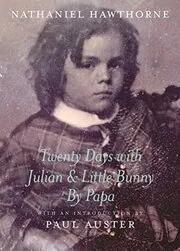
Twenty Days with Julian and Little Bunny by Papa
by Nathaniel Hawthorne
1851
Drawn from Hawthorne's journal, this charming diary records a few weeks alone with his young son Julian and a pet rabbit. It shows the severe classic author in a warmer, funnier, more domestic light.
Life of Franklin Pierce
by Nathaniel Hawthorne
1852
Hawthorne's campaign biography of his college friend Franklin Pierce presents the future president as dutiful, steady, and public-spirited. It is as revealing for Hawthorne's politics and loyalties as for Pierce himself.
The Marble Faun
by Nathaniel Hawthorne
1860
In Rome, four artists and dreamers, Miriam, Hilda, Kenyon, and Donatello, are drawn into a dark moral crisis. Hawthorne blends art, innocence, guilt, and old-world atmosphere in one of his strangest novels.

Our Old Home
by Nathaniel Hawthorne
1863
Drawn from Hawthorne's years in England, these essays and sketches mix travel writing, social observation, and homesick comparison. He is attentive to buildings, class, custom, and the uneasy feeling of being both visitor and judge.

From the Snow Image
by Nathaniel Hawthorne
1864
Two children build a snow girl so lovingly that she seems almost to come alive. Hawthorne turns a winter game into a tender, slightly uncanny story about imagination and loss.

The Celestial Railroad and Other Stories
by Nathaniel Hawthorne
1864
This collection joins Hawthorne's satire of spiritual shortcutting with other tales of moral confusion and uneasy revelation. It is one of the better places to meet his allegorical side.
Passages from the English notebooks of Nathaniel Hawthorne
by Nathaniel Hawthorne
1873
This volume gathers Hawthorne's observations from his years in England, from daily scenes to historical reflections. The notebook form lets you watch his fiction-making mind at work in real time.
Doctor Grimshawe's Secret; A Romance ..
by Nathaniel Hawthorne
1882
This posthumous, unfinished romance centers on the grim Doctor Grimshawe and the children in his care, Ned and Elsie. Graveyards, hidden identities, and an old secret give the story its haunted, half-finished pull.
The Ancestral Footstep
by Nathaniel Hawthorne
1882
This fragment sketches an English romance built around inheritance, a vanished heir, and a bloody footprint left at an ancestral house. Even unfinished, it shows Hawthorne's fascination with family history and the past refusing to stay buried.

The Dolliver Romance
by Nathaniel Hawthorne
1883
This unfinished late romance follows the elderly apothecary Doctor Dolliver, his great-granddaughter Pansie, and the tensions around a mysterious household. It mixes domestic warmth with secrets, greed, and Hawthorne's usual moral haze.
The American Notebooks
by Nathaniel Hawthorne
1932
Hawthorne's journals from the United States collect sketches, story seeds, landscapes, and overheard details that later fed his fiction. They are a rich backstage look at how he turned ordinary scenes into unsettling art.
The Complete Novels and Selected Tales of Nathaniel Hawthorne
by Nathaniel Hawthorne
1937
A broad omnibus bringing together Hawthorne's major novels with a representative handful of shorter fiction. It is a convenient one-volume introduction to his range.

Hawthorne's Short Stories
by Nathaniel Hawthorne
1955
This selection gathers many of Hawthorne's strongest short works, including his darker New England tales and symbolic moral fables. It is a handy starting point if you want the essentials without a huge volume.

Selected Tales and Sketches
by Nathaniel Hawthorne
1959
This curated selection balances Hawthorne's best-known stories with reflective sketches and historical pieces. It shows how easily he moved between plot-driven tale and atmospheric meditation.

The Complete Short Stories of Nathaniel Hawthorne
by Nathaniel Hawthorne
1959
An expansive collection of Hawthorne's shorter fiction, from famous classroom staples to quieter sketches. It is best for readers who want the full sweep of his imagination.

The Complete Greek Stories
by Nathaniel Hawthorne
1963
This volume gathers Hawthorne's myth retellings from A Wonder-Book for Girls and Boys and Tanglewood Tales into one place. It is ideal for readers who want the whole classical side of his work.

Twice-Told Tales and Other Short Stories
by Nathaniel Hawthorne
1964
This volume combines Hawthorne's early collection with additional tales, giving readers a fuller look at his legends, parables, and New England unease. It works well as both sampler and core collection.

Selected Short Stories of Nathaniel Hawthorne
by Nathaniel Hawthorne
1966
A compact introduction to Hawthorne's short fiction, built around the stories that made his reputation. Expect moral ambiguity, symbolic detail, and a lingering chill.

The Paradise of Children
by Nathaniel Hawthorne
1967
Hawthorne retells the story of Pandora for young readers, beginning in a bright world that curiosity helps change forever. It has the ease of a bedtime story and the sting of an old warning.

Great Stone Face
by Nathaniel Hawthorne
1970
Ernest grows up beneath a mountain profile said to foretell a great man. Hawthorne makes his patient, idealistic search into a gentle fable about character, fame, and becoming what you admire.

The Scarlet Letter and Selected Tales
by Nathaniel Hawthorne
1970
This edition pairs Hawthorne's best-known novel with shorter pieces that echo its concerns with guilt, secrecy, and judgment. It is a useful bridge between his long and short fiction.

Letters of Hawthorne to William D. Ticknor, 1851-1864
by Nathaniel Hawthorne
1972
Hawthorne's letters to his publisher William D. Ticknor mix business, friendship, travel, and literary life. Together they offer a clear picture of how a major American writer worked behind the scenes.

Love Letters Of Nathaniel Hawthorne, 1839 1863
by Nathaniel Hawthorne
1972
These letters trace Hawthorne's long, intimate correspondence with Sophia Peabody across courtship, marriage, and family life. The volume shows a more affectionate and playful voice than many readers expect.

The Great Short Works of Nathaniel Hawthorne
by Nathaniel Hawthorne
1977
This anthology gathers major stories, sketches, and shorter novels or excerpts in one readable volume. It is a smart choice for readers who want the highlights without collecting separate books.
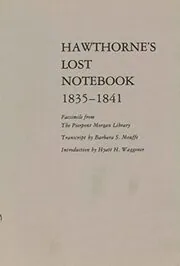
Hawthorne's Lost Notebook
by Nathaniel Hawthorne
1978
This recovered notebook gathers fragments, observations, and early materials that deepen the record of Hawthorne's creative life. It is most interesting for readers who like drafts, false starts, and the raw texture of an author's mind.
Septimius Felton
by Nathaniel Hawthorne
1978
In this unfinished late romance, Septimius becomes obsessed with a recipe for the elixir of life. Hawthorne turns that quest for immortality into a moody story about ambition, knowledge, and the cost of refusing limits.

The Scarlet Letter and Other Writings
by Nathaniel Hawthorne
1978
Alongside The Scarlet Letter, this edition offers additional fiction or essays that place the novel in the wider shape of Hawthorne's work. It is helpful if you want context with the classic.

Haunting Tales
by Nathaniel Hawthorne
1980
A themed selection of Hawthorne's eerier stories, where guilt, secrecy, uncanny events, and New England shadows do most of the work. Good if you want his gothic side front and center.

The Ambitious Guest and Lady Eleanore's Mantle
by Nathaniel Hawthorne
1980
This paired edition joins two Hawthorne tales, one about a traveler facing doom in the White Mountains, the other about pride and punishment in colonial Boston. Both show his gift for moral drama under pressure.

Selected Stories
by Nathaniel Hawthorne
1982
This volume offers a concise doorway into Hawthorne's tale-telling, bringing together some of his most enduring shorter pieces. You get the moral tension and strange atmosphere without committing to a complete collection.
Hawthorne's American Travel Sketches
by Nathaniel Hawthorne
1990
These travel sketches collect Hawthorne's sharp observations of places, people, and regional life in the United States. They sit between journalism and fiction, full of local color and the moral shadows he never quite stops seeing.

Rappaccini's Daughter, And Other Tales
by Nathaniel Hawthorne
1991
Built around one of Hawthorne's finest gothic stories, this collection pairs poisonous beauty with other tales of obsession, secrecy, and moral danger. It is an especially dark sampler.
Florida Stories
by John Miller, Larry McMurtry, Dave Barry, Elmore Leonard, Ernest Hemingway, John D MacDonald, Damon Runyon, Isaac Bashevis Singer, Nathaniel Hawthorne, Stephen Crane, Zora Neale Hurston, Elizabeth Bishop, Tennessee Williams, Alison Lurie, Wallace Stevens, John Sayles, John James Audubon, Joy Williams, Joan Didion, Kirsten Miller & William Bartram
1993
Edited by John and Kirsten Miller, this literary collection brings together fiction and nonfiction set in Florida. Selections by writers including Joan Didion, Zora Neale Hurston, and Dave Barry offer varied perspectives on the state’s history, landscape, and cultural contradictions.

The Three Golden Apples
by Nathaniel Hawthorne
1993
Hawthorne retells one of Hercules' labors with humor, adventure, and plenty of storytelling warmth. It is a lively children's version of a myth about strength, cunning, and impossible tasks.

Selected Works of Nathaniel Hawthorne
by Nathaniel Hawthorne
2002
A broad selection that usually mixes novel excerpts, tales, sketches, and possibly essays. It is meant to show Hawthorne as more than just the author of one famous classroom novel.

Main-Street
by Nathaniel Hawthorne
2005
More pageant than plot, this long sketch walks through the history of a New England street and the people who shaped it. Hawthorne treats local history like a series of living scenes passing before the eye.

Sights from a Steeple
by Nathaniel Hawthorne
2005
From the top of a church steeple, the narrator watches a town spread out below in sunlight, motion, and weather. The sketch is light on plot but rich in mood and shifting perspective.
Snowflakes
by Nathaniel Hawthorne
2005
This winter sketch moves from falling snow to children's play and the strange beauty of cold weather. Hawthorne treats the season as both familiar and faintly magical.

The Christmas Banquet
by Nathaniel Hawthorne
2005
Several men gather for a yearly dinner to honor the one guest among them who has been the unhappiest. It is a melancholy, reflective tale about memory, sorrow, and the strange fellowship of pain.

The Magic Pitcher
by Nathaniel Hawthorne
2005
In this retelling of Baucis and Philemon, a humble couple welcomes mysterious strangers and finds their kindness richly rewarded. Hawthorne keeps the lesson clear without losing the wonder of the myth.
The Old Apple-Dealer
by Nathaniel Hawthorne
2005
Hawthorne pauses over the quiet figure of an elderly apple seller and the life suggested by his worn routine. It is a small, humane sketch about labor, age, and unnoticed dignity.

The Hawthorne Collection
by Nathaniel Hawthorne
2008
This omnibus gathers a range of Hawthorne's fiction in one place, likely mixing novels, tales, and sketches. It is a convenient bundle for readers who want plenty to browse.

Legends of the Province House and Other Twice-Told Tales
by Nathaniel Hawthorne
2009
This collection highlights Hawthorne's historical Boston tales alongside other early short fiction. Expect old buildings, political memory, and a lingering sense that the past is still in the room.

Sunday at Home
by Nathaniel Hawthorne
2009
A calm Sunday indoors becomes an occasion for memory, observation, and gentle meditation. This is one of Hawthorne's quieter domestic sketches, more atmosphere than plot.

The House of the Seven Gables and Other Tales
by Nathaniel Hawthorne
2009
This edition combines Hawthorne's great haunted-house novel with additional shorter fiction that shares its interest in inheritance, guilt, and the burden of old New England.

In Colonial Days
by Nathaniel Hawthorne
2010
This collection gathers Hawthorne's historical tales set in early New England, where governors, rebels, ministers, and ordinary townspeople share the stage. It is a readable doorway into his favorite historical ground.

Myths That Every Child Should Know
by Nathaniel Hawthorne
2011
This volume offers classic myths in a form meant for younger readers, with clear storytelling and memorable lessons. It fits well beside Hawthorne's own myth retellings for children.

Puritan Passions
by Nathaniel Hawthorne
2011
This Hawthorne volume leans into his darker New England imagination, where desire, pride, and religious severity drive the conflict. Expect moral tension, gothic atmosphere, and no easy innocence.

The Birthmark & Five Other Tales
by Nathaniel Hawthorne
2013
A slim selection led by Hawthorne's chilling story of perfection gone wrong. The companion tales usually deepen the same mix of symbolism, moral pressure, and unease.
The French and Italian Note-Books
by Nathaniel Hawthorne
2013
Written during Hawthorne's European years, these notebooks record museums, cities, ruins, and passing impressions in France and Italy. They show how travel broadened his eye without dulling his taste for mystery.
The Wedding-Knell
by Nathaniel Hawthorne
2013
An elderly bride and bridegroom marry at last in a ceremony overshadowed by age, memory, and death. Hawthorne turns the event into an eerie reflection on hope that arrives too late.
David Swan
by Nathaniel Hawthorne
2014
A tired young traveler falls asleep by the roadside while life-changing chances pass within arm's reach. Hawthorne turns the missed encounters into a neat meditation on chance and unseen fate.
The Gray Champion
by Nathaniel Hawthorne
2014
Set during the colonial crisis of 1689, this tale imagines a mysterious old Puritan stepping forward to challenge tyranny in Boston. It reads like a legend about resistance, history, and the sudden return of buried courage.
The Shaker Bridal
by Nathaniel Hawthorne
2014
Set in a Shaker community, this tale weighs spiritual discipline against human feeling and attachment. Hawthorne is interested less in satire than in what happens when belief tries to master desire.
The Wayside
by Nathaniel Hawthorne
2014
Framed at Hawthorne's Concord home, this piece opens a circle of mythic storytelling with an easy, conversational touch. It works as a welcoming doorway into the tales that follow.
The Antique Ring
by Nathaniel Hawthorne
2015
This unfinished tale-in-a-tale begins with an old ring and opens toward legend, inheritance, and romance. Even in fragment form, it shows Hawthorne's taste for objects heavy with history.
The Pomegranate Seeds
by Nathaniel Hawthorne
2015
Hawthorne retells the Persephone story for young readers, tracing loss, longing, and the bargain that binds her to the underworld. The result is gentle, sad, and easy to follow.
Grandfather's Chair
by Nathaniel Hawthorne
2016
Hawthorne retells New England history for younger readers through stories framed around an old chair and a listening family. It is part history book, part fireside storytelling, with a strong sense of place and memory.

The Light and the Lure
by Nathaniel Hawthorne
2016
This lesser-known Hawthorne piece turns on temptation, appearance, and the pull of what shines at a distance. It carries his usual interest in moral choice and inward struggle.

True Stories from New England History, 1620-1803
by Nathaniel Hawthorne
2016
Hawthorne turns colonial and early American history into brisk narrative for younger readers. The book highlights famous figures, conflicts, and turning points without losing the feeling of a story being told aloud.

Legends of the Province House
by Nathaniel Hawthorne
2017
These linked tales look back to colonial Boston and the old Province House, where rumor, politics, and ghostly memory blur together. Hawthorne uses the setting to turn local history into something almost supernatural.

Circe's Palace
by Nathaniel Hawthorne
2018
Hawthorne retells Odysseus's meeting with Circe for younger readers, with transformed sailors, a dangerous enchantress, and a hero who must keep his wits. The myth stays adventurous but approachable.
Hawthorne's First Diary
by Nathaniel Hawthorne
2018
This early diary offers a rare glimpse of Hawthorne before fame, with the habits, observations, and moods of a young writer in formation. It is slight but revealing.

Little Daffydowndilly and Other Stories
by Nathaniel Hawthorne
2018
This children's collection includes playful and gently moral tales, often centered on youthful wishes, lessons, and imagination. It shows Hawthorne in a lighter mode than the darker famous stories.

Tales, Sketches, and Other Papers
by Nathaniel Hawthorne
2018
This broad collection gathers fiction with essays and short prose pieces, showing how easily Hawthorne moved between storytelling and reflection. It is useful for readers who want a fuller sense of his prose world.

The Gentle Boy
by Nathaniel Hawthorne
2018
Set amid Puritan persecution of Quakers, this story follows a gentle child caught in the cruelty of adults and institutions. It is one of Hawthorne's most openly sympathetic tales.
Chiefly About War Matters
by Nathaniel Hawthorne
2019
Hawthorne's Civil War essay blends travel writing, political unease, and close observation from a visit to Washington and the front. It is thoughtful, skeptical, and unusually direct for him.

Septimius Felton, or, The Elixir of Life
by Nathaniel Hawthorne
2019
This version of Hawthorne's unfinished romance follows Septimius as he pursues a secret formula for immortality. The elixir gives the story its eerie center, but the real subject is what ambition does to a soul.

The Snow Image: and Other Twice-Told Tales
by Nathaniel Hawthorne
2019
This later collection pairs the tender title story with a range of Hawthorne's mature short fiction. It moves from childlike wonder to some of his darkest moral pieces.
True Stories from History and Biography
by Nathaniel Hawthorne
2019
This collection gathers short historical and biographical pieces written to interest younger readers. Hawthorne keeps the focus on vivid episodes and human character rather than dry fact lists.
Where to start with Nathaniel Hawthorne
If you want the classic place to begin: The Scarlet Letter
If you want gothic New England: The House of the Seven Gables → The Marble Faun
If you want Hawthorne's reform-world novel: The Blithedale Romance
If you want the best short, dark tales: Young Goodman Brown → The Minister's Black Veil → The Birthmark → Rappaccini's Daughter
If you want myth retellings for younger readers: A Wonder-Book for Girls and Boys → Tanglewood Tales
Nathaniel Hawthorne collections, short stories, and related book types
Short Stories/Novellas
Collections
Non-Fiction
Standalone Nathaniel Hawthorne books



by John Miller, Larry McMurtry, Dave Barry, Elmore Leonard, Ernest Hemingway, John D MacDonald, Damon Runyon, Isaac Bashevis Singer, Nathaniel Hawthorne, Stephen Crane, Zora Neale Hurston, Elizabeth Bishop, Tennessee Williams, Alison Lurie, Wallace Stevens, John Sayles, John James Audubon, Joy Williams, Joan Didion, Kirsten Miller & William Bartram
1993
Author bio
Nathaniel Hawthorne was born in Salem, Massachusetts, on July 4, 1804, and spent part of his boyhood in Salem and part in the wilder landscape around Raymond, Maine. Those two places stayed with him, the tight, watchful old town on one side, and woods, lakes, and solitude on the other.
He lost his father, a sea captain, when he was four. That early absence mattered. So did his family history. Hawthorne grew up knowing he was descended from John Hathorne, one of the Salem witch trial judges, and that burden of inherited guilt never really left his imagination.
At Bowdoin College he met Franklin Pierce and Henry Wadsworth Longfellow, but he was never the loudest man in the room. After graduating in 1825, he spent years writing quietly, publishing anonymously, and wondering if any of it would last. His first novel, Fanshawe, came out in 1828 and failed badly enough that he later tried to keep it out of sight.
Then the short stories began to find their shape.
Collections like Twice-Told Tales and Mosses from an Old Manse showed what Hawthorne could do better than almost anyone else of his time. He liked old houses, village rumors, uneasy consciences, and people who discover that one private choice can darken an entire life. Readers still come to him for stories like Young Goodman Brown, The Minister's Black Veil, The Birthmark, and Rappaccini's Daughter, which are short, strange, and much sharper than their age might suggest.
His adult life was never just about writing. He worked at custom houses in Boston and Salem, spent a short, unhappy spell at Brook Farm, married Sophia Peabody in 1842, and lived for a time at the Old Manse in Concord. That ordinary pressure to earn money, keep a household going, and make room for work sits behind a lot of his career.
In the burst of years after he lost his Salem Custom House job, he wrote the books most people know best: The Scarlet Letter, The House of the Seven Gables, and The Blithedale Romance. Later came The Marble Faun, written after years in Europe, and the children's myth books A Wonder-Book for Girls and Boys and Tanglewood Tales. What ties them together is less plot than mood. Hawthorne kept returning to guilt, secrecy, pride, religion, family history, and the way the past keeps leaning on the present.
He could be severe, but he wasn't only severe.
His notebooks and letters show a man who noticed everything: weather, gestures, rooms, overheard talk, the look of a road at dusk. They also show a more domestic Hawthorne than the schoolroom legend suggests, especially in the warm, funny pages later published as Twenty Days with Julian and Little Bunny by Papa.
He did not write fast, and he did not always write easily, but when he found the right form he was hard to forget.
In 1853, thanks to Franklin Pierce, Hawthorne became United States consul in Liverpool, a post that took him and his family abroad for several years. They traveled in England, France, and Italy before returning to Concord in 1860. His health declined in the last years of his life, and he died in Plymouth, New Hampshire, on May 19, 1864, while traveling with Pierce. He was buried in Concord, but his books never stayed still. They kept traveling, into classrooms, adaptations, and the long afterlife of American gothic fiction.

Edited by
Software engineer whose passion for tracking book recommendations from podcasts inspired the creation of MRB.
Lead investor at 3one4 Capital whose startup expertise and love for books helped shape MRB and its growth.
Comments
Did we miss something? Have feedback?
Help us improve this page by sharing your thoughts