
Nathan Englander Books in Order
Explore Nathan Englander books in order, with quick summaries, major novels and story collections, and simple guidance on where to start reading.
Last updated:
As an Amazon Associate, we earn from qualifying purchases (at no extra cost to you).
Nathan Englander books in publication order
8 books

For the Relief of Unbearable Urges
by Nathan Englander
1999
Englander's debut collection moves between Hasidic Brooklyn, wartime Europe, and Stalinist Russia with wit and nerve. These stories are often comic on the surface, but beneath them sits a steady ache about faith, longing, and belonging.
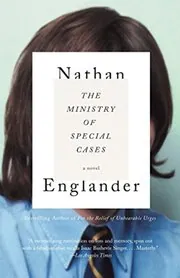
The Ministry of Special Cases
by Nathan Englander
2005
Set during Argentina's Dirty War, this novel follows Kaddish Poznan and his wife as they search for their disappeared son. Englander turns state terror and bureaucratic cruelty into a dark, intimate story about family, memory, and survival.
The Gilgul of Park Avenue
by Nathan Englander
2007
A polished Manhattan businessman suddenly becomes convinced he is an Orthodox Jew, and his tidy Park Avenue life starts to tilt. This strange, darkly funny story probes identity, marriage, and the surprising pull of belief.

What We Talk About When We Talk About Anne Frank
by Nathan Englander
2012
This collection brings together stories about marriage, memory, religion, and the uneasy weight of Jewish history. The title story, in which two couples play the Anne Frank game, sets the tone: funny, awkward, and quietly devastating.
The Twenty-Seventh Man
by Nathan Englander
2014
In this play, on the eve of Stalin's purge of Soviet Yiddish writers, an unknown young writer is swept into a prison cell with literary giants marked for death. Englander turns that locked room into a tense meditation on art, fear, and survival.
Peep Show
by Nathan Englander
2015
Allen Fein, a lapsed Jew with a pregnant non-Jewish wife waiting at home, makes one reckless stop in Times Square and runs into the last people he wants to see. The result is a funny, uneasy story about desire, shame, and old identities.
Dinner at the Center of the Earth
by Nathan Englander
2017
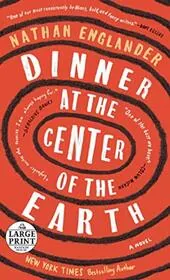
In a secret prison cell in the Negev, a nameless captive waits while an aging Israeli general lies dying. Englander builds a fractured, suspenseful novel about espionage, love, and the wreckage of the Israeli-Palestinian conflict.
Kaddish.com
by Nathan Englander
2019
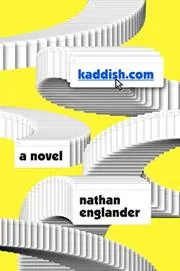
When his father dies, a secular Brooklyn son refuses the daily mourning prayer and hires a stranger online to say it for him. What starts as a joke turns into a sharp, funny, unexpectedly tender novel about grief, faith, and family.
Recommended by
1 person- Natalie Portman recommended this book
Natalie Portman
Natalie Portman shared this book on Instagram.
Natalie Portman's recommendation of this book
Where to start with Nathan Englander
If you want the short stories that made his name: For the Relief of Unbearable Urges → What We Talk About When We Talk About Anne Frank
If you want a dark historical novel: The Ministry of Special Cases
If you want political suspense: Dinner at the Center of the Earth
If you want a shorter, funny place to begin: Kaddish.com
Nathan Englander collections, short stories, and related book types
Plays
Short Stories/Novellas
Short Story Collections
Standalone Nathan Englander books
Author bio
Nathan Englander was born in 1970 in West Hempstead on Long Island and grew up in an Orthodox Jewish community where religion, argument, ritual, and storytelling were part of ordinary life. He attended the Hebrew Academy of Nassau County, later studied at SUNY Binghamton, and then went on to the Iowa Writers' Workshop. Those places gave him both deep familiarity with Jewish tradition and the literary tools to push against it, question it, and turn it into fiction.
He didn't arrive as a writer in a straight line.
While he was a student, and later while living in Jerusalem, stories started to take shape around the worlds he knew best and the histories that would not leave him alone. He has said that learning about Stalin's murder of Soviet Yiddish writers helped spark The Twenty-Seventh Man, the story that became a key part of his first book. After Iowa, he moved back to Jerusalem and spent about five years there, working odd jobs and writing before his debut arrived.
That debut, For the Relief of Unbearable Urges, came out in 1999 and quickly made clear what kind of writer he was. The collection moves from Hasidic Brooklyn to wartime Europe to Stalinist Russia, but the pressure point is often the same: what happens when private desire crashes into communal rules. Readers who love Englander usually point to the same mix, deadpan humor, moral unease, and real tenderness for people making bad or desperate choices.
Then he widened the frame.
In The Ministry of Special Cases, he turned to Argentina's Dirty War and built a family story out of disappearance, bureaucracy, and grief. Dinner at the Center of the Earth moved into the Israeli-Palestinian conflict, mixing prison-cell suspense, political argument, and a love story in a way that feels both knotted and intimate. Kaddish.com brought things back to Brooklyn with a sharper comic edge, following a secular son who tries to outsource mourning and learns that grief, faith, and family are harder to keep at arm's length than he thought.
His short fiction stayed central too. What We Talk About When We Talk About Anne Frank won the Frank O'Connor International Short Story Award and was a finalist for the Pulitzer Prize in 2013. Across those stories, and across his work more broadly, he keeps returning to people split between belief and doubt, old loyalties and newer freedoms, inherited fear and ordinary daily life. He writes a lot about Jews, but the real subject is often the mess of being human inside any system of obligation.
He also moved into theater. His play The Twenty-Seventh Man, adapted from his own story, premiered at the Public Theater in 2012. Englander has taught fiction at Hunter College and serves as Distinguished Writer in Residence at New York University. He lives in Brooklyn, New York, with his wife and daughter.
What makes his work stick is the tension inside it. The books can be very funny, then suddenly brutal. The settings are specific, Orthodox neighborhoods, Buenos Aires under terror, Jerusalem and the Negev, but the questions are plain and close to the bone: What do we owe the dead? What do we owe family? How much of ourselves can we shed before something essential goes missing? His body of work is not huge, which may be part of the appeal. Each book feels deliberate, argued over, and made to last.










Edited by
Software engineer whose passion for tracking book recommendations from podcasts inspired the creation of MRB.
Lead investor at 3one4 Capital whose startup expertise and love for books helped shape MRB and its growth.
Comments
Did we miss something? Have feedback?
Help us improve this page by sharing your thoughts