
Natalie Robins Books in Order
Browse Natalie Robins books in reading order, with short summaries for each book and a clear title list to help you find a starting point.
Last updated:
As an Amazon Associate, we earn from qualifying purchases (at no extra cost to you).
Natalie Robins books in publication order
8 books
The Peas Belong on the Eye Level
by Natalie Robins
1971
Natalie Robins’s poetry collection includes a sequence addressing Vietnam, racism, and political violence. These poems examine the distance between wartime suffering and a society continuing its ordinary routines, bringing public conflict into the language of everyday life.
Eclipse
by Natalie Robins
1981
Robins’s poems explore mortality through grief, remembered experience and the recurring patterns of the natural world. The collection places awareness of death alongside nature’s continuing cycles, considering how the past remains present in human life.
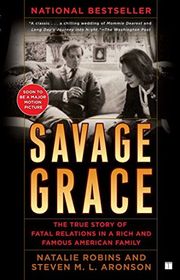
Savage Grace
by Natalie Robins
1985
Through interviews, diaries, letters and institutional records, Natalie Robins and Steven Aronson reconstruct the collapse of the wealthy Baekeland family. Their account follows Brooks, Barbara and their son Tony across an international social world marked by secrecy and violence.
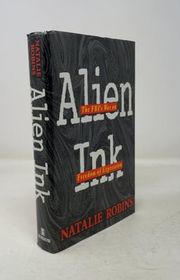
Alien Ink
by Natalie Robins
1992
Drawing on released FBI files and interviews, Natalie Robins investigates the bureau’s surveillance and intimidation of American writers. The account follows its efforts to police expression across decades, examining how political suspicion affected authors, journalists and readers.
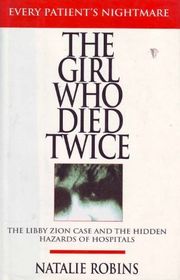
The Girl Who Died Twice
by Natalie Robins
1995
Natalie Robins reconstructs the death of eighteen-year-old Libby Zion and her father’s campaign for answers. Interviews with family members, hospital staff and medical experts examine the disputed treatment, ensuing legal battles and broader questions about hospital supervision.
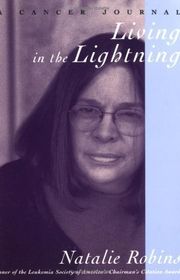
Living in the Lightning
by Natalie Robins
1999
Following her diagnosis with lymphoma, Natalie Robins records the questions, fears and ordinary decisions that accompany treatment. Expanded from her magazine journal, the book traces how illness changes her relationships and her understanding of daily life.
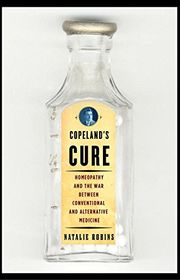
Copeland's Cure
by Natalie Robins
2005
Natalie Robins traces the history of homeopathy in America through its conflict with conventional medicine. At the center is physician and senator Royal Copeland, whose medical and political career helped shape the legal position of homeopathic remedies.
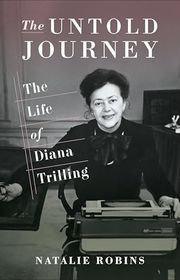
The Untold Journey
by Natalie Robins
2017
Using Diana Trilling’s archives, Natalie Robins reconstructs the critic’s intellectual career and private life. The biography examines her marriage to Lionel Trilling, contentious political positions and struggle to reconcile literary ambition with expectations surrounding marriage and motherhood.
Where to start with Natalie Robins
For true crime and family history: Savage Grace
For writers and FBI surveillance: Alien Ink
For Diana Trilling’s biography: The Untold Journey
For medicine and politics: Copeland's Cure
Standalone Natalie Robins books
Author bio
Natalie Robins writes nonfiction and poetry, with subjects ranging from a wealthy family's history to medical institutions and the lives of writers. Her books on this page are separate investigations and collections, so readers can choose a subject without following a sequence.
Savage Grace, written with Steven M. L. Aronson, is an oral-history account of the Baekeland family. The form brings different people's recollections into a story about private lives behind public wealth. Robins received an Edgar Allan Poe Award for the book, making it a starting point for readers interested in her true-crime work.
Literary freedom provides another direction.
Alien Ink examines the FBI's relationship with writers and freedom of expression. Its attention turns toward the power of an institution to watch, classify and interfere with people whose work depends on thinking and speaking freely. The book won the Hugh M. Hefner First Amendment Award.
Her medical nonfiction includes The Girl Who Died Twice, about the Libby Zion case and hospital safety, and Copeland's Cure. The latter traces homeopathy's contested place in American medicine through physician and senator Royal Copeland. His career brings professional disputes together with the political decisions that shaped the legal position of remedies.
The Untold Journey focuses on Diana Trilling. Drawing on her archives, Robins examines the critic's intellectual work, marriage to Lionel Trilling and difficulties balancing ambition with expectations about motherhood and being a wife. Political disagreement and private tension belong to the same life, rather than separate accounts of the public critic and the person at home.
The poetry offers a change of form.
Alongside the nonfiction, the page includes The Peas Belong on the Eye Level and Eclipse. For a first choice, Savage Grace offers family history and crime, Alien Ink literary and political investigation, and The Untold Journey a sustained biography of a critic whose private life complicates her public image.









Edited by
Software engineer whose passion for tracking book recommendations from podcasts inspired the creation of MRB.
Lead investor at 3one4 Capital whose startup expertise and love for books helped shape MRB and its growth.
Comments
Spotted a missing book, a wrong order or a mistake? Tell us and we'll fix this page.
We're a reading guide, not the author or publisher, so we can't send books or pass on messages.