
Mona Eltahawy Books in Order
Browse Mona Eltahawy’s books in order, with short summaries, reading guidance, and where to start with her feminist essays, manifestos, and commentary.
Last updated:
As an Amazon Associate, we earn from qualifying purchases (at no extra cost to you).
Mona Eltahawy books in publication order
2 books
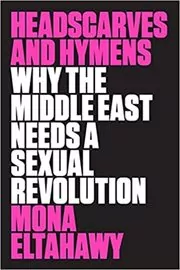
Headscarves and Hymens
by Mona Eltahawy
2014
Eltahawy blends reporting, personal experience, and feminist argument to examine how women across the Middle East and North Africa are controlled by political, cultural, and religious power. It is a direct, unsparing call for a sexual revolution.
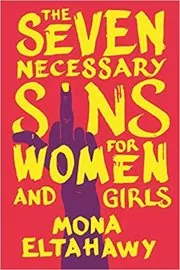
The Seven Necessary Sins for Women and Girls
by Mona Eltahawy
2019
This manifesto reframes anger, ambition, lust, profanity, attention, violence, and power as tools women and girls need, not traits they should hide. Drawing on personal stories and global examples, Eltahawy argues for fighting patriarchy rather than merely surviving it.
Where to start with Mona Eltahawy
If you want her foundational book on patriarchy in the Middle East and North Africa: Headscarves and Hymens
If you want her most direct manifesto for feminist resistance: The Seven Necessary Sins for Women and Girls
If you want the clearest reading path: Headscarves and Hymens → The Seven Necessary Sins for Women and Girls
Mona Eltahawy collections, short stories, and related book types
Non-Fiction
Author bio
Mona Eltahawy was born in Port Said, Egypt, in 1967, to parents who were both doctors. When she was seven, her family moved to the United Kingdom. At fifteen they moved again, this time to Saudi Arabia, and that sharp change in rules about gender, religion, and public life stayed with her.
She later returned to Egypt to study journalism at the American University in Cairo, earning degrees in mass communication in 1990 and 1992. Those Cairo years gave her a way back into Egypt after growing up abroad. Before she became known for bold opinion writing, she trained as a reporter and learned the habits of close observation, asking questions, and following power to the places where it does its quiet work.
One of her first jobs was with a dissident English-language newspaper in Egypt. She later worked for Reuters in Cairo and Jerusalem, reporting major stories around the Middle East. Those years gave her a close-up view of how governments, religion, and family expectations shape the everyday lives of women.
Journalism was the door in.
After moving to the United States in 2000, her writing took a more openly political turn. She has said that after 9/11 she no longer felt that straight news reporting was enough, especially when so few liberal and secular Muslim voices were being heard in public debate. Opinion writing let her argue back, and it let her bring more of herself onto the page. Her essays and op-eds later appeared widely, and she became a regular commentator on television and radio.
That shift brought a wider audience, but it also made the work more personal. Eltahawy has written and spoken about state violence, sexual harassment, religious policing, and the many ways patriarchy works both in public and at home. In 2011, while covering protests in Cairo, she was detained and sexually assaulted by Egyptian security forces, an ordeal that only sharpened her insistence that women’s bodies are political battlegrounds.
Her first book, Headscarves and Hymens, grew out of her widely discussed 2012 essay 'Why Do They Hate Us?'. It mixes reporting, memoir, and political argument to look at the treatment of women across the Middle East and North Africa. She followed it with The Seven Necessary Sins for Women and Girls, which widens the lens and argues that women are taught to fear qualities like anger, ambition, profanity, lust, attention, violence, and power, even when those very things can help them fight back. Readers who connect with Eltahawy usually come for the clarity and stay for the refusal to dress hard truths in soft language.
The page is only one part of the job.
That same mix of testimony and protest shows up in her activism. In 2018 she started #MosqueMeToo, encouraging Muslim women to speak about sexual harassment in sacred spaces, including during the hajj. She lives in New York and continues to write essays and commentary, speak publicly, and push on questions of bodily autonomy, sexual violence, faith, and power. Across everything she writes, the through line is simple: she is less interested in helping women adapt to unfair systems than in asking what it would take to tear those systems down.














Edited by
Software engineer whose passion for tracking book recommendations from podcasts inspired the creation of MRB.
Lead investor at 3one4 Capital whose startup expertise and love for books helped shape MRB and its growth.
Comments
Did we miss something? Have feedback?
Help us improve this page by sharing your thoughts