
Molière Books in Order
Explore Molière’s books and series in order, with short summaries and reading lists to help you find your next book and decide where to begin reading.
Last updated:
As an Amazon Associate, we earn from qualifying purchases (at no extra cost to you).
Molière books in publication order
18 books

The Flying Doctor
by Molière
1645
To escape an unwanted marriage, Lucile pretends to be ill while her lover’s servant poses as a doctor. His increasingly elaborate deceptions create a comic crisis when maintaining the disguise requires him to appear as two different people.

The Jealousy of le Barbouillé
by Molière
1650
Jealous Barbouille seeks help controlling his wife Angelique, but the pompous doctor he consults offers little practical advice. Their domestic conflict becomes a contest of deception as Angelique finds ways to outmaneuver her suspicious husband.
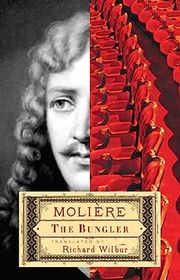
The Bungler
by Molière
1655
In Messina, two young men compete for Célie, who has been left with an old man as security for a loan. Resourceful servant Mascarille devises schemes to help his master win her, only for the master’s blunders to undo them.

The Love-Tiff
by Molière
1656
A romantic quarrel grows as jealousy, wounded pride and misread intentions turn small misunderstandings into larger conflicts. Interfering companions and concealed motives complicate attempts at reconciliation in a comedy about affection undermined by suspicion.
The Affected Young Ladies
by Molière
1659
Magdelon and Cathos dream of fashionable society and sophisticated admirers, filling their lives with affected manners and pretensions. When suitors confront their shallow expectations, their attempts to appear cultivated expose the vanity beneath their carefully managed appearances.

The School for Husbands
by Molière
1661
Brothers Ariste and Sganarelle take opposite approaches to raising two young women entrusted to them. While one allows freedom, the other plans to marry his tightly controlled ward, whose determination to choose her own husband sets a deception in motion.

Tartuffe
by Molière
1664
A religious impostor gains the confidence of Orgon, who welcomes him into his household and ignores his family’s warnings. As Tartuffe pursues wealth, marriage, and his host’s wife, those around him struggle to expose the hypocrisy beneath his pious manner.

The Forced Marriage
by Molière
1664
Determined to marry a younger woman, the aging Sganarelle begins to doubt whether his decision is wise. He consults philosophers, friends and fortune-tellers, but their conflicting advice leaves him increasingly anxious about the marriage he has planned.

Doctor Love
by Molière
1665
A young woman pretends to be ill so that she can marry the man she loves. Her deception brings the medical profession into a farcical courtship scheme, where supposed expertise proves less effective than the ingenuity of the lovers.

Don Juan, or the Stone Banquet
by Molière
1665
Don Juan has pursued pleasure across Europe, breaking promises and disregarding the people he hurts. As time begins to run out, his habitual defiance faces a reckoning in a dark comedy about a life spent refusing restraint.

Mélicerte
by Molière
1666
Young Myrtil loves Melicerte, but his father has already promised him to one of two nymphs. As the lovers seek permission to marry, an announcement from the king unsettles their hopes in this unfinished pastoral play.

The Misanthrope
by Molière
1666
Alceste condemns the hypocrisy and pretensions of polite society while remaining blind to his own faults. His growing irritation with everyone around him collides with his attachment to a woman whose social world embodies much of what he despises.
The Sicilian, or Love the Painter
by Molière
1667
Adraste longs to speak with Isidore, whose jealous guardian Don Pedro keeps her closely watched. With help from his resourceful servant Hali, he devises a disguise and a series of tricks to gain access to her.
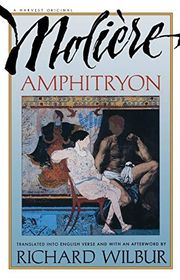
Amphitryon
by Molière
1668
Jupiter takes the absent general Amphitryon's appearance to pursue his wife, while Mercury impersonates the servant Sosia. The real men's return turns the gods' deception into a bewildering series of confrontations over identity, fidelity and authority.
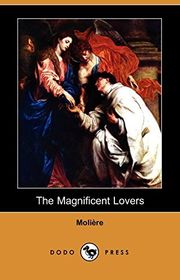
The Magnificent Lovers
by Molière
1670
Two princes compete to impress a princess and her mother with elaborate entertainments, while a general conceals his own love for her. Courtly ambition, differences of rank and an astrologer's influence complicate the contest for her affection.

Psyche
by Molière
1671
Psyche's beauty provokes Venus's jealousy, exposing the young woman to divine punishment. A mysterious lover offers happiness, but interference from her sisters threatens their relationship and draws her into further trials in this mythological verse drama.

The Countess of Escarbagnas
by Molière
1671
A provincial countess returns from Paris convinced of her elevated social standing. Her pretensions and the attentions of competing suitors expose the distance between her ambitions and reality in a comedy of status and fashionable behavior.
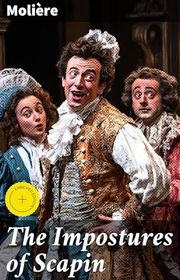
The Impostures of Scapin
by Molière
1671
Octave's father returns intending to arrange his marriage, threatening the young man's existing attachment. The resourceful servant Scapin intervenes with elaborate tricks, drawing two fathers and two pairs of lovers into an increasingly tangled comedy of deception.
Where to start with Molière
For trickery and farce: The Impostures of Scapin
For religious hypocrisy: Tartuffe
For honesty and social friction: The Misanthrope
For provincial social ambition: The Countess of Escarbagnas
Standalone Molière books
Author bio
Molière was the stage name of Jean-Baptiste Poquelin, the Paris-born playwright and actor whose comedies turn vanity, authority and self-deception into conflict. Born in 1622, he was the son of a royal upholsterer. He chose the theater and founded the Illustre-Théâtre with Madeleine Béjart and fellow actors in 1643, making performance central to his working life.
His plays were written to be spoken, interrupted and acted upon.
That practical energy is easy to find in The Impostures of Scapin. A servant's resourcefulness creates an elaborate series of tricks as young lovers try to escape the marriages their fathers intend for them. The comedy depends on the gap between parental authority and the information Scapin chooses to supply. It is a useful first play for readers who enjoy schemes, misunderstandings and a character who can keep several people moving in the wrong direction at once.
Tartuffe approaches deception through false piety. Orgon believes that a supposedly devout man should guide his household, while other family members see reasons to distrust the guest. The play makes hypocrisy a problem of who is allowed to recognize it: the person holding authority is also the person most reluctant to see the truth. Its history included bans before permission for performance in 1669, showing how contentious this particular comic target could be.
The Misanthrope turns toward a man whose objections to hypocrisy create difficulties of their own. Alceste wants honesty in a social world built around tact and flattering conversation, yet he loves Célimène, who belongs comfortably within that world. The result is not simply a contest between truth and lies. His demand for absolute sincerity also becomes something the audience must examine.
Molière's comedy can expose the critic as well as the person being criticized.
Social ambition supplies another clear example in The Countess of Escarbagnas. A provincial countess returns from Paris with an elevated idea of her importance, and her pretensions become visible through the people around her. In The School for Husbands, the title points toward another recurring question: what happens when someone assumes that authority gives them the right to manage another person's choices?
Molière performed before Louis XIV at the Louvre in 1658 and died in Paris in 1673. His plays can be read independently, with no sequence required. Start with The Impostures of Scapin for an energetic servant-led farce, Tartuffe for household conflict and religious hypocrisy, or The Misanthrope for a more uncomfortable encounter between conviction, love and social life.















Edited by
Software engineer whose passion for tracking book recommendations from podcasts inspired the creation of MRB.
Lead investor at 3one4 Capital whose startup expertise and love for books helped shape MRB and its growth.
Comments
Spotted a missing book, a wrong order or a mistake? Tell us and we'll fix this page.
We're a reading guide, not the author or publisher, so we can't send books or pass on messages.