
Mikhail Bulgakov Books in Order
Find Mikhail Bulgakov’s books in publication order, including The Master and Margarita, his satirical fiction, medical stories, diaries, and letters.
Last updated:
As an Amazon Associate, we earn from qualifying purchases (at no extra cost to you).
Mikhail Bulgakov books in publication order
17 books
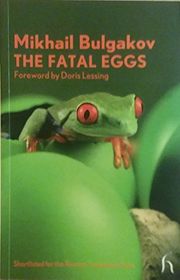
The Fatal Eggs
by Mikhail Bulgakov
1923
Zoologist Persikov discovers a ray that accelerates growth and reproduction just as a plague devastates Russia’s chickens. The state seizes his invention to restore poultry production, but a disastrous mistake unleashes a threat far beyond the laboratory.
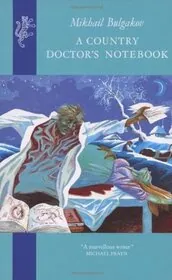
A Country Doctor's Notebook
by Mikhail Bulgakov
1925
Drawing on Bulgakov’s medical experiences, these stories follow a newly qualified doctor in remote Russian countryside before the Revolution. Difficult cases and overwhelming responsibility mix candid accounts of rural medicine with anxiety, humor, and youthful uncertainty.
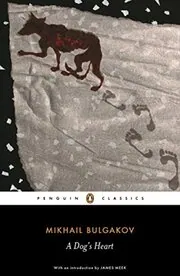
A Dog's Heart
by Mikhail Bulgakov
1925
A doctor’s experiment gives a stray dog human organs, transforming it into an unruly man. The creature’s disruptive behavior turns a scientific triumph into a grotesque satire of Soviet society, official ambition, and attempts to remake human nature.
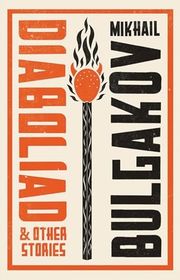
Diaboliad and Other Stories
by Mikhail Bulgakov
1925
After clerk Korotkov loses his job over a trivial mistake, his attempts to seek justice descend into a bewildering bureaucratic nightmare. Three accompanying stories explore the absurdity, violence, and confusion of life in revolutionary Russia.
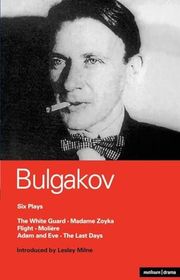
Six Plays
by Mikhail Bulgakov
1925
Six plays portray civil war refugees, ambitious schemers, artists under pressure, and people confronting political upheaval. From The White Guard and Flight to Molière and The Last Days, the collection explores how private lives collide with authority.
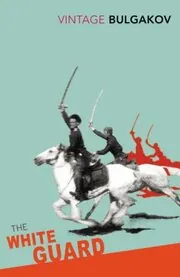
The White Guard
by Mikhail Bulgakov
1925
The Turbin family struggles to preserve its home and values in Kiev during the upheavals of 1918. Civil war dissolves familiar loyalties and institutions, bringing political chaos into an intimate story of siblings, friends, and survival.
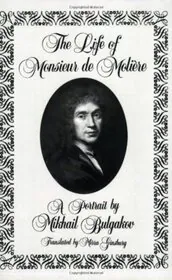
The Life of Monsieur de Molière
by Mikhail Bulgakov
1933
Bulgakov recreates the life of French playwright Molière in a narrative that blends biography with novelistic detail. His portrait follows artistic struggle and dedication while bringing the theatrical and social world of seventeenth-century France to life.
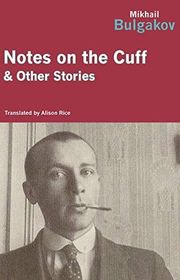
Notes on the Cuff and Other Stories
by Mikhail Bulgakov
1940
A young writer tries to begin his literary career amid civil war, hunger, illness, and political suspicion. These autobiographical sketches and accompanying stories follow his struggles with survival and the bewildering bureaucracy of Moscow’s cultural institutions.
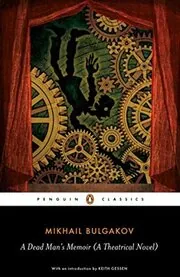
A Dead Man's Memoir
by Mikhail Bulgakov
1965
A failed novelist survives a suicide attempt and sees his work adapted for the stage. Entering the theatrical world brings a new set of absurd obstacles, exposing artistic rivalry and bureaucracy through a partly autobiographical satire.
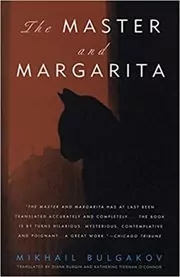
The Master and Margarita
by Mikhail Bulgakov
1967
The devil’s arrival disrupts Soviet Moscow, drawing a persecuted writer and his devoted lover into extraordinary events. Their story intertwines with ancient Jerusalem in a satirical novel about power, belief, artistic freedom, and enduring love.
Recommended by
6 people Peter Thiel recommended this book
Peter Thiel
"The devil shows up in Stalinist Russia, [...] and gives everybody what they want, and everything goes haywire." - Peter Thiel
 Jordan Peterson recommended this book
Jordan Peterson
"I read [this book] four times, and it's still unbelievably deep." - Jordan Peterson
 Jack Dorsey recommended this book
Jack Dorsey
"[One] of my favorite books." - Jack Dorsey
 Max Levchin recommended this book
Max Levchin
"One of the finest works of fiction of the last century." - Max Levchin
 PewDiePie recommended this book
PewDiePie
"A masterpiece." - PewDiePie
 Jack Edwards recommended this book
Jack Edwards
"Bizarre, but quite wonderful." - Jack Edwards
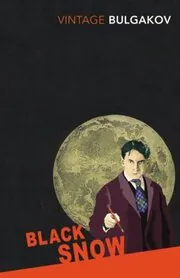
Black Snow
by Mikhail Bulgakov
1968
Failed novelist Maxudov’s work is chosen for production at the prestigious Independent Theatre. Feuding directors, quarrelsome actors, and the playwright’s insecurities turn rehearsals into chaos in Bulgakov’s comic portrait of the Soviet literary and theatrical establishment.
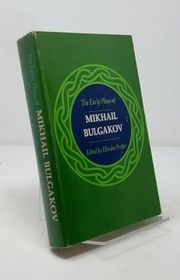
The Early Plays of Mikhail Bulgakov
by Mikhail Bulgakov
1972
Five plays follow families, refugees, performers, and schemers confronting the upheavals of revolutionary Russia and the demands of political authority. The collection brings together The Days of the Turbins, Zoya’s Apartment, Flight, The Crimson Island, and The Cabal of Hypocrites.
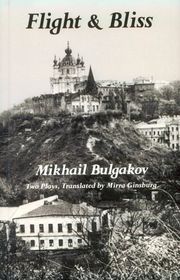
Flight and Bliss
by Mikhail Bulgakov
1985
Flight follows White Russian refugees wrestling with guilt, exile, and survival after civil war. In Bliss, an inventor’s time machine entangles its passengers with Ivan the Terrible and a distant future, turning scientific ambition into bureaucratic chaos.
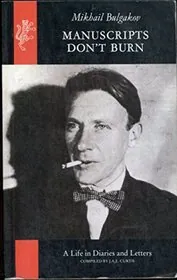
Manuscripts Don't Burn
by Mikhail Bulgakov
1991
Selections from Bulgakov’s correspondence and diary, alongside his wife Elena’s diary, document his life through personal records. The collection brings the writer’s experiences and relationships into view through accounts preserved by the couple themselves.

The Later Plays of M. Bulgakov
by Mikhail Bulgakov
2003
Five later plays place scientific inventions, historical figures, and political ambitions under satirical scrutiny. Adam and Eve, Bliss, Ivan Vasilievich, Last Days, and Batum explore the collision between individual lives and the forces of power.
Diaries and Selected Letters
by Mikhail Bulgakov
2013
Bulgakov’s letters and diary entries, with material from his wife Yelena, illuminate his private life and literary career. The selection records the pressures faced by an artist under Soviet rule during a turbulent period of Russian history.
Molière, or The Cabal of Hypocrites and Don Quixote
by Mikhail Bulgakov
2017
Bulgakov’s plays about Molière and Don Quixote examine the pressures placed on imagination and independence. Their artists and idealists confront hostile political forces, exposing the tensions between personal conviction, public authority, and the freedom to create.
Where to start with Mikhail Bulgakov
For the Moscow fantasy: The Master and Margarita
For stories rooted in medicine: A Country Doctor's Notebook
For a family amid civil war: The White Guard
For a portrait of a playwright: The Life of Monsieur de Molière
Standalone Mikhail Bulgakov books
Author bio
Mikhail Bulgakov was born in Kyiv in 1891 and trained as a doctor before becoming a novelist and playwright. He qualified in medicine in 1916, worked at a country hospital in Smolensk province and served as a doctor with the White Army during the civil war. That early life gave him experience of both medical responsibility and a society being violently remade.
Medicine remained a subject after he left the profession.
A Country Doctor's Notebook, also translated under the title A Young Doctor’s Notebook, draws on his work in a rural hospital. These stories offer a comparatively direct way into his writing, grounded in the pressure of treating patients with limited experience and resources. They also show why a reader should not expect all his books to resemble the supernatural comedy of The Master and Margarita. His range includes accounts of practical work as well as events that defy ordinary explanation.
He settled in Moscow in 1921, turning his attention to writing. The White Guard looks back toward Kyiv through the Turbin siblings, whose home and loyalties are threatened by civil war. Its domestic focus places large political changes beside the effort to keep a family’s life intact. A stage adaptation brought Bulgakov wider recognition, but political pressure and censorship increasingly restricted what he could publish or see performed.
The theater became one of his great subjects.
His fiction and plays repeatedly consider the artist’s position when public authority controls an audience’s access to the work. The Life of Monsieur de Molière approaches the French playwright as a fellow theater maker living under autocratic power. It is a historical portrait with the movement of a novel, and it belongs beside Bulgakov’s dramatic writing as another expression of his fascination with performance, dependence and artistic independence.
He worked on The Master and Margarita during the 1930s, when publication in the Soviet Union was not a realistic prospect. The novel brings Satan and a disruptive band of companions into Moscow, including a talking cat. Alongside the city’s comic upheavals runs the story of a writer and his work about Pontius Pilate. Its changing registers make room for farce, love, religious questions and the hazards of creating something that powerful people dislike. The absurdity is part of the story’s method, giving familiar institutions an unfamiliar, unsettling appearance.
Bulgakov died in 1940, long before that novel reached its first readers in print. A censored version appeared in installments in 1966 and 1967. That delayed history matters when looking at his bibliography: a date on an edition can sit decades beyond the writing or the author’s lifetime. For a first encounter, the medical stories, the civil-war family novel and the Moscow fantasy offer three distinct approaches to a writer whose work moves between an observer’s precision and a satirist’s freedom to make the impossible happen.












Edited by
Software engineer whose passion for tracking book recommendations from podcasts inspired the creation of MRB.
Lead investor at 3one4 Capital whose startup expertise and love for books helped shape MRB and its growth.
Comments
Spotted a missing book, a wrong order or a mistake? Tell us and we'll fix this page.
We're a reading guide, not the author or publisher, so we can't send books or pass on messages.