
Midgard Saga Books in Order
Part ofDon Ehrenhaft Books in OrderBrowse the Midgard Saga books in order by Don Ehrenhaft, with short summaries, series background, and a clear place to start reading.
Last updated:
As an Amazon Associate, we earn from qualifying purchases (at no extra cost to you).
Midgard Saga books in publication order
4 books
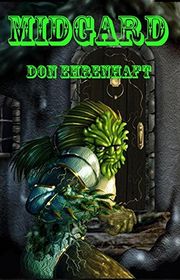
MIDGARD
by Don Ehrenhaft
2016
The first book in the Midgard Saga introduces Ehrenhaft’s Norse-inspired fantasy world. Begin here before Gateway, Orphan, and Nox to follow the series’ characters, hidden peoples, and growing conflict in order.
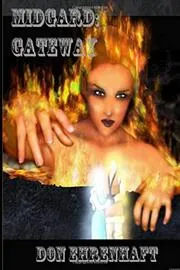
MIDGARD: Gateway
by Don Ehrenhaft
2017
The second Midgard Saga novel continues the story after MIDGARD, returning readers to its Norse-inspired fantasy world. Read it after the opener to follow the developing characters, dangers, and larger conflict in sequence.
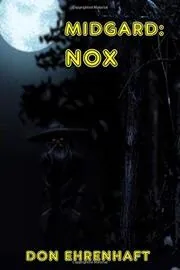
MIDGARD: Nox
by Don Ehrenhaft
2017
The final Midgard Saga novel brings the series toward Ragnarok. Read it after MIDGARD, Gateway, and Orphan to see the established conflicts and mysteries reach their intended conclusion.
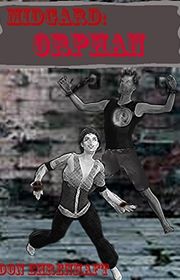
MIDGARD: Orphan
by Don Ehrenhaft
2017
As dwarves and giants contest Midgard, Tarin travels toward Alfheim and faces the dangers of Svartalheim. Kael McNaughton discovers he is one of the hidden creatures living unseen among humans, changing everything he thought he knew.
Midgard Saga books in chronological order
Series background & context
The Midgard Saga is Don Ehrenhaft’s four-book fantasy sequence, beginning with MIDGARD and continuing through MIDGARD: Gateway, MIDGARD: Orphan, and MIDGARD: Nox. It is best read in publication order. The books build on a shared world and an unfolding conflict, rather than working as separate adventures.
The setting takes its language and geography from Norse myth. Midgard is joined by places such as Alfheim and Svartalheim, and the story brings elves, dark elves, dwarves, giants, and other hidden beings into the picture. These names give the series a mythic frame, but the books use them for an original fantasy story rather than a straight retelling of old legends.
The world is under pressure.
In MIDGARD: Orphan, dwarves and giants are making competing claims on Midgard while Tarin is away on a journey linked to Alfheim. His path leads toward Svartalheim, a dangerous land associated with dark elves. At the same time, Kael McNaughton discovers that he is one of the creatures able to move among humans unnoticed, even in plain sight.
That combination gives the series two kinds of tension. There is the wider struggle over land, power, and the future of Midgard. There is also the more personal question of identity, especially for characters who learn that the ordinary world has never been the whole story. Tarin and Kael’s problems are tied to the larger setting, so discoveries about themselves can change what is possible for everyone around them.
Expect a quest-driven fantasy story with mythic locations, supernatural peoples, and dangers that grow as the series moves forward. The titles suggest a progression from entering the world and its mysteries in MIDGARD, through new crossings and revelations in Gateway and Orphan, toward the Ragnarok-focused final volume, Nox.
Start at the beginning.
Reading MIDGARD first gives the setting and its conflicts room to develop. From there, Gateway and Orphan deepen the journey through the different realms and bring hidden truths into view. Nox is positioned as the conclusion, so it will have the most impact after the earlier books have established the characters, places, and stakes.
For readers drawn to fantasy that uses Norse-inspired names and ideas without requiring prior knowledge of mythology, the Midgard Saga offers a short, complete run. Its four books are a good fit for anyone who wants an ongoing adventure rather than a single standalone tale.





Edited by
Software engineer whose passion for tracking book recommendations from podcasts inspired the creation of MRB.
Lead investor at 3one4 Capital whose startup expertise and love for books helped shape MRB and its growth.
Comments
Did we miss something? Have feedback?
Help us improve this page by sharing your thoughts