
Michael Cobley Books in Order
Explore Michael Cobley books in order, with reading order, short summaries, series guides for Humanity's Fire and Shadowkings, and easy starting points.
Last updated:
As an Amazon Associate, we earn from qualifying purchases (at no extra cost to you).
Michael Cobley books in publication order
9 books
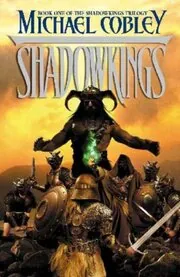
ShadowKings
by Michael Cobley
2001
Sixteen years after an empire falls to the Mogaun and their dark god, scattered survivors struggle to fight back. As the shattered Lord of Twilight begins to return through five mortal hosts, war and prophecy close in from every side.
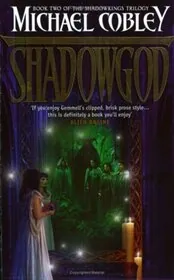
ShadowGod
by Michael Cobley
2003
A savage winter grips the broken empire as Tauric's forces prepare to meet the Mogaun in open war. Meanwhile Byrnak and the other Shadowkings are pulled deeper into the fate of the Lord of Twilight.
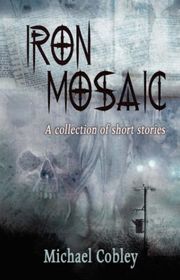
Iron Mosaic
by Michael Cobley
2004
This short story collection shows Cobley working across dark fantasy, science fiction, and stranger in-between territory. Ghostly viewpoints, icy landscapes, body-tech unease, and far-future speculation give the book a restless, wide-ranging feel.
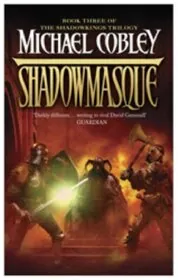
ShadowMasque
by Michael Cobley
2005
Three centuries after the Great Shadowking War, dread spreads through the empire as old horrors stir again. Corlek Ondene and the Order of Watchers are drawn into court intrigue, hidden identities, and a threat working its way back into the world.
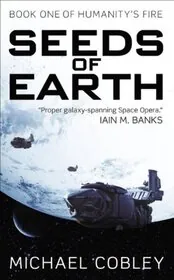
Seeds of Earth
by Michael Cobley
2009
After first contact nearly wipes out humanity, a lost colony world called Darien becomes the center of a vast interstellar struggle. Buried ruins, uneasy alliances, and ancient enemies turn one remote settlement into the key to survival.
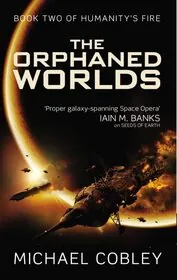
The Orphaned Worlds
by Michael Cobley
2010
Darien is no longer lost, and rival powers close in while Earth can barely intervene. As an ancient hyperspace prison and the threat inside it come into focus, a colonial dispute turns into the opening move of a much larger war.
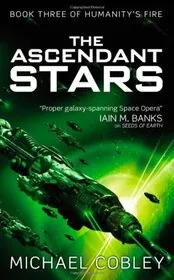
The Ascendant Stars
by Michael Cobley
2011
Darien is under siege from above and below as ancient machine enemies break loose and fleets gather overhead. The trilogy closes on a large-scale clash over whether organic life can hold its ground.
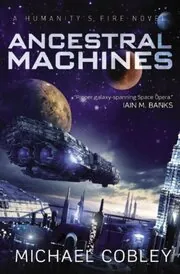
Ancestral Machines
by Michael Cobley
2015
When a smuggling job collapses, Captain Brannan Pyke and his crew are dragged into the Warcage, a brutal chain of worlds bound to an artificial sun. To get out alive, they must navigate tyranny, rebellion, and alien power games.

Splintered Suns
by Michael Cobley
2018
Pyke and his crew take on a museum heist that leads to a buried ancient starship and a prize everyone wants. Old rivals, desert hazards, and lost technology turn a simple theft into a fast-moving treasure hunt.
Where to start with Michael Cobley
If you want big space opera first: Seeds of Earth → The Orphaned Worlds → The Ascendant Stars
If you want more rogues in the same universe: Ancestral Machines → Splintered Suns
If you want dark epic fantasy: ShadowKings → ShadowGod → ShadowMasque
If you want a short sampler: Iron Mosaic
Michael Cobley sub-series and character series
Michael Cobley collections, short stories, and related book types
Collections
Author bio
Michael Cobley was born in Leicester in 1959, to an English father and a Scottish mother. His family spent a few years in Australia, but Scotland is where he really grew up. From the age of seven onward he lived in and around Glasgow, went to school in Clydebank, and later studied engineering at the University of Strathclyde.
University life seems to have pulled him in a few directions at once. He studied engineering, wrote a sharp, argumentative column for the student paper under the name Phaedrus, and worked as a DJ at the students' union. Politics, music, and speculative ideas all seem to have met there, which helps explain why his novels can feel both big in concept and very tuned in to how people behave under pressure.
Writing came into focus for him in the mid-1980s.
After publishing short fiction in small-press science fiction magazines, his first professional sale came in 1988, when the story Waltz in Flexitime appeared in Other Edens II. Another professional sale to Interzone followed in 1992. Those years were a long apprenticeship. He wrote short stories, tried a couple of novels that went nowhere, and kept going.
That persistence paid off with ShadowKings in 2001. ShadowGod and ShadowMasque followed, completing a dark fantasy trilogy built around ruined empires, hard campaigns, old magic, and the long aftershocks of conquest. He also gathered his shorter work in Iron Mosaic in 2004. ShadowMasque later picked up a British Fantasy Society award nomination, which was a clear sign that the trilogy had found its readers.
Then he changed lanes.
With Seeds of Earth, The Orphaned Worlds, and The Ascendant Stars, Cobley moved from war-torn fantasy into large-scale space opera. Readers who click with these books usually mention the same things: the sense of scale, the layered politics, the strange alien species, and the way machine intelligence is treated as something fascinating and dangerous rather than just a gadget. The series starts with humanity reeling from a disastrous first contact and only gets bigger from there.
He stayed in that universe for Ancestral Machines and Splintered Suns, but he did not just repeat himself. Ancestral Machines grew from an idea he had been carrying in note form for more than twenty-five years, and it opens up a different corner of the setting. Splintered Suns shifts even further toward rogues, heists, buried ships, and ancient tech. Same universe, different flavor.
Across both fantasy and science fiction, Cobley's books tend to return to a few things. He likes people caught inside very large systems, empires, wars, collapsing orders, machine networks, and old powers that refuse to stay buried. He also likes pressure. Soldiers, exiles, captains, diplomats, and survivors in his fiction usually have to make decisions before they have enough information, which gives the stories a steady forward drive.
Cobley has spent most of his life in Scotland and later settled in North Ayrshire. He has also been part of Glasgow's science fiction scene. What stands out across his work is how naturally he moves between battered fantasy landscapes and crowded galactic futures. The scenery changes. The interest in power, loyalty, and stubborn people trying to hold the line does not.








Edited by
Software engineer whose passion for tracking book recommendations from podcasts inspired the creation of MRB.
Lead investor at 3one4 Capital whose startup expertise and love for books helped shape MRB and its growth.
Comments
Did we miss something? Have feedback?
Help us improve this page by sharing your thoughts