
Max Beerbohm Books in Order
Browse Max Beerbohm books in order, with quick summaries, where to start, and notes on his essays, satire, fiction, and caricature collections.
Last updated:
As an Amazon Associate, we earn from qualifying purchases (at no extra cost to you).
Max Beerbohm books in publication order
43 books

A Defence of Cosmetics
by Max Beerbohm
1896
One of Beerbohm's earliest and best-known essays, this mock defense of rouge and makeup cheerfully overturns moral seriousness. It is a small manifesto of style, performance, and the pleasure of not sounding earnest.
Caricatures of Twenty-Five Gentlemen
by Max Beerbohm
1896
Beerbohm's first book of caricatures introduces the gift that made him famous as an artist. Writers and public figures from the 1890s appear in quick, exact portraits that are mocking, elegant, and surprisingly alive.
The Happy Hypocrite
by Max Beerbohm
1896
A disreputable dandy hides behind a saintly mask to win the innocent Jenny Mere. Beerbohm turns the conceit into a sly fairy tale about appearance, desire, and whether pretending can change a person's life.
Happy Hypocrite and Other Pieces
by Max Beerbohm
1897
This collection places Beerbohm's best-known fairy tale beside other short pieces that show his range. The mood shifts from playful fantasy to social satire, but the light touch and exact phrasing never disappear.
Yet Again
by Max Beerbohm
1909
A lively essay collection in which Beerbohm turns ordinary subjects, farewells, trains, elections, manners, even fire, into polished comedy. The pleasure is in the voice: amused, exact, and always a little sideways.

Cartoons: The Second Childhood of John Bull
by Max Beerbohm
1911
A set of political cartoons in which John Bull, and Britain with him, appears childish, touchy, and off balance. Prompted by the Boer War era, these drawings show a sharper and more openly political Beerbohm than usual.
Zuleika Dobson
by Max Beerbohm
1911
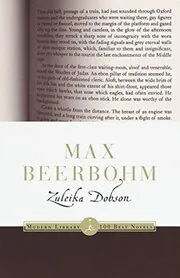
When the dazzling Zuleika arrives in Oxford, the university's undergraduates fall helplessly in love with her. Beerbohm turns that absurd premise into a dark, glittering satire about vanity, privilege, and the foolishness of mass devotion.
A Christmas Garland
by Max Beerbohm
1912
Seventeen Christmas-themed prose parodies let Beerbohm mimic the voices of major writers from his own time. The fun is not just in the imitation, but in how exactly he catches each author's habits of mind.
Fifty Caricatures
by Max Beerbohm
1913
This book gathers fifty caricatures of politicians, writers, actors, and artists from the early twentieth century. Beerbohm reduces each sitter to a few telling lines, then somehow makes the whole personality snap into view.
Enoch Soames
by Max Beerbohm
1916
Enoch Soames is a failed poet who cannot stop dreaming of future fame. In desperation he makes a bargain with the Devil, and Beerbohm turns literary vanity into one of the strangest and smartest stories of the period.

A. V. Laider
by Max Beerbohm
1919
A quiet seaside acquaintance slowly reveals a chilling story about palmistry, fear, and a railway disaster. Beerbohm keeps the tone calm and conversational, which only makes the uncertainty, and the unease, grow stronger.

James Pethel
by Max Beerbohm
1919
Beerbohm meets a gambler in Dieppe and finds himself fascinated by the man's charm, nerve, and hunger for risk. The result is a finely judged portrait of thrill-seeking that is admiring, skeptical, and quietly ominous.
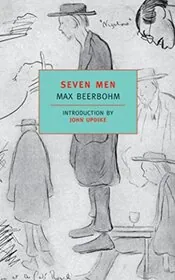
Seven Men
by Max Beerbohm
1919
This strange, elegant collection presents a gallery of half-real, half-invented men from the 1890s. Beerbohm blends memoir, social comedy, and fantasy, with unforgettable pieces like Enoch Soames, A. V. Laider, and James Pethel.
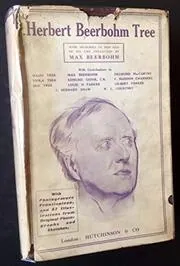
Herbert Beerbohm Tree
by Max Beerbohm
1920
Part memoir and part theatrical portrait, this book looks at the great actor-manager Herbert Beerbohm Tree through Max's affectionate but unsentimental eye. It captures both the man and the world of the Edwardian stage around him.
A Survey
by Max Beerbohm
1921
A book of fifty-two caricatures and humorous illustrations, many shaped by the atmosphere of the First World War years. Beerbohm ranges across public life, catching celebrities and statesmen in poses that gently undo them.
And Even Now
by Max Beerbohm
1921
A later essay collection, quieter and more reflective than Beerbohm's early work but just as sharp. He writes about memory, habits, travel, writing, and small embarrassments with wit that never feels forced.
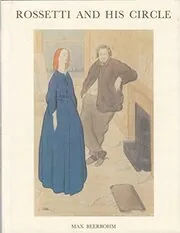
Rossetti and His Circle
by Max Beerbohm
1922
A sequence of caricatures devoted to Dante Gabriel Rossetti and the Pre-Raphaelite world around him. Beerbohm is playful rather than cruel, turning a dense artistic circle into a witty visual comedy of manners and poses.
Things New and Old
by Max Beerbohm
1923
This caricature collection looks both backward and outward, mixing contemporary figures with affectionate returns to earlier decades. It shows Beerbohm as a comic historian, interested as much in atmosphere as in likeness.
Observations
by Max Beerbohm
1926
This volume gathers fifty-one caricatures, each built from Beerbohm's gift for finding the one line or posture that says everything. Writers, politicians, and public figures appear both recognizable and gently absurd.
A Stranger in Venice
by Max Beerbohm
1928
Beerbohm turns Venice into something more than a postcard view. This short essay is graceful, funny, and slightly wary, looking at beauty, performance, and the odd position of the outsider in a city built for display.
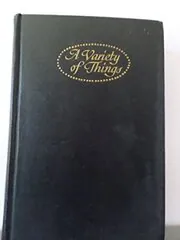
A Variety of Things
by Max Beerbohm
1928
A late collection that does exactly what the title promises. Essays, sketches, and stories sit side by side, showing Beerbohm moving easily from social comedy to memory, travel, and whimsical fantasy.
The Dreadful Dragon of Hay Hill
by Max Beerbohm
1928
In a prehistoric version of London, a dragon wakes on Hay Hill and throws a settled little world into panic. Beerbohm plays the fantasy straight enough to make the satire, and the bravery, land all the harder.

Heroes and Heroines of Bitter Sweet
by Max Beerbohm
1931
A slim portfolio of caricatures based on Noel Coward's operetta Bitter Sweet. Beerbohm turns the production's stars and theatrical glamour into bright, stylish images that are affectionate, pointed, and unmistakably his.
Lytton Strachey
by Max Beerbohm
1943
A brief but vivid portrait of Lytton Strachey, one brilliant observer writing about another. Beerbohm focuses on Strachey's mind, style, and curious force as a historian and literary personality.
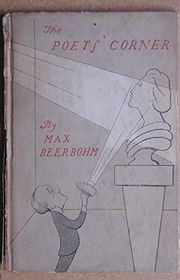
The Poets Corner
by Max Beerbohm
1943
Here Beerbohm turns his eye on poets across different centuries, from the canonical to the modern. The drawings are literary jokes, but also compact acts of criticism, each one saying something about how the writer reads.
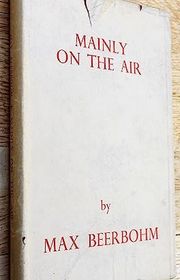
Mainly on the Air
by Max Beerbohm
1946
Built around Beerbohm's BBC talks, this late collection is full of memory, charm, and dry observation. Old London, music halls, cars, manners, and literary afterthoughts all pass through the same calm comic intelligence.
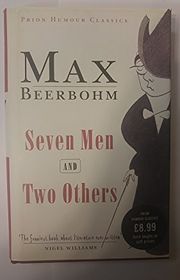
Seven Men and Two Others
by Max Beerbohm
1950
This expanded version of Seven Men adds further portraits to Beerbohm's odd company of remembered and invented figures. It keeps the same blend of memoir, fantasy, and literary mischief that makes the original so distinctive.
Around Theatres
by Max Beerbohm
1953
Beerbohm's theatre criticism is less about handing down verdicts than about catching the mood of a performance and the absurdities around it. Actors, audiences, and playwrights all come in for his crisp, amused scrutiny.
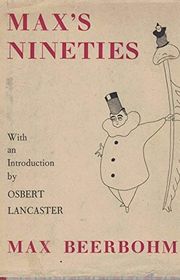
Max's Nineties
by Max Beerbohm
1958
This volume recovers Beerbohm's drawings from 1892 to 1899, including many first seen in magazines. It offers a sharp picture of his early style, and of the artistic and literary world he was already skewering.
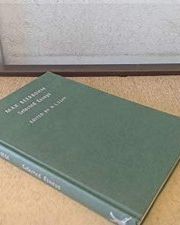
Selected Essays
by Max Beerbohm
1958
A compact way into Beerbohm's best nonfiction, this selection samples the essays that made his reputation. Taste, memory, theatre, reading, manners, and self-mockery all appear, shaped by his unusually controlled comic voice.
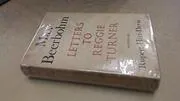
Letters to Reggie Turner
by Max Beerbohm
1964
These letters to Beerbohm's close friend Reginald Turner show him at his freest and funniest. They bring the literary and social life of the 1890s and after into view, without losing the private warmth of real friendship.
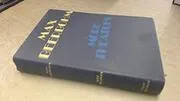
More Theatres, 1898-1903
by Max Beerbohm
1969
This collection continues Beerbohm's run as one of the keenest theatre critics of his day. He writes about plays, performers, and theatrical fashions with exact taste, comic timing, and a healthy dislike of puffed-up nonsense.
Last Theatres, 1904-1910
by Max Beerbohm
1970
The last stretch of Beerbohm's theatre criticism before he left England for Italy. These pieces keep his usual balance of close observation, dry wit, and sharp feeling for how actors and audiences shape an evening.
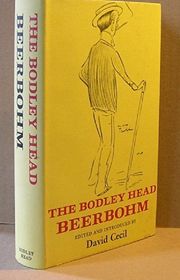
The Bodley Head Max Beerbohm
by Max Beerbohm
1970
A substantial one-volume selection that brings together the prose most readers come to Beerbohm for. Essays, stories, parodies, and memoir pieces sit side by side, giving a broad view of his quiet but exact comic art.
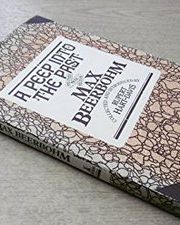
A Peep into the Past
by Max Beerbohm
1972
This sly early satire imagines Oscar Wilde not as a blazing celebrity, but as a faded, elderly figure already turning into history. The joke is sharp, and so is Beerbohm's eye for pose and reputation.
Max and Will
by Max Beerbohm
1975
Centered on the friendship between Max Beerbohm and painter William Rothenstein, this volume gathers letters and context across decades. It offers a close view of artistic friendship, gossip, loyalty, and literary life from within.
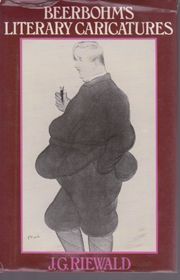
Beerbohm's Literary Caricatures
by Max Beerbohm
1977
This collection brings together Beerbohm's caricatures of writers from a wide literary span, from the classical past to modern figures. It shows how well he could turn criticism into drawing without losing the joke.

The Imaginary Reminiscences of Sir Max Beerbohm
by Max Beerbohm
1985
A critical study of Beerbohm's life, persona, and art, with special attention to the line between performance and sincerity. It is useful for readers curious about how carefully Max fashioned both the man and the author.
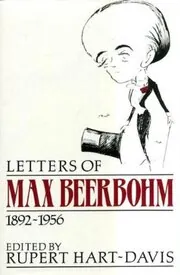
Letters of Max Beerbohm, 1892-1956
by Max Beerbohm
1988
A wide-ranging selection of Beerbohm's correspondence across more than sixty years. The letters show the same intelligence and comic poise as the essays, while also revealing his friendships, routines, and long view of literary life.
Max Beerbohm: Collected Verse
by Max Beerbohm
1994
This volume gathers Beerbohm's poems, light verse, and parodies, including much that was not previously easy to find. It reveals a writer who brought the same precision and mischief to verse that he brought to prose.
The Early Works
by Max Beerbohm
2000
A gathering of youthful Beerbohm, full of early essays, sketches, and parodic play. It lets you watch the tone arrive almost fully formed: amused, polished, slightly insolent, and already very sure of its own rhythm.

The Prince of Minor Writers
by Max Beerbohm
2015
This modern selection presents Beerbohm's essays as a living body of work, not a dusty curiosity. It is an excellent entry point, bringing together pieces on taste, literature, society, memory, and the comedy of self-presentation.
The Works of Max Beerbohm
by Max Beerbohm
2018
Beerbohm's first essay collection announced him at once as a stylist and satirist. Written in the 1890s, these pieces skewer dandies, royalty, cosmetics, and literary pretension with mock scholarship and effortless poise.
Where to start with Max Beerbohm
If you want the Oxford satire everyone remembers: Zuleika Dobson
If you want witty short fiction: The Happy Hypocrite → Enoch Soames → Seven Men
If you want his sharpest literary parody: A Christmas Garland
If you want the essays first: The Works of Max Beerbohm → Yet Again → And Even Now
If you want drama criticism and caricature: Around Theatres → Rossetti and His Circle → Fifty Caricatures
Max Beerbohm collections, short stories, and related book types
Short Stories/Novellas
Collections
Non-Fiction
Standalone Max Beerbohm books
Author bio
Max Beerbohm was born in Kensington, London, on August 24, 1872, into a large, prosperous family with roots on the Baltic side of Europe. He grew up around people who liked talk, performance, and style. One half-brother, Herbert Beerbohm Tree, became a famous actor-manager. Another sibling, Julius, wrote and traveled. That mix of theatre, wit, and self-invention stayed with Max for the rest of his life.
At Charterhouse, he was already doing two things that would make his name: writing and drawing caricatures. He went on to Merton College, Oxford, in 1890. He was never much interested in being a model student, but he became a memorable presence there, elegant, amused, and keenly aware of the comedy of social life. Oxford also put him near the world he would keep sending up, the world of pose, taste, ambition, and performance.
Through Herbert Beerbohm Tree, he came into Oscar Wilde's circle, and in the early 1890s he began publishing essays and sketches in London magazines. One of the first big moments was A Defence of Cosmetics, printed in the first issue of The Yellow Book in 1894. Two years later came The Works of Max Beerbohm, his first essay collection, and his first caricature book, Caricatures of Twenty-Five Gentlemen. He was still very young, but his voice was already there: sly, neat, funny, and never in a hurry.
In 1898 he succeeded George Bernard Shaw as drama critic for the Saturday Review. He kept that post until 1910. The job suited him. Beerbohm loved theatre, but he also loved watching the people around theatre, the actors, the playwrights, the critics, the audiences, and the little rituals of admiration and annoyance that came with all of them. That work later fed books like Around Theatres, More Theatres, 1898-1903, and Last Theatres, 1904-1910.
He didn't write a huge amount, but what he did write lasted.
Many readers start with Zuleika Dobson, his only novel, a sharp and strange Oxford satire in which beauty, vanity, and mass foolishness run wild. Others go first to A Christmas Garland, where he parodies the prose styles of leading writers of his day, or to Seven Men, a set of stories that look like memoir, gossip, and fantasy all at once. The Happy Hypocrite shows another side of him, airy and fairy-tale-like, while Enoch Soames turns literary failure into a dark joke with a supernatural twist. Readers tend to like him for the same reasons across all these books: precision, surprise, and a tone that stays light even when the joke has teeth.
He was funny, but never noisy.
In 1910 he married the American actress Florence Kahn and moved to Rapallo, on the Italian coast. He lived there for most of the rest of his life, apart from periods shaped by the world wars. Distance suited him. Even when he was writing about London, Oxford, or the faded glamour of the 1890s, he often did it with the calm of someone looking back from just far enough away to see the whole little performance.
His later years added radio to the mix. From the 1930s on, he gave BBC talks that were later collected in Mainly on the Air. He kept writing letters too, full of the same careful mischief that marks the essays. Beerbohm died in Rapallo in 1956. He is still a hard writer to pin down, essayist, parodist, storyteller, caricaturist, but that is part of the pleasure. He made a career out of watching people try to become important, and then gently showing how odd they already were.








Edited by
Software engineer whose passion for tracking book recommendations from podcasts inspired the creation of MRB.
Lead investor at 3one4 Capital whose startup expertise and love for books helped shape MRB and its growth.
Comments
Did we miss something? Have feedback?
Help us improve this page by sharing your thoughts