
Maurice Druon Books in Order
Browse Maurice Druon books in order, with quick summaries, series guides, and where to start tips for the Accursed Kings, Les Grandes Familles, and more.
Last updated:
As an Amazon Associate, we earn from qualifying purchases (at no extra cost to you).
Maurice Druon books in publication order
13 books
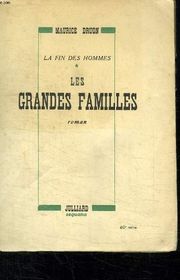
La fin des hommes
by Maurice Druon
1948
This opening novel of the Les Grandes Familles cycle follows bankers, aristocrats, and social climbers in interwar Paris, where money and desire drive every alliance. A young scholar turned politician watches ambition poison every level of society.

La Chute des Corps
by Maurice Druon
1950
The second volume follows ruined fortunes, bad marriages, and a political career still on the rise. As old families weaken after the crash, private cruelty and public ambition leave fresh damage behind.
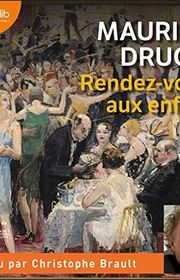
Rendez-vous aux enfers
by Maurice Druon
1951
On the eve of war, the younger generation of the Schoudler family tries to survive debts, love affairs, and rotten bargains. Druon closes the trilogy with a bleak portrait of privilege, compromise, and moral exhaustion.
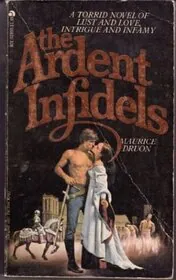
Ardent Infidels
by Maurice Druon
1955
This alternate English edition of The Iron King opens with Philip the Fair at the height of his power. Adultery, vengeance, and the Templars' curse begin the long unraveling of a royal dynasty.
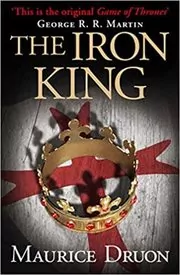
The Iron King
by Maurice Druon
1955
King Philip the Fair seems unshakable, but scandal inside his own family and the dying curse of a Templar grand master open the way to revenge, betrayal, and dynastic collapse in fourteenth-century France.
Recommended by
1 person George R. R. Martin recommended this book
George R. R. Martin
"France’s best historical novelist since Dumas Pere." - George R. R. Martin
George R. R. Martin's recommendation of this book
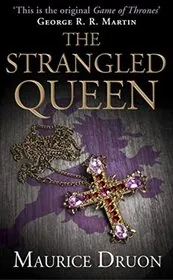
The Strangled Queen
by Maurice Druon
1955
Philip IV is dead and Louis X has taken the throne, but his disgraced wife still lives in prison, blocking any clean succession. Murder, factional plotting, and papal deadlock keep France in a dangerous state of suspense.
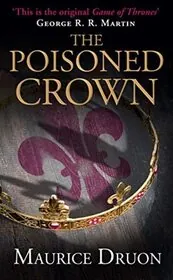
The Poisoned Crown
by Maurice Druon
1956
Louis X finally has a new queen, but marriage does not bring stability. As the king stumbles into war and rival nobles circle the throne, private ambition and public weakness threaten the crown.
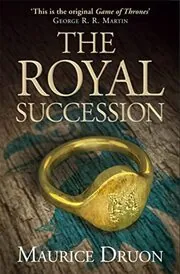
The Royal Succession
by Maurice Druon
1957
Louis X is dead, Queen Clemence is pregnant, and the fate of France hangs on an unborn child. Regents, lawyers, and ambitious princes battle over the succession in one of the series' sharpest power struggles.
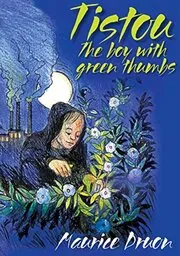
Tistou
by Maurice Druon
1957
Sent away from school to learn from life, young Tistou discovers he can make flowers grow wherever he touches. This gentle, odd little fable uses a child's gift to question prisons, poverty, and war.
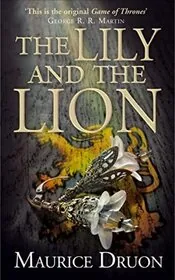
The Lily and The Lion
by Maurice Druon
1959
Charles IV is dead, Robert of Artois has helped raise Philippe of Valois to the throne, and now he wants payment. Exile, rival claims, and English ambition push France closer to the Hundred Years' War.
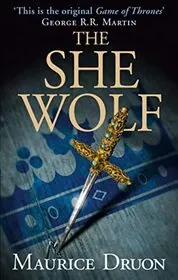
The She-Wolf
by Maurice Druon
1959
Queen Isabella arrives in France on a diplomatic mission, but exile Roger Mortimer and the chaos of Edward II's England turn negotiation into rebellion. Court politics in Paris and London collide as power shifts across the Channel.
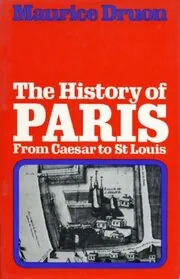
The History of Paris
by Maurice Druon
1964
Druon traces Paris from Roman Lutetia to the age of Saint Louis, showing how invasions, kings, churches, and river trade shaped the city. It is a brisk, story-driven history rather than a dry chronicle.
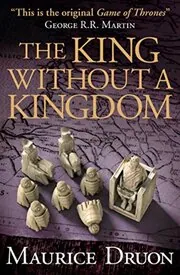
The King Without a Kingdom
by Maurice Druon
1977
In the final Accursed Kings novel, France is battered by war, famine, plague, and a weak King John II. Through Cardinal Périgord's eyes, Druon shows a kingdom coming apart as the Hundred Years' War deepens.
Where to start with Maurice Druon
If you want royal intrigue and medieval power games: The Iron King → The Strangled Queen → The Poisoned Crown
If you prefer sharp social drama: La fin des hommes → La Chute des Corps → Rendez-vous aux enfers
If you want a shorter, gentler book: Tistou
If you want history without the fiction: The History of Paris
Maurice Druon sub-series and character series
Les Grandes Familles books in order
Explore this seriesLes Grandes Familles books in chronological order
Maurice Druon collections, short stories, and related book types
Non-Fiction
Standalone Maurice Druon books
Author bio
Maurice Druon was born in Paris on April 23, 1918, but he spent much of his childhood in La Croix-Saint-Leufroy, a village in Normandy. His early family life was complicated. His father, the actor Lazare Kessel, died when Druon was still very young, and after his mother's remarriage he took the surname Druon in 1926.
Books were close to him from the start.
He was the nephew of Joseph Kessel, one of the big literary figures in French letters, and he began publishing in magazines and newspapers at eighteen. Druon studied literature in Paris, attended the lycée Michelet in Vanves, and won the concours général in 1936. He also spent time at the École libre des sciences politiques, but the real draw was writing, journalism, and public life.
World War II pushed him out of any ordinary career path. Called up in 1940 as a cavalry officer, he later joined the Resistance, left France in late 1942 by crossing the Pyrenees, and reached London through Spain and Portugal. In 1943, working with Joseph Kessel on music by Anna Marly, he wrote the French words to Chant des Partisans. The song became one of the lasting anthems of the Resistance, and Druon later served as a war correspondent as the conflict came to an end.
History never felt distant to him.
After the war he committed himself to literature. His first postwar book, La Dernière Brigade, drew on his wartime experience, but his real breakthrough came with Les Grandes Familles, the opening volume of the cycle also known as La fin des hommes. It won the Prix Goncourt in 1948. Readers found a writer who could be sharp without being stiff, and who understood how money, class, sex, and ambition can quietly wreck a family.
Many readers now meet Druon through The Iron King and the rest of The Accursed Kings. These novels follow the last Capetian kings, their rivals, and the slow slide toward the Hundred Years' War. What people tend to like is not just the history, but the pace, the scheming, and the way Druon makes dynastic politics feel immediate. Books like The Strangled Queen and The Royal Succession are full of legal traps, family grudges, and sudden reversals, while still staying easy to follow. The series was adapted for television twice, first in 1972 and again in 2005.
He didn't only write about crowns and ministers. Tistou is a children's story about a boy whose gift for growing flowers turns into a quiet argument for kindness and peace. In The History of Paris, he stepped back from fiction and told the story of the city from Roman times to Saint Louis. That mix, harsh political fiction on one hand, gentle fable and historical narrative on the other, says a lot about his range.
He didn't stay in one lane.
Druon was elected to the Académie française in 1966 and served as its perpetual secretary from 1985 to 1999. He was also France's minister of cultural affairs in 1973 and 1974, and later a deputy for Paris from 1978 to 1981. He wrote essays as well as novels, and he cared deeply about history, language, and the way public institutions shape national life. He died in Paris on April 14, 2009, leaving behind work that moves easily from interwar boardrooms to medieval courts to a child's flower-filled imagination.



Edited by
Software engineer whose passion for tracking book recommendations from podcasts inspired the creation of MRB.
Lead investor at 3one4 Capital whose startup expertise and love for books helped shape MRB and its growth.
Comments
Did we miss something? Have feedback?
Help us improve this page by sharing your thoughts