
Mateo Askaripour Books in Order
Explore Mateo Askaripour's books in order, with quick summaries, standalone reading guidance, and simple tips on where to start with his fiction.
Last updated:
As an Amazon Associate, we earn from qualifying purchases (at no extra cost to you).
Mateo Askaripour books in publication order
3 books
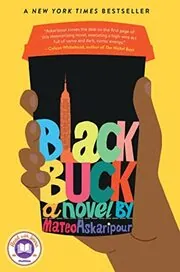
Black Buck
by Mateo Askaripour
2021
Darren Vender is content working at Starbucks until a chance encounter lands him on the sales team of a cultish New York startup. As he remakes himself as Buck, ambition, race, and personal loss collide in a biting corporate satire.

Invisible Faces
by Mateo Askaripour
2023
In a future order where invisibility marks people for second-class lives, Sweetmint's hard-won place begins to crumble when her missing brother is accused of murder. Her search turns into a dangerous chase through power, lies, and family loyalty.

This Great Hemisphere
by Mateo Askaripour
2024
Set in the Northwestern Hemisphere of 2529, this novel follows Sweetmint as she hunts for her supposedly dead brother, now linked to a political killing. As an invisible woman moving through a deeply unequal society, she has little time and even fewer people to trust.
Where to start with Mateo Askaripour
If you want sharp workplace satire: Black Buck
If you want a big speculative world: This Great Hemisphere
If you want the quickest sense of his range: Black Buck → This Great Hemisphere
If you want the full listed path: Black Buck → Invisible Faces → This Great Hemisphere
Standalone Mateo Askaripour books
Author bio
Mateo Askaripour grew up on Long Island, New York, in a family shaped by both Jamaican and Iranian roots. He has said he felt especially close to his Jamaican side as a kid, with his grandmother in the house and family trips to Jamaica, but he also studied Farsi in college as a way of reaching toward the part of his background he knew less well. Growing up between those influences, and in a place where he often felt his difference, sharpened his sense of how race, belonging, and perception shape everyday life. That feeling shows up again and again in his fiction.
It also helps explain why so much of his work is about being seen, misread, or pushed aside.
Before publishing fiction, Askaripour worked in New York tech and sales. In 2016, while managing a team at a startup, he decided to take writing seriously. He left that job in August, started sending pages out, and learned the slow way that wanting to write a book and knowing how to build one are different things. Two early novels went nowhere, but the routine, pressure, and plain stubbornness of sales gave him the stamina to keep reading, revising, and trying again.
The break was not only the book itself. He has said that his time at the Rhode Island Writers Colony helped him feel less alone as a writer and gave him a real sense of community. After years of working mostly on his own, that mattered.
The third try changed everything.
That third book was Black Buck, the novel that put him on a lot of readers' radar fast. It follows Darren Vender, a young Black barista who gets pulled into the hard-driving world of startup sales and starts remaking himself into someone sharper, richer, and harder to recognize. The setup drew directly on Askaripour's own tech-sales experience, which helps give the book its nerve and detail. People come to Black Buck for the speed and satire, but what stays with many readers is its take on race, ambition, code-switching, family pressure, and the cost of selling too much of yourself. The novel became an instant New York Times bestseller and a Read with Jenna book club pick.
He did not stay in one mode for long.
With This Great Hemisphere, Askaripour moved into speculative fiction without leaving his central questions behind. The novel imagines a future society where many people are born invisible and forced into second-class lives. At its center is Sweetmint, a young woman searching for her missing brother while political violence closes in around her. The book is bigger in scale than Black Buck, with more worldbuilding and a wider political frame, but it still works best at the human level. Readers who connect with Askaripour usually respond to that mix of momentum and feeling, ideas that stay grounded in personal stakes.
Across novels and essays, Askaripour keeps returning to power. He writes about work, status, race, family loyalty, and the stories people tell themselves in order to survive. His nonfiction has appeared in The New York Times, Entrepreneur, and Literary Hub, among other places. Even outside the novels, he tends to ask the same hard question: who benefits when certain people are treated as invisible?
His path has brought him from startup sales to literary recognition, including the National Book Foundation's 5 Under 35 honor. He lives in Brooklyn now, and his work has grown beyond novels into essays, speaking, teaching, and screen projects. What links it all is a plain but sturdy idea, that stories can help people feel less alone and maybe a little more possible to themselves.











Edited by
Software engineer whose passion for tracking book recommendations from podcasts inspired the creation of MRB.
Lead investor at 3one4 Capital whose startup expertise and love for books helped shape MRB and its growth.
Comments
Did we miss something? Have feedback?
Help us improve this page by sharing your thoughts