
Mary Wesley Books in Order
This page collects all of Mary Wesley's books in order, with brief summaries, background on her career, and simple guidance on where to start reading.
Last updated:
As an Amazon Associate, we earn from qualifying purchases (at no extra cost to you).
Mary Wesley books in publication order
15 books
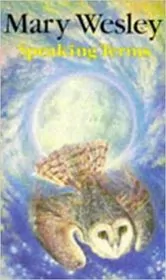
Speaking Terms
by Mary Wesley
1969
When a group of English children discover they can talk with animals, they find themselves helping foxes, birds and farm creatures outwit cruel adults, turning a quiet countryside summer into a clever battle over kindness, freedom and who truly owns the wild.
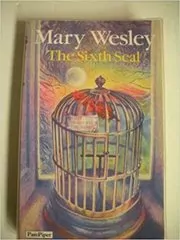
The Sixth Seal
by Mary Wesley
1969
After a sudden catastrophe wipes out most of the population, a mother, her teenage son and his friend pick their way through an eerily empty English countryside and join a mismatched band of survivors who must invent a new kind of village life.
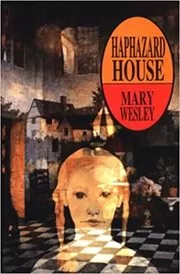
Haphazard House
by Mary Wesley
1983
Eleven year old Lisa Fuller thinks her impulsive father has lost his mind when a long-shot bet lands the family in a half burned country house, where a friendly ghost, deserted village and slippery sense of time turn everyday life into something uncanny.
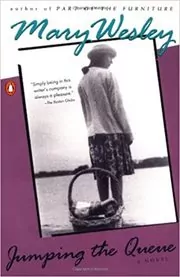
Jumping the Queue
by Mary Wesley
1983
Recently widowed Matilda Poliport plans a tidy suicide on a Cornish beach, but when she instead rescues a wanted man intent on his own death, the two outsiders strike a strange bargain that forces them to face guilt, desire and buried secrets.
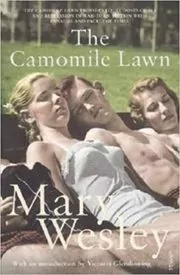
The Camomile Lawn
by Mary Wesley
1984
In August 1939 five cousins gather at their aunt and uncle's Cornish house, racing along the camomile lawn that leads to the sea. War scatters them into London offices, service and dangerous love affairs, and a reunion decades later reveals what each has become.
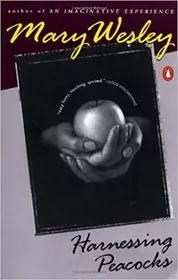
Harnessing Peacocks
by Mary Wesley
1985
As a pregnant teenager Hebe overhears her wealthy family planning an abortion to avoid scandal and runs away instead. Years later she is a devoted single mother in Cornwall, funding her son's schooling through a secret mixture of private catering and discreet paid encounters.
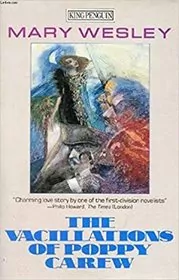
The Vacillations of Poppy Carew
by Mary Wesley
1986
Poppy Carew is dumped by her feckless boyfriend on the eve of her beloved father's death, then inherits his money and his request for a "fun" funeral. As undertakers, pig farmer and ex lover compete for her, Poppy must finally choose her own future.
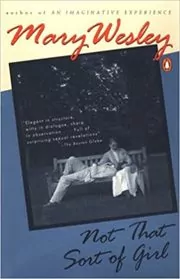
Not That Sort of Girl
by Mary Wesley
1987
At nineteen, Rose chooses a safe marriage to steady Ned Peel over the wild love she feels for penniless Mylo Cooper. Decades of wartime secrets, quiet infidelity and the pull of a cherished country house leave her wondering what loyalty has really cost her.
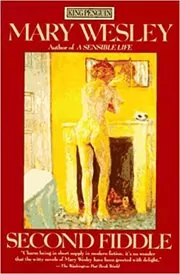
Second Fiddle
by Mary Wesley
1988
Forty something Laura Thornby prides herself on brief affairs and complete control, until she meets twenty three year old aspiring writer Claud Bannister. Rearranging his life for art and amusement, she finds her own past, her parents and her feelings slipping beyond her rules.
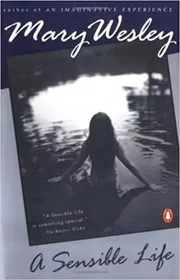
A Sensible Life
by Mary Wesley
1990
As a lonely ten year old on holiday in 1920s Brittany, Flora Trevelyan is ignored by her parents and falls in love with three older boys. Over the following decades she builds a "sensible" independent life, yet keeps colliding with the people from that first summer.
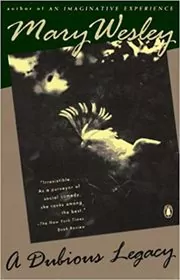
A Dubious Legacy
by Mary Wesley
1992
During and after World War II, landowner Henry Tillotson brings his troubling bride home to his West Country estate, only to have her retreat to bed and rule the house from there. Two younger couples become regular guests, entangled for decades in Henry's charm, Margaret's barbed games and the question of who belongs to whom.
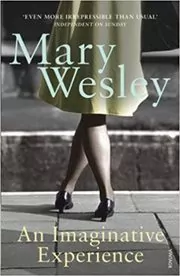
An Imaginative Experience
by Mary Wesley
1994
Still shattered by the car crash that killed her husband and young son, Julia Piper lives quietly in London, cleaning other people's flats and trying not to feel. A chance encounter on a stalled train, a gentle publisher and a malicious stalker gradually pull her toward a reckoning with grief, fear and the possibility of love.
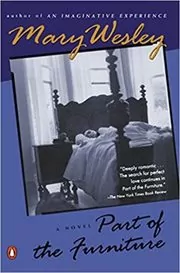
Part of the Furniture
by Mary Wesley
1997
In 1941, Juno Marlowe shelters from an air raid in a stranger's London house and leaves the next morning with a letter to his family in the West Country. Taking refuge on their farm, she discovers she is pregnant and slowly transforms from awkward evacuee into a capable young woman with her own place in the world.
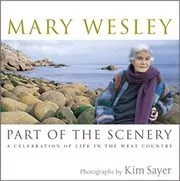
Part of the Scenery
by Mary Wesley
2001
Part travel book, part memoir, this collaboration pairs Mary Wesley's memories of the West Country with atmospheric photographs to capture the houses, lanes and coastline that shaped her fiction, from wartime hideaways to the landscapes she came to call home.
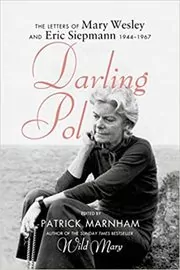
Darling Pol
by Mary Wesley
2017
Drawn from decades of letters between Mary Wesley and her second husband Eric Siepmann, Darling Pol traces their long love affair through wartime separation, work, money worries and family life, while showing how her fierce, funny voice as a novelist began to emerge.
Where to start with Mary Wesley
If you want wartime family sagas: The Camomile Lawn → A Sensible Life → Part of the Furniture.
If you like darkly comic love stories: Jumping the Queue → The Vacillations of Poppy Carew → Harnessing Peacocks.
If you prefer character driven domestic drama: Not That Sort of Girl → Second Fiddle → A Dubious Legacy.
If you enjoy quieter later novels: An Imaginative Experience → Part of the Furniture.
Mary Wesley collections, short stories, and related book types
Non-Fiction
Standalone Mary Wesley books
Author bio
Mary Wesley was an English novelist who found literary fame astonishingly late in life. Her first adult novel, Jumping the Queue, appeared when she was in her early seventies, and she went on to sell millions of copies of her witty, spiky stories about love, war and family. By the time she died she had become a favourite for readers who like their comfort reading spiked with moral unease.
She was born Mary Aline Mynors Farmar in 1912 in Englefield Green, Surrey, the youngest of three children of an army officer and a socially ambitious mother. Brought up in a large house with a long succession of governesses, she grew up feeling more inconvenient than cherished, and that sense of being the odd one out never quite left her.
It is no surprise that her novels are full of neglected children, cutting parents and families that wound as much as they protect.
Again and again she uses dark jokes to show how people manage to survive the hurts handed down to them.
As a young woman she attended classes at the London School of Economics, was presented at court and lived the life expected of a well-bred daughter between the wars. During the Second World War she worked for the War Office in a role linked to intelligence, experience that later fed into the vivid wartime scenes in The Camomile Lawn and other books.
In her twenties she married Charles Swinfen Eady, later Lord Swinfen, and had two sons. The marriage broke down, and during the war she fell in love with the journalist and playwright Eric Siepmann. They lived together for years before they could marry in the early 1950s, had a third son, and were largely cut off financially by her disapproving parents. When Siepmann died in 1970 she was nearly penniless, raising a teenager and determined to make her own living.
Wesley had already published children's books such as Speaking Terms and The Sixth Seal, but only in her sixties did she treat writing as full-time work. Jumping the Queue in 1983 was followed in quick succession by The Camomile Lawn, Harnessing Peacocks, The Vacillations of Poppy Carew, Not That Sort of Girl, Second Fiddle, A Sensible Life, A Dubious Legacy, An Imaginative Experience and Part of the Furniture. Over two decades she became one of Britain's best-selling novelists.
Readers came for her brisk humour and stayed for the bite underneath. Her books are full of big West Country houses, wartime London streets and coastal villages where secrets fester. She writes about class, money, illegitimacy and sex with the calm authority of someone who has seen more than most, often giving older characters the boldest love affairs and the worst behaviour.
In later life she was appointed CBE, collaborated on an authorised biography, and ordered herself a bright lacquered coffin that she kept as a coffee table, a private joke about mortality. She died in 2002 in Totnes, Devon, aged ninety, leaving behind ten adult novels, children’s fiction, memoir and letters, and a lasting example of how late a writing life can truly begin.








Edited by
Software engineer whose passion for tracking book recommendations from podcasts inspired the creation of MRB.
Lead investor at 3one4 Capital whose startup expertise and love for books helped shape MRB and its growth.
Comments
Did we miss something? Have feedback?
Help us improve this page by sharing your thoughts