
Mary Roach Books in Order
Explore Mary Roach books in order, with short summaries, where to start tips, and reading guidance for her smart, funny, curiosity-driven science books.
Last updated:
As an Amazon Associate, we earn from qualifying purchases (at no extra cost to you).
Mary Roach books in publication order
12 books
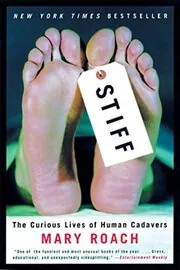
Stiff
by Mary Roach
2003
Roach explores what happens to human bodies after death, from medical training and crash tests to decomposition and organ research. Morbid, funny, and unexpectedly humane, it shows how cadavers have shaped science and medicine.
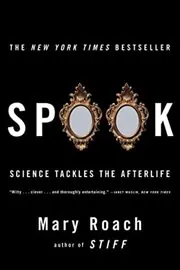
Spook
by Mary Roach
2005
Roach follows scientists, mediums, doctors, and true believers as they try to test the afterlife with instruments, experiments, and nerve. It is a skeptical but open-minded tour of one of humanity's oldest questions.
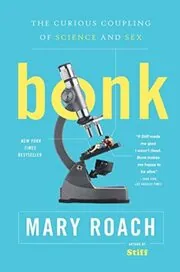
Bonk
by Mary Roach
2008
Roach dives into the long, odd history of sex research, visiting labs, clinics, and inventors in search of answers. She treats the subject with curiosity and humor while asking blunt questions about desire, anatomy, and orgasm.

Packing for Mars
by Mary Roach
2010
Roach looks at the unglamorous side of space travel, from zero gravity sickness to toilets, isolation, and crash tests. It is a funny, deeply reported tour of what the human body can, and cannot, handle off Earth.
Recommended by
1 person Jon Stewart recommended this book
Jon Stewart
"Hilarious." - Jon Stewart
Jon Stewart's recommendation of this book
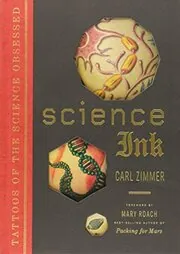
Science Ink
by Mary Roach
2011
Carl Zimmer's illustrated collection pairs science with tattoo art, telling the stories behind hundreds of designs inspired by biology, math, physics, and more. Mary Roach contributes the foreword, making this a fun side trip for science fans.

The Best American Science and Nature Writing 2011
by Mary Roach
2011
Guest-edited by Mary Roach, this anthology gathers standout science and nature essays by a wide range of writers. The pieces mix big ideas, human stories, and sharp reporting across subjects from medicine to technology to the natural world.
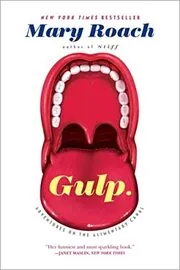
Gulp
by Mary Roach
2013
Roach turns the digestive tract into a surprisingly lively subject, from taste and chewing to stomach acid, constipation, and fecal transplants. It is a gross, funny, curious look at the science behind eating and elimination.
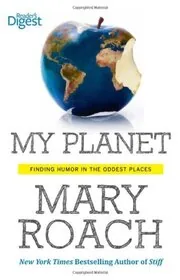
My Planet
by Mary Roach
2013
This collection gathers Roach's Reader's Digest columns about marriage, family, food, technology, mess, and everyday annoyances. It is lighter than her science books, but the same sharp eye for absurd detail is all over it.
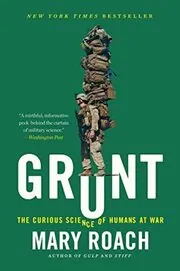
Grunt
by Mary Roach
2016
Instead of battlefield strategy, Roach studies the science that keeps soldiers functioning: heat, exhaustion, wounds, noise, bugs, and bad gear. She follows researchers and military specialists to show how much war depends on problems far from the front line.
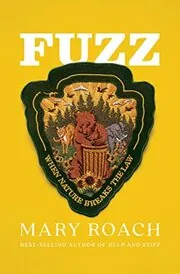
Fuzz
by Mary Roach
2021
What do you do with a bear breaking and entering, a jaywalking moose, or gulls wrecking a ceremony? Roach follows wildlife experts around the world to explore the science, ethics, and absurdity of human-animal conflict.
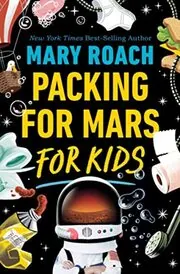
Packing for Mars for Kids
by Mary Roach
2022
Roach adapts her space book for middle grade readers, tackling floating, bathing, eating, and bathroom problems in orbit. It keeps the weird, gross, and awe-inspiring parts of astronaut life while making the science clear and fun.

Replaceable You
by Mary Roach
2025
Roach investigates the long effort to repair and replace the body's failing parts, from prosthetics and transplants to tissue engineering and pig organs. It asks not just what medicine can build, but what those fixes cost and change.
Where to start with Mary Roach
If you want the classic Mary Roach experience: Stiff → Spook → Bonk
If space is your thing: Packing for Mars → Packing for Mars for Kids
If you want body science close to home: Gulp → Replaceable You
If you want science at the human edge: Grunt → Fuzz
If you want her lighter, everyday voice: My Planet
Mary Roach collections, short stories, and related book types
Scientific Research Books
Supernatural Research Books
Humor Books
Non-Fiction
Standalone Mary Roach books
Author bio
Mary Roach was born in Hanover, New Hampshire, and grew up nearby in Etna, where both of her parents worked at Dartmouth College. She has described that childhood as small-town and a little offbeat, which feels fitting in hindsight. After graduating from Wesleyan University in 1981 with a degree in psychology, she piled into a car with friends and headed to San Francisco, a move that gave her both distance from home and the start of a writing life.
That move changed everything.
Roach did not train as a scientist, and she has been refreshingly open about that. She spent a few years doing freelance copy editing, then landed a part-time public affairs job at the San Francisco Zoo, writing press releases and pieces for the membership magazine. On the days she was not in her cubicle behind Gorilla World, she freelanced for local papers and, little by little, learned how to report, how to ask better questions, and how to follow a weird detail until it led somewhere good.
Magazine work carried her forward. Editors moved on to bigger publications and brought her with them, and her byline eventually appeared in places like Discover, National Geographic, Wired, Outside, and The New York Times Magazine. She has said people call her a science writer even though she does not have a science degree, and that outsider status turns out to be part of her appeal. She asks the questions a specialist might skip, and she stays with a subject until the jargon finally gives up.
In the late 1990s, magazine budgets tightened and travel money dried up, so she shifted to books. That change produced Stiff, her 2003 breakout about cadavers and the many ways the dead continue to serve the living, from surgical training to crash testing to forensic science. It became a bestseller and announced the kind of writer she would be, curious, fearless, funny, and unusually good at turning taboo material into something readable, human, and surprisingly moving.
She kept following subjects that most people would avoid at the dinner table. Spook looks at scientific attempts to investigate the afterlife. Bonk explores the history and physiology of sex research. Packing for Mars asks what space travel does to the human body when gravity, privacy, and ordinary hygiene all disappear. Gulp goes down the digestive tract, Grunt studies the strange science that helps soldiers function, Fuzz looks at human conflict with wildlife, and Replaceable You dives into the messy, inventive effort to repair or replace failing body parts.
Her books are funny, but the joke is rarely the point.
What readers tend to like is the mix. She does serious reporting, spends time with researchers and technicians, and then translates what she learns into plain English without sanding away the weirdness. Again and again, she returns to the human body, not in a solemn textbook way, but as a place where fear, disgust, hope, vanity, pain, and ingenuity all collide. She is also drawn to people with very unusual jobs, the kinds of experts who study spit, rats, ghosts, amputations, elephant raids, or space toilets and somehow make a life of it.
Roach has also written lighter work, including the essays collected in My Planet, which grew out of her columns for Reader's Digest. She guest-edited The Best American Science and Nature Writing 2011, served on the American Heritage Dictionary usage panel, and has been involved with the Mars Institute. She lives in Oakland, California, and by her own account spends most of her time working on books and being with family and friends. She also likes bird-watching, hiking, backpacking, Scrabble, mangoes, and the kind of nature television that can make even a seasoned reader squirm.











Edited by
Software engineer whose passion for tracking book recommendations from podcasts inspired the creation of MRB.
Lead investor at 3one4 Capital whose startup expertise and love for books helped shape MRB and its growth.
Comments
Did we miss something? Have feedback?
Help us improve this page by sharing your thoughts