
Mary Chamberlain Books in Order
Explore Mary Chamberlain books in publication order, with short summaries and series lists to help you compare titles and choose your next book to read.
Last updated:
As an Amazon Associate, we earn from qualifying purchases (at no extra cost to you).
Mary Chamberlain books in publication order
13 books
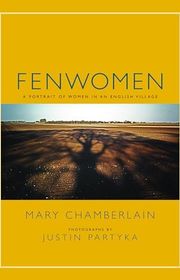
Fenwomen
by Mary Chamberlain
1977
Through women’s recollections, Mary Chamberlain traces nearly a century of life in an isolated Cambridgeshire village. The oral history explores labor, family and community from perspectives often absent from accounts centered on landowners and country houses.
Writing Lives
by Mary Chamberlain
1988
Established women writers converse with younger successors about their lives and work. Edited by Mary Chamberlain, this collection brings together voices from across twentieth-century literature to explore the experiences, motivations and circumstances that shape women’s writing.
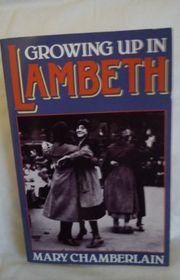
Growing Up in Lambeth
by Mary Chamberlain
1989
Drawing on interviews with Lambeth residents, Chamberlain reconstructs working-class childhood and everyday life in South London. Personal recollections reveal household economies, family responsibilities, and neighbourhood relationships, offering a detailed alternative to sanitised accounts of urban poverty.
Narrative and Genre
by Mary Chamberlain
1997
This edited collection examines how literary and social conventions shape autobiographies and oral testimony. Scholars from several disciplines consider the relationship between memory, storytelling and genre, exploring how the form of a life story influences the meanings it can convey.

Narratives of Exile and Return
by Mary Chamberlain
1997
Drawing on interviews across generations of Barbadian families, Mary Chamberlain explores migration to Britain and elsewhere. She connects personal accounts with Barbados’s social history, examining how departure, return and continuing family ties shape identity and cultural change.
Caribbean Migration
by Mary Chamberlain
1998
This edited collection compares Caribbean migration within the region and to Europe and North America. Contributors examine its causes, migrants’ experiences and the effects of history, gender, imperialism and culture, while considering different methods for studying mobility.
Family Love in the Diaspora
by Mary Chamberlain
2006
Using life histories from Caribbean families across three generations, Chamberlain challenges colonial assumptions about family instability. She explores how kinship networks sustain migrants, transmit memory and adapt to change across Jamaica, Trinidad and Tobago, Barbados and Britain.

Empire and Nation-building in the Caribbean
by Mary Chamberlain
2010
Focusing on Barbados between 1937 and 1966, Mary Chamberlain examines the complicated transition from British colony to independent nation. She traces political change alongside migration, racial divisions and everyday social and cultural activity, emphasizing the many participants in nation-building.
Old Wives' Tales
by Mary Chamberlain
2010
Mary Chamberlain investigates women’s roles as healers through historical records and conversations about inherited remedies. Tracing practices associated with midwives, nurses and household medicine, she examines the origins of traditional cures and their uneasy relationship with orthodox medical authority.
The Mighty Jester
by Mary Chamberlain
2014
Romantic entanglements and political conflict shape the lives of people on a Caribbean island moving toward nationhood.
The Dressmaker's War
by Mary Chamberlain
2015
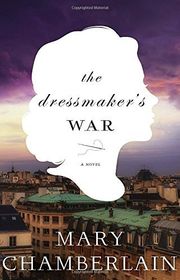
Aspiring dressmaker Ada leaves London for Paris with an aristocratic lover, only to be abandoned as war begins. Taken prisoner in Germany, she uses her sewing skills to survive, but returning home brings new dangers from a past others refuse to understand.
The Hidden
by Mary Chamberlain
2019
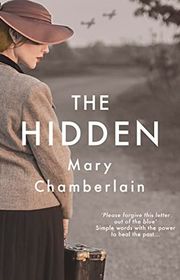
A woman searching for the identity behind an old photograph disrupts the quiet later lives of Dora and Joe. Her questions revive their experiences under German occupation in the Channel Islands, exposing concealed identities, painful loyalties and a shared wartime past.
The Forgotten
by Mary Chamberlain
2021
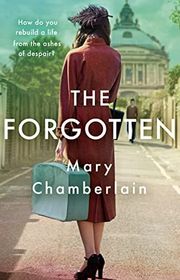
In 1958 London, Betty meets war veteran John through the Campaign for Nuclear Disarmament. As their connection develops, his traumatic memories of Berlin and growing need to protect her begin to expose the buried experiences that shape both their lives.
Where to start with Mary Chamberlain
For her wartime fiction: The Dressmaker's War
For secrets of the occupied Channel Islands: The Hidden
For war memories and a later relationship: The Forgotten
For women’s oral history: Fenwomen
Standalone Mary Chamberlain books
Author bio
Mary Chamberlain writes history and historical fiction, with a particular interest in lives that official accounts can leave out. Born in South London in 1947, she studied at Edinburgh, the London School of Economics and Royal Holloway. Her academic career included work on women, migration and the Caribbean before she turned to novels.
She is emeritus professor of Caribbean history at Oxford Brookes University.
Fenwomen is an important starting point for her nonfiction. It records the voices of ordinary women in an isolated village in the Cambridgeshire Fens, bringing daily work and personal memory into a portrait of rural life. It was the first book published by Virago Press and helped inspire Caryl Churchill's play Fen. Its attention to what women remember, and what other people overlook, also provides a useful introduction to the concerns of her later writing.
Her nonfiction ranges across women's history, oral history and Caribbean history. The books on this page include Growing Up in Lambeth, Narratives of Exile and Return, Family Love in the Diaspora and Empire and Nation-building in the Caribbean. These offer different routes into the historical side of her work, alongside the novels.
After her academic career, Chamberlain completed a creative writing MA at Royal Holloway in 2010.
The Dressmaker's War follows Ada Vaughan, an English seamstress who dreams of building a better life through her skill. A Hungarian aristocrat takes her to Paris, but war leaves her stranded and she is later imprisoned in Germany. Dressmaking becomes a means of staying alive. The novel asks how a woman's choices under coercion will be understood by people who did not share her experience.
The Hidden also concerns wartime experiences that remain difficult to explain afterward. Questions about an old photograph disturb the later lives of Dora and Joe, drawing their memories of the German occupation of the Channel Islands back into the open. In The Forgotten, a connection between Betty and veteran John through the Campaign for Nuclear Disarmament brings his traumatic memories of Berlin into their relationship. Both novels make the past a pressure on the present, rather than a closed chapter.
Chamberlain has lived in Britain and the Caribbean and now lives in London. Readers can begin with the recorded village voices of Fenwomen or with the invented life of Ada Vaughan: two different forms for exploring whose experiences are heard and how they are judged.






Edited by
Software engineer whose passion for tracking book recommendations from podcasts inspired the creation of MRB.
Lead investor at 3one4 Capital whose startup expertise and love for books helped shape MRB and its growth.
Comments
Spotted a missing book, a wrong order or a mistake? Tell us and we'll fix this page.
We're a reading guide, not the author or publisher, so we can't send books or pass on messages.