
Martin Dugard Books in Order
Explore Martin Dugard books in publication order, with short summaries and series lists to help you compare titles and choose your next book to read.
Last updated:
As an Amazon Associate, we earn from qualifying purchases (at no extra cost to you).
Martin Dugard books in publication order
17 books
On the Edge
by Martin Dugard
1995
Extreme athletes face tests of endurance in accounts of climbing, kayaking, sailing and adventure racing. A climber stranded without food, a woman traveling through Siberia and a blind solo transatlantic sailor feature among the people pushing their limits.
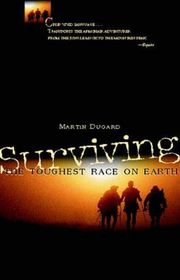
Surviving the Toughest Race on Earth
by Martin Dugard
1998
Dugard recounts his experiences reporting on and competing in the Raid Gauloises, an endurance race through demanding wilderness terrain. The memoir follows physical exhaustion, teamwork and personal uncertainty as he moves from corporate employment toward a life of adventure writing.
Knockdown
by Martin Dugard
1999
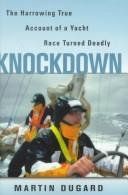
Dugard investigates a yacht race overwhelmed by deadly storms, following competitors whose pursuit of adventure becomes a struggle to survive. Alongside the disaster, he explores why experienced sailors accept extreme risks and what happens when nature exceeds their preparations.
Survivor
by Martin Dugard
2000
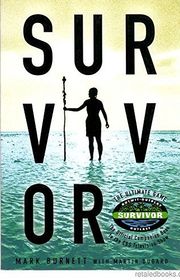
Written from the first Survivor production, this companion account goes behind the television competition on Pulau Tiga. Dugard and producer Mark Burnett examine the contestants’ experience and the personal negotiations that shaped a contest built around endurance and elimination.
Chasing Lance
by Martin Dugard
2001
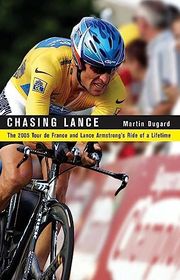
Dugard draws on years covering the Tour de France to explore the race’s world during Lance Armstrong’s final planned appearance. Part travelogue and part sporting portrait, the book combines cycling, local culture and encounters along the route.
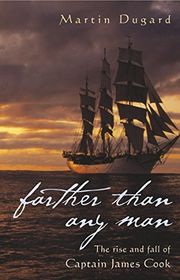
Farther Than Any Man
by Martin Dugard
2001
Following James Cook from modest beginnings to command of major Pacific expeditions, Dugard examines the ambition and ability behind his achievements. The biography also traces how the power acquired through exploration contributed to conflicts that ended in catastrophe.
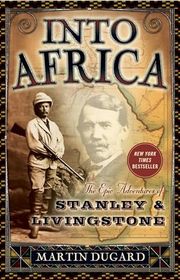
Into Africa
by Martin Dugard
2002
Dugard follows David Livingstone’s disappearance in central Africa and Henry Morton Stanley’s mission to find him. Their converging journeys reveal the ambition, political interests and physical dangers behind one of exploration history’s most famous encounters.
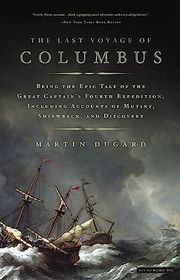
The Last Voyage of Columbus
by Martin Dugard
2005
After disgrace and imprisonment, Christopher Columbus undertakes a final expedition seeking to restore his standing. Dugard follows a voyage beset by storms, conflict, mutiny and shipwreck, portraying an aging explorer whose determination drives him deeper into danger.
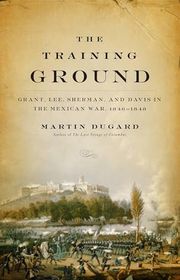
The Training Ground
by Martin Dugard
2008
Before facing one another in the Civil War, Grant, Lee and other future commanders fought together in Mexico. Dugard follows their formative experiences, examining how shared campaigns, battlefield lessons and personal ambitions shaped men who later became enemies.
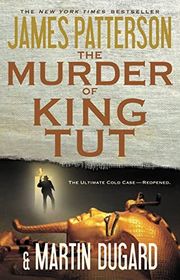
The Murder of King Tut
by James Patterson
2009
Patterson and Martin Dugard investigate the death of Egypt's young king through historical accounts, archaeological records, and forensic evidence. Their reconstruction explores the rivalries surrounding Tutankhamun's reign and presents their theory about how his life ended.
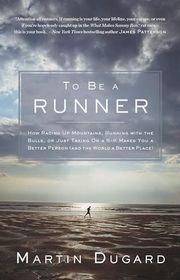
To Be a Runner
by Martin Dugard
2011
Drawing on races and running adventures across six continents, Dugard blends memoir with reflections on the sport’s place in everyday life. Experiences as an athlete and coach become a way to examine discipline, hope and the effort to keep improving.
The Explorers
by Martin Dugard
2013
Dugard traces Burton and Speke’s search for the Nile’s source and the bitter dispute that followed. Connecting their experiences with other explorers’ lives, he examines the curiosity, resilience and competing ambitions that drive people into the unknown.
Taking Paris
by Martin Dugard
2021
From the fall of Paris to its liberation, Dugard follows resistance fighters and Allied leaders working to free the city from Nazi occupation. Their decisions and sacrifices connect street-level danger with the military and political struggle shaping France’s future.
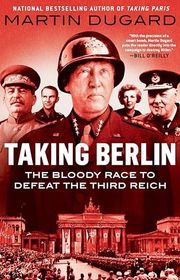
Taking Berlin
by Martin Dugard
2022
As Nazi Germany collapses, Western Allied armies and Soviet forces race toward Berlin. Dugard follows the campaigns, competing commanders and political calculations that turn a shared military objective into a struggle over the shape of postwar Europe.
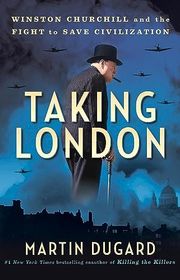
Taking London
by Martin Dugard
2024
With France defeated in 1940, Churchill faces the prospect of a German invasion while Hugh Dowding prepares Britain’s air defenses. Dugard follows the pilots, commanders and political leaders whose decisions shape the aerial battle over Britain.
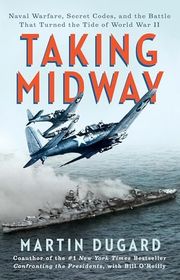
Taking Midway
by Martin Dugard
2025
As Japan prepares a major Pacific offensive, American codebreaker Joseph Rochefort struggles to convince naval leaders of its target. His work and the ensuing clashes between carrier forces form this account of the battle that transformed the Pacific war.
The Long Run
by Martin Dugard
2026
Following major runners of the 1970s and early 1980s, this history traces the marathon's growth from a niche pursuit to mass participation. Individual races and social changes reveal how athletes helped transform public expectations about endurance running.
Where to start with Martin Dugard
For the Taking histories in publication order: Taking Paris → Taking Berlin → Taking London → Taking Midway
For exploration: Farther Than Any Man → Into Africa → The Last Voyage of Columbus → The Explorers
For running memoir and history: To Be a Runner → The Long Run
Standalone Martin Dugard books


by Martin Dugard
2013A Story of Fearless Outcasts, Blundering Geniuses, and Impossible Success
by Martin Dugard
2025Naval Warfare, Secret Codes, and the Battle that Turned the Tide of World War II
by Martin Dugard
2026Steve Prefontaine, Frank Shorter, Joan Benoit, Grete Waitz, and the Decade That Made the Marathon Cool
Author bio
Martin Dugard writes narrative history about exploration, war and endurance. He is also a distance runner and high-school running coach, interests that appear in both his personal writing and his histories of the sport. A fellow of the Royal Geographical Society and a board member of the USA Track and Field Foundation, he lives in Southern California with his wife, Calene. They have three sons.
Travel is part of his research. For The Last Voyage of Columbus, he visited Spain, the Caribbean and Central America. Work on Into Africa took him along Henry Morton Stanley’s route in Tanzania, while researching The Murder of King Tut brought him to Egypt. That last book was written with James Patterson; his other collaborations include the Killing history series with Bill O’Reilly.
Exploration is a subject he approaches through individual lives.
Farther Than Any Man follows Captain James Cook, while The Explorers considers why people choose dangerous journeys. The practical demands of a voyage and the motives for undertaking it give these books two related questions: what happened, and what persuaded someone to take the risk in the first place.
His Taking books move into military history. Taking Paris examines occupation, resistance, collaboration and the struggle to liberate the city. Taking Berlin follows in publication order, with Taking London turning to the defense of Britain through Winston Churchill, Hugh Dowding and the Royal Air Force. Air defense involves machines and planning as well as the pilots who put them into action.
Taking Midway takes that interest in decisive military choices into the Pacific. Codebreaker Joseph Rochefort’s effort to identify the target of a Japanese offensive is central to its account of the carrier battle. Readers can choose a campaign that interests them; the shared Taking label gives the histories a recognizable group rather than a fictional cast whose story must begin in the first volume.
Running offers another route into his work.
To Be a Runner draws on his own experience of distance running. The Long Run looks outward to the athletes and changes that helped bring marathon running into mass participation. The personal and historical approaches complement each other: one considers running as part of a life, while the other follows the growth of a sport. Together with the exploration books, they give readers an alternative to the military histories while retaining an interest in people pushing through difficult physical circumstances.
















Edited by
Software engineer whose passion for tracking book recommendations from podcasts inspired the creation of MRB.
Lead investor at 3one4 Capital whose startup expertise and love for books helped shape MRB and its growth.
Comments
Spotted a missing book, a wrong order or a mistake? Tell us and we'll fix this page.
We're a reading guide, not the author or publisher, so we can't send books or pass on messages.