
Lymond Chronicles Books in Order
Part ofDorothy Dunnett Books in OrderBrowse the Lymond Chronicles by Dorothy Dunnett in order, with book summaries, series background, reading order, and where to start.
Last updated:
As an Amazon Associate, we earn from qualifying purchases (at no extra cost to you).
Lymond Chronicles books in publication order
6 books
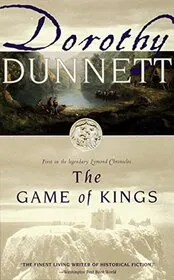
The Game of Kings
by Dorothy Dunnett
1961
Returning to a Scotland shaken by invasion, Francis Crawford of Lymond must clear his name and outplay men who call him traitor. It opens the series with feuds, schemes, and a hero as brilliant as he is dangerous.
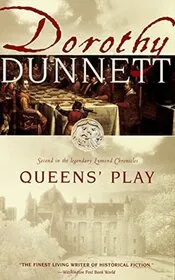
Queens' Play
by Dorothy Dunnett
1964
Sent to France on a covert mission, Lymond must protect the young Mary Queen of Scots without losing himself in disguise. Court spectacle, espionage, and divided loyalties turn the novel into a dazzling game of masks.
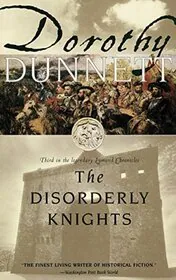
The Disorderly Knights
by Dorothy Dunnett
1966
Lymond heads to Malta to watch the Knights of St John face the Turkish threat, only to find rot inside the order itself. Faith, manipulation, and a terrifying private enemy make this a brutal turning point in the series.
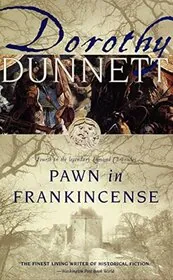
Pawn in Frankincense
by Dorothy Dunnett
1969
Lymond hunts through the Ottoman world for his kidnapped child while serving on a mission to the Sultan. Personal desperation and international intrigue merge in one of the series' darkest and most relentless adventures.
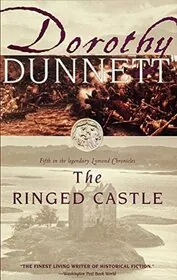
The Ringed Castle
by Dorothy Dunnett
1971
Trying to outrun grief and scandal, Lymond travels to Muscovy and enters the violent court of Ivan the Terrible. Russia offers fresh campaigns and new schemes, but the past follows him all the way north.
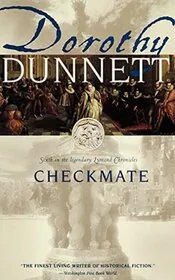
Checkmate
by Dorothy Dunnett
1975
In 1557 Lymond returns to France to lead forces in Scotland's struggle against England, but battlefield success only sharpens the danger around him. The final book drives toward war, family truth, and the last moves in a very old game.
Lymond Chronicles books in chronological order
Series background & context
The Lymond Chronicles open with The Game of Kings in a battered Scotland of 1547, just after invasion, defeat, and political panic. Into that mess comes Francis Crawford of Lymond, younger son of a noble family, accused by many of treason and trusted by almost no one. He is brilliant, reckless, theatrically gifted, and hard to read even for the people who love him. The first book starts as a return home story, but it quickly becomes something larger and far more dangerous.
Lymond is never allowed an easy stage.
Across six books, Dunnett sends him through Scotland, France, Malta, the Ottoman world, England, and Russia. He serves, spies, fights, performs, negotiates, and survives by wit as often as by force. Historical figures crowd the page, but the series never feels like a lesson dressed up as fiction. It feels lived in. Courts are noisy, ships are cramped, campaigns go wrong, and every political bargain seems to come with a private cost hidden inside it.
What makes the series memorable is the tension between public brilliance and private damage. Lymond can outtalk, outplay, or outthink almost anyone, yet much of the story turns on the things he cannot settle cleanly: loyalty to family, responsibility to country, questions of identity, and the people he hurts while trying to carry too much alone. The books are full of masks, roles, coded language, and performances, which suits a hero who is always partly acting, even when the danger is real.
These are historical adventures, but they are not simple swashbucklers. The action is vivid, yet the emotional stakes keep deepening from Queens' Play and The Disorderly Knights through Pawn in Frankincense, The Ringed Castle, and Checkmate. Love, friendship, memory, faith, ambition, and grief all matter here. So does humour. Dunnett can move from high comedy to real pain very quickly, which is one reason the books stay so alive.
They also reward patience. The prose is dense, the cast is large, and Dunnett does not stop to explain every reference the first time it appears. For many readers, that challenge is part of the pleasure. The more time you give Lymond, the more the pattern comes into view. Read in order, the six books build one of those rare long stories where the personal and the political feel equally sharp from first page to last.






Edited by
Software engineer whose passion for tracking book recommendations from podcasts inspired the creation of MRB.
Lead investor at 3one4 Capital whose startup expertise and love for books helped shape MRB and its growth.
Comments
Did we miss something? Have feedback?
Help us improve this page by sharing your thoughts