
Lost Colonies Trilogy Books in Order
Part ofBV Larson Books in OrderExplore the Lost Colonies Trilogy by BV Larson, with books in order, quick summaries, series background, and where to start.
Last updated:
As an Amazon Associate, we earn from qualifying purchases (at no extra cost to you).
Lost Colonies Trilogy books in publication order
3 books
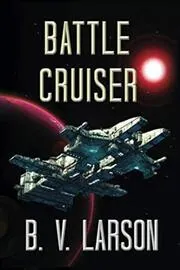
Battle Cruiser
by BV Larson
2015
A century after Earth lost contact with its colonies, a massive warship returns from the outer reaches. Captain William Sparhawk is sent back out to explore the reunion, and it quickly turns dangerous.
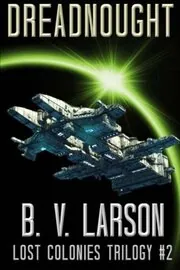
Dreadnought
by BV Larson
2015
Sparhawk's first voyage reveals that Earth is in far greater danger than anyone guessed. He must choose between warning home and hunting enemy scouts, knowing either choice could ignite a wider war.
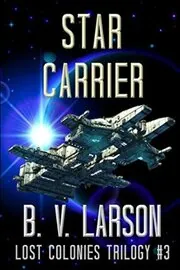
Star Carrier
by BV Larson
2016
Earth begins building a terrifying new fleet, but Captain William Sparhawk is no longer sure what it is really for. The answers lead toward secrecy, fear, and a truth more unsettling than open war.
Lost Colonies Trilogy books in chronological order
Series background & context
The Lost Colonies Trilogy starts with a smart piece of future history. A century earlier, Earth's sun erupted and destroyed the wormhole network that linked humanity's worlds. Trade died, communication failed, and Old Earth was cut off from the younger colonies it had once founded. By the time the series opens, that separation feels permanent.
Then a massive ship appears at the edge of the Solar System.
That first arrival gives the trilogy its shape. Earth has been isolated and relatively outdated. The lost colonies, by contrast, have kept developing, fighting, and changing in ways the homeworld never saw. The reunion is not warm. It is tense, suspicious, and full of the uncomfortable realization that humanity's descendants may now be better at warfare than humanity itself.
Captain William Sparhawk is the central figure holding the story together. He commands Defiant, Earth's first capital ship to return to the stars, and he works well as a lead because he is not a swaggering conqueror. He is honorable, practical, and often caught between what seems right and what Earth believes it needs. Through him, the books get to explore not just combat and exploration, but also secrecy, responsibility, and the fear of discovering that home is no longer the center of the human story.
The trilogy broadens nicely from there. Battle Cruiser is about first contact after the long silence and the uneasy discovery that the younger worlds survived. Dreadnought pushes deeper into the implications, as Sparhawk learns that the real danger is larger than one awkward reunion. Star Carrier takes the story into the unsettling moment when Earth begins building a fleet and readers have to ask whether that is a sensible defense, a political power grab, or both.
It is a tighter arc than some of Larson's longer series.
That makes it a good choice for readers who want military science fiction with a clear beginning, middle, and end. You still get big ships, expanding threats, and strange alien possibilities beyond the human frontier, but the trilogy keeps its attention on one main crisis, the question of what becomes of humanity after its scattered branches meet again and no longer recognize one another.
If you like first-contact tension mixed with naval command and a compact three-book escalation, this is one of Larson's more approachable series.


Edited by
Software engineer whose passion for tracking book recommendations from podcasts inspired the creation of MRB.
Lead investor at 3one4 Capital whose startup expertise and love for books helped shape MRB and its growth.
Comments
Did we miss something? Have feedback?
Help us improve this page by sharing your thoughts