
Lloyd C Douglas Books in Order
Browse Lloyd C Douglas books in order, with short summaries, notes on his best-known novels, and simple advice on where to start reading.
Last updated:
As an Amazon Associate, we earn from qualifying purchases (at no extra cost to you).
Lloyd C Douglas books in publication order
11 books
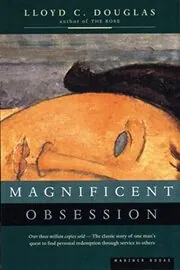
Magnificent Obsession
by Lloyd C Douglas
1929
After a reckless young man is saved at the cost of a beloved doctor's life, guilt drives him to change. His search for the doctor's hidden creed becomes a story of sacrifice, healing, and moral renewal.
Forgive Us Our Trespasses
by Lloyd C Douglas
1932
Born into a harsh and loveless world, a rebellious boy grows into a bitter young cynic. Douglas follows his long road toward mercy, forgiveness, and the uneasy hope that a damaged life can still be remade.
Green Light
by Lloyd C Douglas
1934
Young surgeon Newell Paige takes the blame for a fatal mistake and watches his career collapse. Guided by the wise Dean Harcourt, he has to decide whether sacrifice, love, and faith can light a way back.

White Banners
by Lloyd C Douglas
1936
On a snowy day in small-town Indiana, peddler Hannah Parmalee steps into the struggling Ward household and stays. Her warmth and common sense quietly change the family's fortunes as illness, money worries, and betrayal close in.

Home for Christmas
by Lloyd C Douglas
1937
Five grown siblings return to the old family homestead to recreate the Christmases they once knew. What begins as a nostalgic plan becomes a warm reunion about memory, family strain, and the pull of home.
Disputed Passage
by Lloyd C Douglas
1939
A medical student is pulled between cold scientific ambition and a more humane idea of healing. His journey takes him from the classroom to war-torn China, where love, danger, and conscience all demand an answer.

Doctor Hudson's Secret Journal
by Lloyd C Douglas
1939
This prequel to Magnificent Obsession turns back to Dr. Wayne Hudson himself. Through his reflections and cases, Douglas explores the private discipline and spiritual outlook that shaped Hudson's unusual power to heal.

Invitation to Live
by Lloyd C Douglas
1941
Barbara Breckenridge expects money from her great-grandmother's will and gets a challenge instead. One cathedral service sends the restless heiress into a new kind of life, where other people's troubles begin to matter deeply.
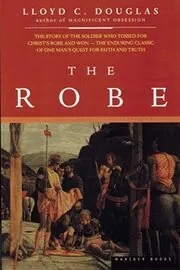
The Robe
by Lloyd C Douglas
1942
Roman tribune Marcellus wins Jesus' robe after the Crucifixion and cannot escape what follows. His search for answers carries him across the empire and toward a faith that remakes his life at great personal cost.
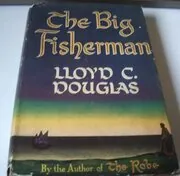
The Big Fisherman
by Lloyd C Douglas
1948
Set around Simon Peter, John the Baptist, and Herod's court, this sweeping novel blends biblical history with invented lives. Fara's vow of revenge collides with Peter's growing faith and the pull of Jesus' teachings.
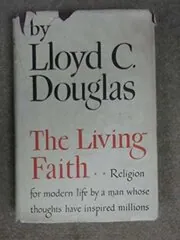
The Living Faith
by Lloyd C Douglas
1955
A posthumous selection of Douglas's sermons, this book gathers his reflections on the Sermon on the Mount, prayer, courage, and daily Christian life. It shows the preacher behind the novelist, practical, direct, and humane.
Where to start with Lloyd C Douglas
If you want the book that made him famous: Magnificent Obsession → Doctor Hudson's Secret Journal
If you want biblical historical fiction: The Robe → The Big Fisherman
If you like medical drama and moral conflict: Green Light → Disputed Passage
If you prefer warmer family-centered stories: White Banners → Invitation to Live → Home for Christmas
If you want a novel centered on forgiveness: Forgive Us Our Trespasses
Standalone Lloyd C Douglas books
Author bio
Lloyd C. Douglas was born in Columbia City, Indiana, on August 27, 1877. He spent parts of his boyhood in Monroeville and Wilmot, Indiana, and in Florence, Kentucky, where his father served a Lutheran church, so he grew up around sermons, parish calls, and the everyday routines of church life.
Church came first for him.
After graduating from Wittenberg College in 1903, he was ordained in the Lutheran ministry. He married Bessie Porch, and the couple had two daughters. Over the years he served churches and religious posts in places including Indiana, Ohio, Washington, the University of Illinois, Ann Arbor, Akron, Los Angeles, and Montreal, learning how ordinary people talked about illness, money, grief, hope, and belief.
That background mattered. Before he became a novelist, Douglas had already spent years writing sermons and religious books, and he had a preacher's feel for the stories people carry into a room. When he retired from the pulpit at St. James United Church in Montreal, he did not ease into quiet retirement. He started writing fiction instead.
His first novel, Magnificent Obsession, appeared in 1929, when he was fifty-one, and it changed the course of his life. The book follows a reckless man whose guilt over a doctor's death turns into a search for hidden generosity, moral repair, and a more useful life. Readers responded right away to that mix of emotion, medicine, and spiritual curiosity.
He was a late starter, but not a hesitant one.
Books like Forgive Us Our Trespasses, Green Light, White Banners, and Disputed Passage show what Douglas did well. He liked people under strain, young doctors facing hard choices, families stretched by money and illness, lonely people being nudged toward mercy, and proud people learning that they cannot live by willpower alone. Even when the plots turn dramatic, the real pull is usually a question about how to live decently.
Then came the big historical novels. The Robe follows the Roman tribune Marcellus after the Crucifixion, and The Big Fisherman turns toward Simon Peter, John the Baptist, Herod's court, and the world around Jesus' ministry. Those books made Douglas an even bigger name, and film versions later carried several of his stories to a much wider audience.
What keeps his work readable is its plain purpose. Douglas was interested in faith less as doctrine than as action, what people do when shame catches up with them, when forgiveness looks hard, or when a second chance finally arrives. He returned again and again to service done quietly, conscience tested in public, and the stubborn idea that inner change should show up in daily behavior.
He died in Los Angeles on February 13, 1951, and was buried at Forest Lawn Memorial Park in Glendale. His autobiography, Time to Remember, was published that same year, and his daughters later completed the story of his life in The Shape of Sunday. For someone who did not begin publishing novels until midlife, he left behind a body of work that still feels closely tied to the world he knew best, churches, hospitals, troubled households, and people trying to do better than they did yesterday.







Edited by
Software engineer whose passion for tracking book recommendations from podcasts inspired the creation of MRB.
Lead investor at 3one4 Capital whose startup expertise and love for books helped shape MRB and its growth.
Comments
Did we miss something? Have feedback?
Help us improve this page by sharing your thoughts