
Lionel Davidson Books in Order
See Lionel Davidson's books in order, with short summaries, where to start advice, and background on his classic spy, adventure, and thriller novels.
Last updated:
As an Amazon Associate, we earn from qualifying purchases (at no extra cost to you).
Lionel Davidson books in publication order
9 books
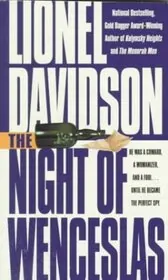
The Night of Wenceslas
by Lionel Davidson
1960
Nicolas Whistler, a young Londoner with Czech roots, is sent to Prague on what seems like a routine business trip. Instead he stumbles into Cold War espionage and has to think fast to stay ahead of the secret police.
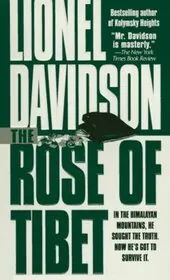
The Rose of Tibet
by Lionel Davidson
1962
When Charles Houston learns his missing brother may still be alive, he leaves London and slips into Tibet from India. The search leads him through dangerous mountains, an isolated monastery, and the upheaval of the Chinese invasion.

A Long Way to Shiloh
by Lionel Davidson
1966
Semitic scholar Caspar Laing is drawn into a hunt for the lost Menorah, racing from embassies and archives into the harsh landscapes of Israel and the Dead Sea. It's a treasure thriller with brains, danger, and dry humor.
Making Good Again
by Lionel Davidson
1968
Lawyer James Raison goes to Germany to handle a reparations claim and finds himself pulled into unfinished business from the war. Old loyalties and old lies turn legal work into a dangerous reckoning.

Smith's Gazelle
by Lionel Davidson
1971
In the Israeli desert during the Six-Day War, an old Bedouin and two boys, one Jewish and one Arab, become part of a fragile miracle. Their friendship and a hidden herd of gazelles give the story both warmth and tension.
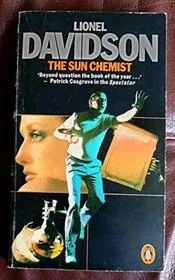
The Sun Chemist
by Lionel Davidson
1976
Researcher Igor Druyanov follows missing Chaim Weizmann papers from England to Israel. What begins as archival cleanup becomes a dangerous chase involving murder, stolen cases, and an energy secret powerful enough to trouble governments.

The Chelsea Murders / Murder Games
by Lionel Davidson
1978
A killer is stalking Chelsea, leaving poetry as a clue before each murder. As police circle a loose bohemian world of artists, film-makers, and hangers-on, Davidson turns fashionable London into a tense and deeply odd hunting ground.
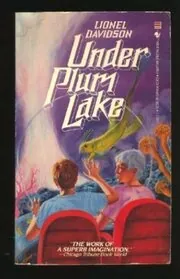
Under Plum Lake
by Lionel Davidson
1980
Thirteen-year-old Barry explores a cave on the Cornish coast and stumbles into Egon, a secret world beneath the sea. Guided by the strange boy Dido, he sees wonders that make ordinary life feel both smaller and harder to return to.
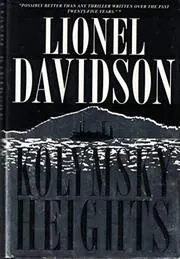
Kolymsky Heights
by Lionel Davidson
1994
A plea for help slips out of a secret Siberian lab and reaches Johnny Porter, a brilliant linguist and master of disguise. His mission into the Arctic wastes becomes a brutal test of nerve, endurance, and invention.
Where to start with Lionel Davidson
If you want classic Cold War suspense: The Night of Wenceslas → Kolymsky Heights
If you want big adventure: The Rose of Tibet → A Long Way to Shiloh
If you want darker, more tangled thrillers: Making Good Again → The Sun Chemist → The Chelsea Murders
If you want something unexpected: Under Plum Lake
Standalone Lionel Davidson books
Author bio
Lionel Davidson was born in Hull, Yorkshire, on March 31, 1922, the youngest of nine children in a Polish-Jewish immigrant family. His father, a tailor and trade union organizer, died when Lionel was still very young, and the family moved to London, where he grew up. His mother had come from Vilnius, and one of the small, telling details from Davidson's life is that he later taught her to read and write.
He left school at 15 and started work as an office boy at The Spectator. He published a short story there while still a teenager, then moved into writing children's magazine pieces and photo captions for Keystone Press. He did not come through universities or literary circles. He learned by working, watching, and writing to deadline.
Then came the war.
During the Second World War he served as a wireless operator in the Royal Navy's submarine service. Afterward he returned to press work and traveled around Europe as a reporter and freelancer. One of those trips gave him the spark for The Night of Wenceslas, his first novel, a Cold War story that sends an ordinary young man into a Prague trip gone badly wrong.
That book arrived in 1960 and won both the Gold Dagger and the Author's Club First Novel Award. Davidson followed it with The Rose of Tibet, which takes a London schoolteacher into Tibet during the Chinese invasion, and then with A Long Way to Shiloh, a witty, dangerous hunt for the lost Menorah that won him a second Gold Dagger. Readers often come to Davidson for the suspense, but they stay for the odd details, the humor, and the way his places feel fully lived in.
He liked throwing outsiders into trouble.
His middle period widened the map. Davidson lived in Israel for much of the period between 1968 and 1978, and books such as Making Good Again, Smith's Gazelle, and The Sun Chemist brought Jewish history, restitution, science, and the politics of the region into his thrillers without turning them into lectures. Even when the plots get elaborate, the people in them usually feel a little rumpled, a little fallible, and very human.
He also wrote for younger readers under the name David Line. That side of his work includes Under Plum Lake, a strange, memorable children's novel about a hidden world beneath the sea. Later he published The Chelsea Murders, which won him a third Gold Dagger, and after a long gap returned with Kolymsky Heights in 1994, a huge Siberian thriller that reminded readers how much nerve and craft he still had in reserve.
Davidson never wrote a huge shelf of books. He wrote slowly, disappeared for long stretches, and left a fairly small body of adult fiction. But the range inside that shelf is striking: Prague under the Cold War, Tibet in upheaval, desert treasure hunts, postwar Germany, London murder, and frozen Siberia. He was also a Fellow of the Royal Society of Literature and received the Crime Writers' Association's Diamond Dagger in 2001.
He died in London on October 21, 2009. By then he had become one of those writers other writers quietly press on people they like, not because he was flashy, but because once his books click, they tend to stick.






Edited by
Software engineer whose passion for tracking book recommendations from podcasts inspired the creation of MRB.
Lead investor at 3one4 Capital whose startup expertise and love for books helped shape MRB and its growth.
Comments
Did we miss something? Have feedback?
Help us improve this page by sharing your thoughts