
Liam McIlvanney Books in Order
Explore Liam McIlvanney books in order, with series summaries, non-fiction highlights, crime-world background, and simple suggestions on where to start reading.
Last updated: 2 new books added
As an Amazon Associate, we earn from qualifying purchases (at no extra cost to you).
Liam McIlvanney books in publication order
9 books
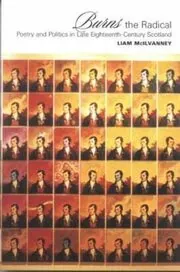
Burns the Radical
by Liam McIlvanney
2002
Liam McIlvanney's study of Robert Burns challenges the cosy image of the national bard, showing how his poems, songs and letters draw on radical political traditions in Scotland and beyond and place him firmly within the intellectual currents of the Enlightenment.
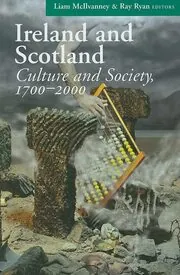
Ireland and Scotland
by Liam McIlvanney
2005
Edited by Liam McIlvanney and Ray Ryan, this scholarly volume surveys culture and society in Ireland and Scotland from 1700 to 2000, with essays on literature, language, religion, politics and sport that trace connections and contrasts between the two countries.
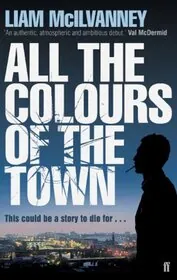
All the Colours of the Town
by Liam McIlvanney
2009
Glasgow journalist Gerry Conway picks up a lead suggesting star Justice Minister Peter Lyons once had links to loyalist paramilitaries. As Conway follows the trail from Scotland to Belfast, a routine scoop turns into an obsession that exposes sectarian hatred and high-level secrets.
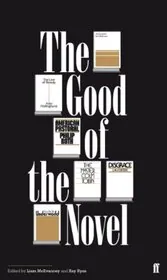
The Good of the Novel
by Liam McIlvanney
2011
This edited collection brings together leading critics and novelists to write in depth about thirteen modern novels, using close readings to explore how contemporary fiction works and what the novel can still do for readers and culture.
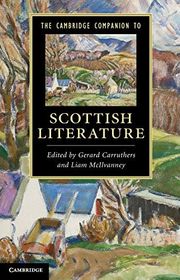
The Cambridge Companion to Scottish Literature
by Liam McIlvanney
2012
Essays trace Scottish literature from its early origins to the period after devolution, across English, Scots, and Gaelic writing. Major authors, genres, and cultural movements reveal how Scotland's distinctive traditions developed at home and throughout its diaspora.
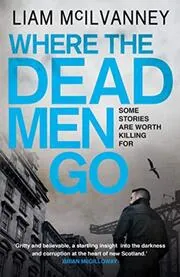
Where the Dead Men Go
by Liam McIlvanney
2013
After three years away, reporter Gerry Conway returns to the struggling Glasgow Tribune and is sent to cover a gangland shooting when his protégé disappears. Finding the younger man's body, he follows the story into a dangerous web of crime, politics and media spin.
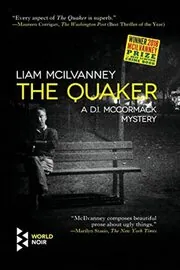
The Quaker
by Liam McIlvanney
2018
During a brutal Glasgow winter in 1969, a serial killer dubbed the Quaker has murdered three women who vanished from the same dance hall. DI Duncan McCormack is called in to review the stalled case and uncovers corruption, secrets and a connection to a risky heist.
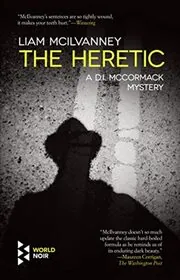
The Heretic
by Liam McIlvanney
2022
In 1975 Glasgow, DI Duncan McCormack returns from London to head a new serious crime unit and finds the city rocked by a deadly warehouse fire, a mutilated ex-MP and a pub bombing, all pointing toward gang bosses and buried police compromises.
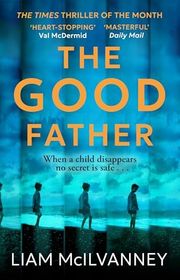
The Good Father
by Liam McIlvanney
2025
Gordon and Sarah Rutherford's young son disappears from a beach, leaving only a sandal behind. As hope gives way to suspicion, the parents turn on those around them and confront how far they will go to find him.
Where to start with Liam McIlvanney
If you want his Glasgow detective stories: The Quaker → The Heretic.
If you enjoy journalism and political intrigue: All the Colours of the Town → Where the Dead Men Go.
If you prefer to follow his fiction in publication order: All the Colours of the Town → Where the Dead Men Go → The Quaker → The Heretic.
If you are here for his work on Burns and Scottish culture: Burns the Radical → Ireland and Scotland → The Good of the Novel.
Liam McIlvanney sub-series and character series
Liam McIlvanney collections, short stories, and related book types
Non-Fiction
Standalone Liam McIlvanney books
Author bio
Liam McIlvanney grew up in Kilmarnock in Ayrshire, in a family where stories were part of everyday life. His father, William McIlvanney, was already known for the Laidlaw crime novels, so the idea of writing never felt remote or glamorous. It was something that happened at the kitchen table.
After school he studied at the University of Glasgow and then at Oxford. He went on to teach Scottish and Irish literature at the University of Aberdeen for more than a decade, and during that time wrote Burns the Radical: Poetry and Politics in Late Eighteenth-Century Scotland, a study that puts Robert Burns back into the radical debates of his age and won a major Scottish first-book award.
Alongside that research he co-edited books on Ireland and Scotland's shared history and on the modern novel, and published essays and reviews in the literary press. He later moved with his family to Dunedin in New Zealand to take up the Stuart Chair in Scottish Studies at the University of Otago, where he now teaches Scottish literature, culture and history and co-directs the Centre for Irish and Scottish Studies.
As a boy he devoured Ray Bradbury's short story collections, working through books like The Illustrated Man and Something Wicked This Way Comes the way other kids attacked blockbuster fantasy series.
Crime fiction arrived a little later. A chance conversation with an editor convinced him that the kinds of stories he loved discussing in class might also be the kinds he could write. The result was All the Colours of the Town in 2009, a novel that introduces Glasgow journalist Gerry Conway and follows a trail from Scottish politics to loyalist Belfast. The book was shortlisted for a national fiction prize and marked him out as a fresh voice in Scottish crime writing.
Where the Dead Men Go returned to Conway and the Glasgow Tribune, this time against a backdrop of shrinking newsrooms, gangland shootings and a city reshaping itself around big events and political change. The novel won the Ngaio Marsh Award for Best New Zealand Crime Novel, reflecting the fact that McIlvanney's Glasgow stories had found a strong readership in his adopted home as well as in Scotland.
Glasgow itself often feels like one of the main characters in his fiction, from condemned tenements and newsroom bars to motorways driven through old neighbourhoods.
His second crime series centres on Detective Inspector Duncan McCormack, a Highland-born Catholic working in a largely Protestant city and a police culture that does not quite trust him. The Quaker, set in 1969 and loosely inspired by the Bible John murders, drops McCormack into a failing investigation and forces him to question both his colleagues and the official story; it went on to win the McIlvanney Prize for Scottish Crime Book of the Year. The Heretic pushes the same character into the mid-1970s, tangling an arson attack, a murdered former politician and a deadly pub bombing as McCormack navigates gang bosses, internal politics and personal secrets, and it has picked up further award nominations.
McIlvanney has spoken about returning again and again to writers like Graham Greene, Muriel Spark, Flannery O'Connor and Shirley Jackson for their mix of tight prose, moral seriousness and dark humour. He tends to fictionalise real events rather than retell them, using crimes and investigations as a way to think about power, loyalty and the different kinds of community people build around themselves. Based in Dunedin, he balances academic work with fiction, teaches and supervises new writers, and still treats reading and writing as two sides of the same long habit.

Edited by
Software engineer whose passion for tracking book recommendations from podcasts inspired the creation of MRB.
Lead investor at 3one4 Capital whose startup expertise and love for books helped shape MRB and its growth.
Comments
Did we miss something? Have feedback?
Help us improve this page by sharing your thoughts