
Lawrence Wright Books in Order
Explore Lawrence Wright books in order, with short summaries, standout nonfiction and novels, plus a quick guide to the best place to start reading.
Last updated:
As an Amazon Associate, we earn from qualifying purchases (at no extra cost to you).
Lawrence Wright books in publication order
19 books
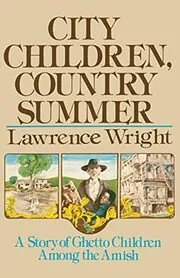
City Children, Country Summer
by Lawrence Wright
1979
Wright follows Fresh Air Fund children from New York as they spend a summer in an Amish farming community in Pennsylvania. It is a close-up look at culture shock, kindness, and the uneasy gap between city and country life.
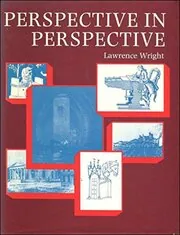
Perspective In Perspective
by Lawrence Wright
1983
This accessible study explains how perspective works across drawing, photography, film, and television. Wright keeps the geometry manageable while showing how realism is built, bent, and sometimes faked.
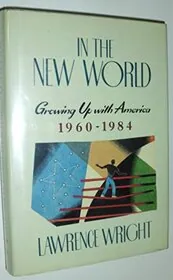
In the New World
by Lawrence Wright
1987
Part memoir, part social history, this book follows Wright from Dallas boyhood into the upheavals of the 1960s and 1970s. Personal memory and national change move side by side.
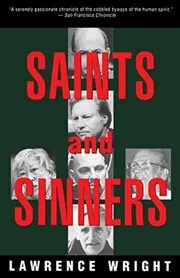
Saints and Sinners
by Lawrence Wright
1993
Using profiles of preachers, skeptics, and religious outsiders, Wright explores American belief in all its messiness. The book moves from grace to scandal, asking what faith looks like when power and personality get involved.
The Peace Report
by Lawrence Wright
1993
Wright asks whether a world beyond war is really possible. He weighs peace as an ideal against the stubborn facts of politics, violence, and human ambition.
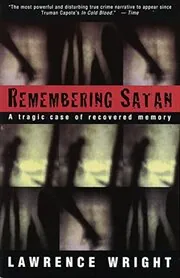
Remembering Satan
by Lawrence Wright
1994
This true-crime account follows the Paul Ingram case, in which accusations of satanic abuse and recovered memories shattered a family. Wright shows how fear, suggestion, and the justice system can produce devastating consequences.
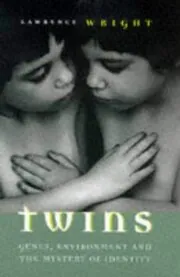
Twins
by Lawrence Wright
1997
Expanded from a magazine piece, this book uses twin studies to explore identity, heredity, and the old fight between nature and nurture. Wright mixes science, history, and human stories without losing the wonder of the subject.
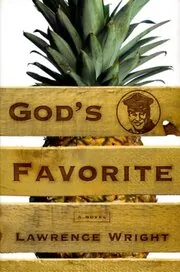
God's Favorite
by Lawrence Wright
2000
In the last frantic days of Panama's dictatorship, Tony Noriega tries to outrun enemies, invading troops, and his own guilty visions. Wright turns a real political collapse into dark, fast-moving historical fiction.

Character Design for Mobile Devices
by Lawrence Wright
2006
A practical guide to creating memorable characters for small screens, this book focuses on pixel art, sprites, and the limits of early mobile hardware. It is aimed at designers who need clarity, charm, and efficiency.
The Looming Tower
by Lawrence Wright
2006
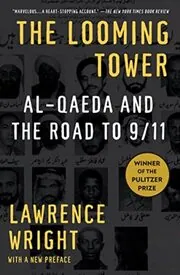
Wright traces the rise of al-Qaeda and the missed chances that led toward 9/11. It is sweeping history told through vivid people, rival agencies, and a series of failures that slowly become catastrophe.
Going Clear
by Lawrence Wright
2013
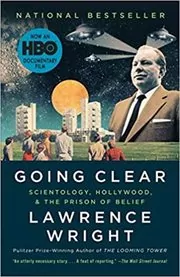
Wright digs into Scientology's history, leadership, and culture of control through extensive interviews with current and former members. It is both an investigation into a secretive organization and a study of why belief can hold so tightly.
Recommended by
1 person Joe Rogan recommended this book
Joe Rogan
"One of the weirdest books I've ever read." - Joe Rogan
Joe Rogan's recommendation of this book
Metal Sharpens Metal
by Lawrence Wright
2014
As the world's military powers close in on open conflict, a young Australian schoolboy is forced into a crisis that suddenly feels personal. The book frames war through one ordinary life caught in its path.
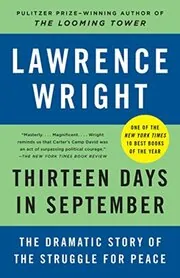
Thirteen Days in September
by Lawrence Wright
2014
Wright turns the 1978 Camp David summit into a tight political drama, following Carter, Begin, and Sadat through thirteen exhausting days of bargaining. The result is diplomatic history with real suspense.
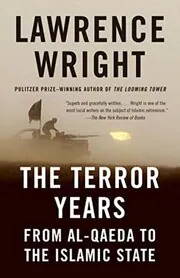
The Terror Years
by Lawrence Wright
2016
This collection gathers Wright's reporting on terrorism in the Middle East, from al-Qaeda's rise to the Islamic State era. The pieces combine field reporting, political context, and a strong sense of lives caught in the blast zone.
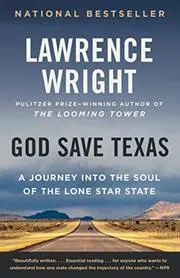
God Save Texas
by Lawrence Wright
2018
Part memoir, part reportage, this book wrestles with Texas as symbol and actual place. Wright looks at its politics, myths, inequalities, and restless growth with affection, frustration, and sharp humor.
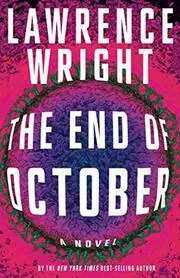
The End of October
by Lawrence Wright
2020
When a lethal virus erupts in Indonesia, epidemiologist Henry Parsons races to trace it before the outbreak becomes a global catastrophe. The book blends medical detail, geopolitics, and family stakes into a tense pandemic thriller.
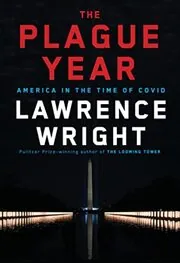
The Plague Year
by Lawrence Wright
2021
Wright chronicles the first stretch of COVID-19, from the outbreak's early days to the vaccine rollout and the political chaos surrounding it. It reads like real-time history written under pressure.

Mr. Texas
by Lawrence Wright
2023
After an impulsive act of heroism, struggling rancher Sonny Lamb is pushed into a run for the Texas legislature. Wright uses his unlikely candidate to skewer money, ambition, and backroom politics with a light touch.

The Human Scale
by Lawrence Wright
2025
FBI agent Tony Malik travels to the West Bank and gets pulled into the murder investigation of an Israeli police chief. The case becomes a tense thriller about distrust, family history, and the human cost of the Israeli-Palestinian conflict.
Where to start with Lawrence Wright
If you want his defining book: The Looming Tower
If you want investigative nonfiction: Going Clear → The Plague Year
If you want Texas on the page: God Save Texas → Mr. Texas
If you want fiction first: The End of October → Mr. Texas → The Human Scale
Lawrence Wright collections, short stories, and related book types
Non-Fiction
Standalone Lawrence Wright books
Author bio
Lawrence Wright was born in Oklahoma City in 1947, but Texas is the place that keeps coming back in his work. His family moved first to Abilene and then to Dallas, where he spent his teen years and graduated from Woodrow Wilson High School. The mix of religion, politics, ambition, and performance that shaped Texas would later feed books like God Save Texas and Mr. Texas.
He did not set out on a straight line to the career readers know now.
After Tulane, Wright opposed the Vietnam War and received conscientious objector status. That decision took him to Cairo, where he taught English at the American University in Cairo and later earned a master’s degree in applied linguistics there. Living in Egypt opened a much larger world to him. He has said that being dropped into a place he did not fully understand sharpened the curiosity that would define his reporting.
Back in the United States, he worked as a race relations reporter in Nashville, then for a Southern Regional Council publication in Atlanta, and later for magazines including Texas Monthly and Rolling Stone. In 1992, he joined The New Yorker as a staff writer. By then he had found the lane he still works in best, long, patient reporting that enters closed systems and explains how people live inside them.
That became his signature.
Readers often start with The Looming Tower, his book on the rise of al-Qaeda and the road to 9/11. It won the Pulitzer Prize for General Nonfiction, but what keeps people talking about it is the way it turns a huge subject into a human story, full of rivalries, blind spots, and missed chances. Going Clear does something similar with Scientology, using years of interviews and research to show how belief, celebrity, fear, and power can get tangled together.
He is just as interested in institutions as he is in the people caught inside them.
That shows up again in Thirteen Days in September, about the Camp David talks, and in The Plague Year, his account of the first stretch of COVID-19 in America. Even when the subject is diplomacy or public health, Wright writes toward tension, motive, and the small decisions that change everything. His fiction carries the same habits into new territory, from the pandemic thriller The End of October to the political satire Mr. Texas and the conflict-driven The Human Scale.
Faith, power, secrecy, violence, and Texas keep returning in his work. So does the question of how ordinary people survive inside big systems, whether that system is a religion, a government, a terror network, or a state myth. He has also written for the stage and screen, including My Trip to Al-Qaeda, Camp David, and the screenplay for The Siege. Film and television have circled back to his books, too. Going Clear became an Emmy-winning documentary, and The Looming Tower was adapted as a miniseries.
These days Wright lives in Austin with his family. He still writes for The New Yorker, and he also plays keyboard in the blues band WhoDo. That detail feels right, because even in his most serious work, there is usually a sense that he is listening closely, trying to catch the rhythm beneath the noise.


Edited by
Software engineer whose passion for tracking book recommendations from podcasts inspired the creation of MRB.
Lead investor at 3one4 Capital whose startup expertise and love for books helped shape MRB and its growth.
Comments
Did we miss something? Have feedback?
Help us improve this page by sharing your thoughts