
Land of the True Game Books in Order
Part ofSheri S Tepper Books in OrderThis page lists the Land of the True Game books by Sheri S Tepper in order, with summaries, series background, and where to start reading.
Last updated:
As an Amazon Associate, we earn from qualifying purchases (at no extra cost to you).
Land of the True Game books in publication order
4 books
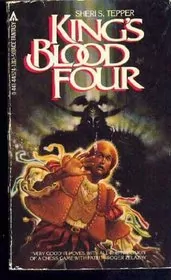
King's Blood Four
by Sheri S Tepper
1983
Peter grows up in a world where power is sorted into dangerous games and inherited ranks. His own birth and abilities make him valuable to people who would rather use him than save him.
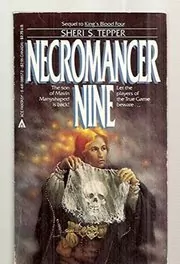
Necromancer Nine
by Sheri S Tepper
1983
Peter moves deeper into the realm of necromancers, rival powers, and hidden lineage. The more he learns about the game, the more dangerous the board becomes.
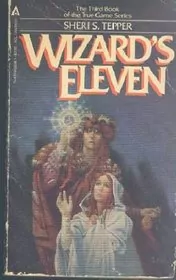
Wizard's Eleven
by Sheri S Tepper
1984
Peter reaches the hardest stage of his journey as magic, politics, and the world's secret history collide. The final contest is about far more than winning.
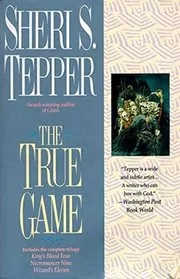
The True Game
by Sheri S Tepper
1996
This omnibus collects the Peter trilogy, beginning with a vulnerable boy and widening into one of Tepper's richest fantasy worlds. It is the clearest doorway into the larger True Game saga.
Land of the True Game books in chronological order
Series background & context
Land of the True Game is the Peter trilogy, the branch of Tepper's larger saga that first lays out the world's rules, or at least the rules as people think they understand them. The books begin with a boy in danger and widen from there into one of Tepper's most inventive fantasy settings, a place where power is formalized into games, titles, talents, and inherited positions that never stay as simple as they look.
Peter is the heart of it.
He begins from a vulnerable place, and that vulnerability is important. Tepper is not writing a clean wish-fulfillment arc. She is interested in how a child grows up inside systems designed to use him, sort him, or decide his value before he understands what is happening. As Peter moves through King's Blood Four, Necromancer Nine, and Wizard's Eleven, the world keeps getting larger and stranger around him.
That world is one of the great pleasures of the series. Keeps, cities, magicians, necromancers, inherited ranks, and dangerous contests give the books a classic fantasy feel at first. But Tepper keeps slipping in complications. Every institution has a history. Every history has missing pieces. The farther Peter gets into the game, the less solid the official story begins to look.
What makes these books work so well is their mix of movement and revelation. Peter is learning who he is, but he is also learning what sort of world could have made him. The tension comes from both directions. Personal danger and structural mystery keep feeding each other. By the time the trilogy reaches its later stages, questions about magic, authority, and destiny are tangled up with questions about memory, technology, and control.
That is why this branch of the saga makes such a good entry point. It gives you the game's vocabulary, but it also gives you the feeling that the vocabulary is incomplete. Tepper trusts the reader to enjoy the surface adventure while sensing there is a larger truth underneath it.
And there is a lot of adventure.
Peter's books are leaner and more direct than some of Tepper's later, sprawling standalones, but they already show what she was good at: pressure, atmosphere, weird worldbuilding, and the sense that every answer will probably lead to a more troubling question. If you want the core spine of the True Game sequence, this is usually where to begin.

Edited by
Software engineer whose passion for tracking book recommendations from podcasts inspired the creation of MRB.
Lead investor at 3one4 Capital whose startup expertise and love for books helped shape MRB and its growth.
Comments
Did we miss something? Have feedback?
Help us improve this page by sharing your thoughts