
Kurt Andersen Books in Order
Browse Kurt Andersen books in order, with quick summaries, where to start, and a clear guide to his novels, satire, and nonfiction on American culture.
Last updated:
As an Amazon Associate, we earn from qualifying purchases (at no extra cost to you).
Kurt Andersen books in publication order
10 books
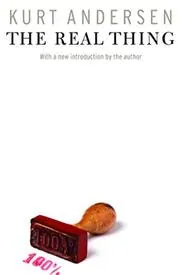
The Real Thing
by Kurt Andersen
1980
This early collection of short satirical essays tries to name the definitive version of everything, from cities and sitcoms to drugs and desserts. It is brisk, skeptical, and easy to dip into a page at a time.
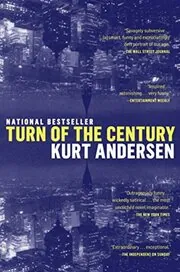
Turn of the Century
by Kurt Andersen
1999
At the end of the 1990s, Manhattan couple George and Lizzie seem to have everything, until ambition, media hype, and a tech-fueled market frenzy start pulling their marriage apart. Andersen turns dot-com era excess into a smart, funny social satire.
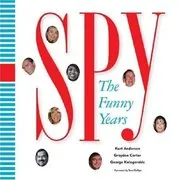
Spy
by Kurt Andersen
2006
Part anthology, part behind-the-scenes history, this book gathers the sharpest work from the satirical magazine Spy. It captures how the magazine skewered media, money, vanity, and power in the late 1980s and early 1990s.
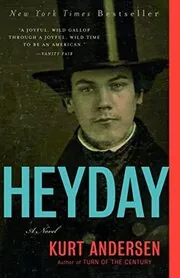
Heyday
by Kurt Andersen
2007
In 1848, English newcomer Ben Knowles lands in New York just as war, revolution, and the Gold Rush remake the world. His ties to a restless band of young Americans pull him into a sprawling adventure about freedom, ambition, and reinvention.
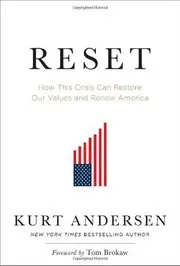
Reset
by Kurt Andersen
2009
Written after the 2008 financial crash, this short book argues that crisis can force a useful rethink. Andersen looks at money, politics, and everyday values, then makes a hopeful case for rebuilding on saner terms.
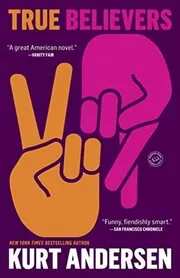
True Believers
by Kurt Andersen
2012
Chicago lawyer Karen Hollander gives up a path to the Supreme Court when a secret from 1968 refuses to stay buried. Her return to childhood spy games, radical politics, and old friends becomes part coming-of-age story, part political mystery.
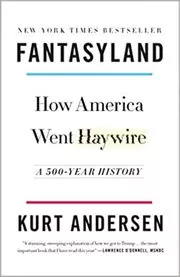
Fantasyland
by Kurt Andersen
2017
Andersen traces five centuries of American magical thinking, from early settlers and religious zeal to conspiracy culture and fake news. It is a big, readable history of how fantasy, performance, and wishful belief became woven into public life.
Recommended by
1 person Walter Isaacson recommended this book
Walter Isaacson
"I think it helps you understand the wackiness happening in our country today." - Walter Isaacson
Walter Isaacson's recommendation of this book
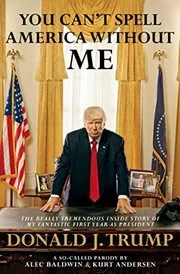
You Can't Spell America Without Me
by Kurt Andersen
2017
Framed as Donald Trump's own memoir, this satire turns bragging, grievance, and self-mythology into the joke. Written with Alec Baldwin, it imagines a White House account so vain and absurd it starts to feel uncomfortably familiar.
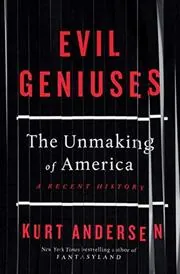
Evil Geniuses
by Kurt Andersen
2020
This nonfiction history argues that, starting in the 1970s, business elites, financiers, and ideological allies rewrote American rules to favor the rich. Andersen follows the money, the politics, and the cultural sales pitch behind that long shift.

The Breakup
by Kurt Andersen
2026
In a fractured 2045 America, Natalie and Asher live on opposite sides of a newly redrawn national map, and their marriage is just as divided. A college road trip brings them back together and turns family strain into a larger question about what can still be saved.
Where to start with Kurt Andersen
If you want sharp social satire: Turn of the Century → The Breakup
If you want a big historical novel: Heyday
If you want politics mixed with memory: True Believers
If you want his big nonfiction about America: Fantasyland → Evil Geniuses
If you want shorter comic books: The Real Thing → Reset → You Can't Spell America Without Me
Kurt Andersen collections, short stories, and related book types
Non-Fiction
Standalone Kurt Andersen books
Author bio
Kurt Andersen was born and raised in Omaha, Nebraska, and that Midwestern vantage point seems to have stayed with him. Even when he writes about Manhattan media people, nineteenth-century dreamers, or national political breakdowns, he tends to sound like someone watching the spectacle with one eyebrow up. He went to Harvard College, where he edited the Harvard Lampoon, and early on he learned how well reporting and comedy can work together.
After college, he moved into magazines and journalism. In 1986 he helped found Spy, the satirical magazine that took aim at New York vanity, celebrity nonsense, and the rich behaving badly. Later he became editor in chief of New York, wrote for Time and The New Yorker, and co-founded Inside, a digital and print publication about the entertainment and media business.
That background matters.
Andersen's fiction often feels powered by the same curiosity that drove his journalism, especially about status, self-invention, and the stories Americans tell themselves. His first novel, Turn of the Century, drops into the late 1990s at full speed, with a Manhattan couple trying to hold a marriage together while technology, money, and hype accelerate around them. It became a national bestseller, and it still reads like a sharp snapshot of the dot-com mood before the bubble burst.
He then went in a very different direction with Heyday, a big historical novel set in 1848. The book follows an English newcomer arriving in New York just as war with Mexico, the California gold rush, and revolutions in Europe make the whole world feel up for grabs. Readers who like large-canvas historical fiction usually gravitate to this one, while True Believers shows another side of him, more intimate, more political, and more tangled with memory. That novel follows Chicago lawyer Karen Hollander as a secret from the 1960s begins to undo the story she has told about her own life.
His nonfiction keeps circling the same big American questions, only more directly. In Fantasyland, he argues that the country's long romance with magical thinking, performance, and personal truth did not suddenly appear in the twenty-first century, it has been building for centuries. In Evil Geniuses, he shifts from culture to economics and politics, tracing how powerful interests helped rewrite the rules of American life from the 1970s onward.
He can be very funny, too.
That streak runs from The Real Thing, a collection of brisk satirical mini-essays he wrote in his twenties, to You Can't Spell America Without Me, his mock Trump memoir written with Alec Baldwin. Even Reset, his short book from the aftermath of the 2008 financial crash, mixes seriousness with a plain, conversational way of making an argument. He likes big ideas, but he rarely writes as if he is standing at a lectern.
Many readers first knew his voice from radio. For twenty years he co-created and hosted Studio 360, a public radio show about arts and culture that won a Peabody and let him range across books, film, design, music, and the strange corners of American life. He has also written for television, film, and the stage, which helps explain why his books, even the idea-heavy ones, keep an eye on scene, rhythm, and performance.
Now he lives in Brooklyn and also spends time in rural Connecticut with his wife, writer Anne Kreamer. As of July 2026, his fifth novel, The Breakup, is scheduled to be published on August 18, 2026, bringing him back to fiction with a near-future American split that sounds very much like a Kurt Andersen problem: intimate, political, funny, and a little unnerving.










Edited by
Software engineer whose passion for tracking book recommendations from podcasts inspired the creation of MRB.
Lead investor at 3one4 Capital whose startup expertise and love for books helped shape MRB and its growth.
Comments
Did we miss something? Have feedback?
Help us improve this page by sharing your thoughts