
Kitchen House Books in Order
Part ofKathleen Grissom Books in OrderSee the Kitchen House series by Kathleen Grissom in order, with short summaries, series background, and a clear guide to the best place to start.
Last updated:
As an Amazon Associate, we earn from qualifying purchases (at no extra cost to you).
Kitchen House books in publication order
2 books
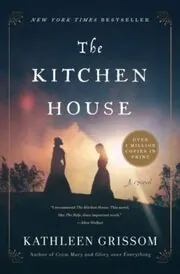
The Kitchen House
by Kathleen Grissom
2010
In 1790, seven-year-old Irish orphan Lavinia is taken to a Virginia tobacco plantation and raised among the kitchen house slaves. As she is pulled between the family who loves her and the white world of the big house, buried secrets turn deadly.
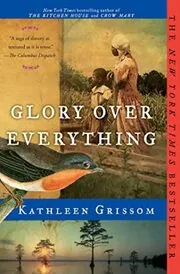
Glory over Everything
by Kathleen Grissom
2016
In 1830 Philadelphia, Jamie Pyke is passing as a wealthy white silversmith when his servant Pan is kidnapped and sold south. To save the boy, Jamie must risk everything by heading back toward the world he escaped.
Kitchen House books in chronological order
Series background & context
The Kitchen House books are linked historical novels, not a long numbered epic, but they do share a strong emotional through line. The story begins in late eighteenth-century Virginia, inside a tobacco plantation household where the kitchen house, the big house, and the fields sit close together while race, power, and law keep everyone sharply divided. That setup matters, because the series is really about people living in the narrow spaces between those worlds.
In The Kitchen House, Grissom introduces Lavinia, an orphaned Irish child brought to the plantation as an indentured servant, and Belle, the master's enslaved daughter, who becomes her protector and teacher. Their bond gives the first book its center. Lavinia is white but vulnerable. Belle is capable, loving, and deeply respected in the kitchen house, yet every part of her life is shaped by slavery.
This is intimate historical fiction, but it is never small.
Much of the tension comes from ordinary routines, cooking, cleaning, child rearing, illness, gossip, and the careful reading of moods inside a household where one wrong move can change a life. Grissom uses that close domestic setting to build bigger questions about ownership, family, addiction, class, violence, and the terrible pressure of being forced to choose where you belong. Readers should expect a story driven as much by relationships and secrets as by outward action.
The second book, Glory over Everything, widens the map. It follows Jamie Pyke, a character who grows out of the world of The Kitchen House, as he lives in 1830 Philadelphia passing as a wealthy white silversmith. When the young boy Pan is kidnapped and sold south, Jamie is pulled into a rescue mission that sends him back toward the world he escaped and into the danger surrounding the Underground Railroad, the backwoods, and the Great Dismal Swamp.
The scope gets larger, but the heart of the series stays the same.
What links these books is not just family or setting, but a steady interest in what freedom actually costs. Grissom keeps returning to questions of loyalty, identity, and survival, especially for people who do not fit neatly into the roles their society assigns them. They are the kind of books where private choices and public systems keep colliding. These novels can be tense, painful, and deeply emotional, but they also leave room for attachment, courage, and found family. Glory over Everything can be read alone, yet the experience is richer if you start with The Kitchen House, because Jamie's story carries so much of the earlier book inside it.












Edited by
Software engineer whose passion for tracking book recommendations from podcasts inspired the creation of MRB.
Lead investor at 3one4 Capital whose startup expertise and love for books helped shape MRB and its growth.
Comments
Did we miss something? Have feedback?
Help us improve this page by sharing your thoughts