
Kishidancho Goroshi Books in Order
Part ofHaruki Murakami Books in OrderThe Killing Commendatore books by Haruki Murakami, a two-part novel about art, history, and a mysterious painting.
Last updated:
As an Amazon Associate, we earn from qualifying purchases (at no extra cost to you).
Kishidancho Goroshi books in publication order
1 book
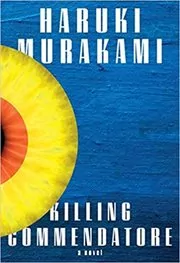
Killing Commendatore
by Haruki Murakami
2017
A portrait painter discovers a hidden painting in an attic that unleashes a chain of mysterious events. To set things right, he must embark on a journey involving a ringing bell, a physical manifestation of an idea, and a descent into a metaphorical underworld.
Kishidancho Goroshi books in chronological order
Series background & context
When Kishidancho Goroshi was first released in Japan, it arrived as a massive literary event, eventually landing on English-language shelves as Killing Commendatore. It is a substantial commitment of a novel, often split into two separate volumes due to its sheer length. If you have read Haruki Murakami before, the texture of this story will feel immediately familiar, yet it pushes his specific brand of magical realism into strange new territory.
The narrative kicks off with a classic Murakami setup. A thirty-six-year-old portrait painter sees his marriage evaporate out of nowhere. His wife admits to an affair, and suddenly, his stable life in Tokyo is gone. He spends weeks driving aimlessly around Japan before finally settling into a secluded mountaintop house in Odawara.
The house isn't just any rental. It belongs to the father of an old friend, a famous Nihonga artist named Tomohiko Amada who has been moved to a care facility. It is a place of solitude, old records, and quiet routine.
Then he finds the painting.
Hidden away in the attic, wrapped up as if it were never meant to be seen again, is a piece titled "Killing Commendatore." It is a stunning, violent work that depicts a scene from Mozart’s opera Don Giovanni, but the setting has been transposed to Japan’s Asuka period. Unwrapping this artwork acts as a catalyst, breaking the seal on the quiet mountain reality the narrator hoped to find.
The weirdness doesn't take long to set in. The Commendatore from the painting manifests in the real world, but not as a ghost or a human. He appears as a two-foot-tall "Idea," dressed in traditional garb, who sits around the house and offers cryptic advice.
Across the valley lives Wataru Menshiki, a wealthy and enigmatic neighbor who feels like a nod to The Great Gatsby. Menshiki hires the narrator to paint his portrait, drawing him into a complex web of secrets. Their interactions lead to the discovery of an ancient stone pit in the woods and a mysterious bell that rings by itself in the dead of night.
The story is a slow burn.
While there is a mystery driving the plot, the book is just as concerned with the act of creating art and the heavy, often dark weight of history. The narrator spends a lot of time cooking simple meals, listening to opera, and thinking about the past, all while reality bends around him. He eventually has to descend into a metaphorical underworld to make sense of it all, proving once again that in this author's universe, the bottom of a dark well is often where the truth is hiding.












Edited by
Software engineer whose passion for tracking book recommendations from podcasts inspired the creation of MRB.
Lead investor at 3one4 Capital whose startup expertise and love for books helped shape MRB and its growth.
Comments
Did we miss something? Have feedback?
Help us improve this page by sharing your thoughts