
Ken Kesey Books in Order
Explore Ken Kesey books in order, with concise summaries, background on his novels and nonfiction, and simple guidance on where to start reading.
Last updated:
As an Amazon Associate, we earn from qualifying purchases (at no extra cost to you).
Ken Kesey books in publication order
12 books
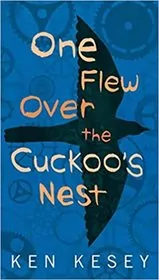
One Flew Over the Cuckoo's Nest
by Ken Kesey
1962
Inside an Oregon psychiatric hospital, silent observer Chief Bromden watches Randle Patrick McMurphy challenge Nurse Ratched’s tight control of the ward. The fight starts as rebellion and becomes a sharp look at power, sanity, and survival.
Recommended by
1 person Jordan Peterson recommended this book
Jordan Peterson
Recommended on Jordan Peterson's website.
Jordan Peterson's recommendation of this book
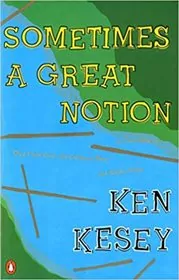
Sometimes a Great Notion
by Ken Kesey
1964
In a rain-soaked Oregon logging town, the Stamper family refuses to join a union strike and keeps cutting timber. Their stubborn stand pulls brothers, spouses, and neighbors into a bitter conflict over work, pride, and loyalty.
Recommended by
1 person- Jordan Peterson recommended this book
Jordan Peterson
Recommended on Jordan Peterson's website.
Jordan Peterson's recommendation of this book
The Merry Pranksters
by Ken Kesey
1965
This nonfiction portrait looks at Kesey’s psychedelic circle, their painted Furthur bus, and the Acid Test spirit that tied art, music, and mischief together. It’s a gateway into the counterculture world surrounding his later nonfiction.

Kesey's Garage Sale
by Ken Kesey
1973
This collage of essays, sketches, plays, and Prankster-era pieces gathers Kesey’s stray experiments from the early 1970s. It feels like a rummage through his workshop, mixing satire, road stories, and counterculture leftovers.

Demon Box
by Ken Kesey
1986
Part essay collection, part fiction grab bag, Demon Box gathers Kesey’s stories, memories, and experiments from life after the Pranksters. The pieces move from family and farming to travel, grief, and the restless leftovers of the 1960s.
Caverns
by Ken Kesey
1990
Written with Kesey’s University of Oregon writing students under a shared pseudonym, this oddball quest follows a released convict leading a 1930s expedition to find a disputed ancient cave. The mystery matters as much as the journey.
Little Tricker the Squirrel Meets Big Double the Bear
by Ken Kesey
1990
Big Double the Bear comes crashing into Topple’s Bottom, hungry enough to scare every animal in sight. Little Tricker, a watchful squirrel with more wit than muscle, has to outthink a bully before the rampage gets worse.
The Further Inquiry
by Ken Kesey
1990
Kesey revisits the Merry Pranksters’ 1964 Furthur bus trip through a mix of screenplay, photographs, testimony, and memory. The book turns a famous road adventure into a playful reckoning with Neal Cassady and the 1960s.
The Sea Lion
by Ken Kesey
1991
Eemook, mocked for his limp and low status among the Sea Cliff People, faces a strange visitor who is not what he seems. His skill and nerve give this children’s tale its trickster heart.
Sailor Song
by Ken Kesey
1992
In the future Alaskan fishing town of Kuinak, Ike Sallas wants a quiet life far from his radical past. Then a Hollywood crew arrives, stirring up old grudges, environmental danger, and a fight over the town’s soul.
Last Go Round
by Ken Kesey
1994
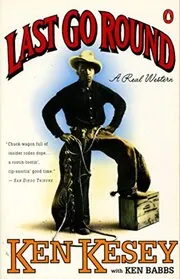
Co-written with Ken Babbs, this tall-tale Western retells the 1911 Pendleton Round-Up through rodeo rivals, real historical figures, and frontier brag. It’s less a plain history than a lively campfire story about the old West.
Conversations with Ken Kesey
by Ken Kesey
2014
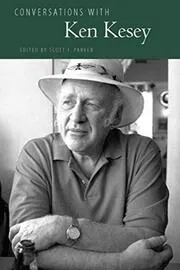
Edited by Scott F. Parker, this interview collection lets Kesey talk through writing, fame, the Pranksters, farming, and loss in his own words. It’s useful for readers who want the person behind the legend.
Where to start with Ken Kesey
Start with the landmark novels: One Flew Over the Cuckoo's Nest → Sometimes A Great Notion.
For Kesey’s counterculture side: Kesey's Garage Sale → The Further Inquiry → Demon Box.
For later fiction and Western tall tales: Sailor Song → Last Go Round.
For younger readers: Little Tricker the Squirrel Meets Big Double the Bear → The Sea Lion.
Ken Kesey collections, short stories, and related book types
Short Story Collections
Non-Fiction
Standalone Ken Kesey books
Author bio
Ken Kesey was born Kenneth Elton Kesey on September 17, 1935, in La Junta, Colorado. His parents, Fred and Geneva, were dairy farmers, and when Kesey was eleven the family moved to the Springfield area of Oregon. The move mattered. Oregon’s rivers, farms, wrestling rooms, and timber towns stayed with him for the rest of his life.
He was a physical kid before he was a famous writer. At Springfield High School and then the University of Oregon, Kesey wrestled and played football, and he earned a bachelor’s degree in speech and communications in 1957. He married his high school sweetheart, Faye Haxby, in 1956.
Then Stanford changed the map.
Kesey entered Stanford’s creative writing program on a fellowship in 1958, studying in a circle that included writers such as Larry McMurtry, Robert Stone, Wendell Berry, and Ken Babbs. To support his growing family, he took work as an aide at the Veterans Administration hospital in Menlo Park. He also joined paid drug experiments there, taking LSD and mescaline at a time when those experiments were still legal and far from ordinary.
Out of that mix came One Flew Over the Cuckoo's Nest in 1962. Kesey drew on the hospital setting, but the novel is not just a hospital story. Through Chief Bromden, McMurphy, and Nurse Ratched, it turns a ward into a pressure cooker about authority, obedience, fear, and the cost of staying yourself.
His second novel, Sometimes A Great Notion, arrived in 1964 and moved the conflict outdoors, into Oregon logging country. The Stamper family’s refusal to join a strike gave Kesey room to write about work, pride, family loyalty, and the stubborn streak that can keep people alive or tear them apart.
By then, Kesey was also living a second public life.
With Ken Babbs, Neal Cassady, and the Merry Pranksters, he rode across the country in the painted bus Furthur, filmed the trip, and helped create the Acid Tests on the West Coast. The Prankster years made him a bridge between Beat writers and the 1960s hippie scene, but they also pulled him away from the steady desk life that might have produced more early novels.
After legal trouble in California, Kesey settled on a farm near Pleasant Hill, Oregon. He kept writing, just in a looser range: Kesey's Garage Sale, Demon Box, the collaborative novel Caverns, the Alaska-set Sailor Song, and Last Go Round, a Western tall tale written with Babbs. He also wrote children’s books, including Little Tricker the Squirrel Meets Big Double the Bear and The Sea Lion.
Kesey died in Eugene, Oregon, on November 10, 2001, after complications following surgery for liver cancer. The two early novels remain the main doorway into his work, but the rest of the shelf shows the fuller pattern: Oregon, performance, rebellion, jokes, family, and a lifelong suspicion of any system that tries to make people smaller.






Edited by
Software engineer whose passion for tracking book recommendations from podcasts inspired the creation of MRB.
Lead investor at 3one4 Capital whose startup expertise and love for books helped shape MRB and its growth.
Comments
Did we miss something? Have feedback?
Help us improve this page by sharing your thoughts