
Ken Goddard Books in Order
Explore Ken Goddard books in order, with short summaries, author background, series guides, and clear suggestions on where to start reading first.
Last updated:
As an Amazon Associate, we earn from qualifying purchases (at no extra cost to you).
Ken Goddard books in publication order
12 books
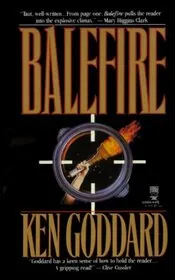
Balefire
by Ken Goddard
1984
A professional terrorist targets Huntington Beach as a warning shot before the 1984 Los Angeles Olympics. The local police are suddenly outmatched, and stopping him becomes a race to save the city before panic and fire take over.

The Alchemist
by Ken Goddard
1985
Chemistry professor David Isaac thinks he has invented a legal shortcut around drug laws. Instead he becomes the hunted center of a brutal fight involving dealers, mob players, and DEA agents closing in from every side.
Cheater / Digger
by Ken Goddard
1991
Henry Culver, a former CIA surveillance expert turned Fairfax criminalist, helps hunt a killer who attacks homes through their crawl spaces. What looks like one vicious murderer soon opens onto espionage, betrayal, and a wider conspiracy.
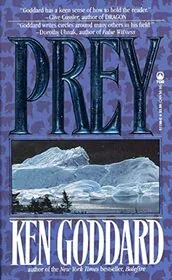
Prey
by Ken Goddard
1992
San Diego homicide investigator Henry Lightstone is working undercover in Alaska when federal wildlife agents pull him into a deadlier war. Soon he and his new team are running from terrorists determined to smash the environmental movement.
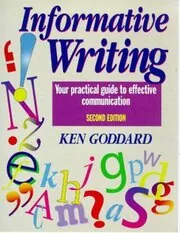
Informative Writing
by Ken Goddard
1995
A practical guide to clear, useful nonfiction writing, this book focuses on getting facts across without clutter. It is aimed at students, professionals, and anyone who needs to write reports, papers, letters, or presentations more effectively.
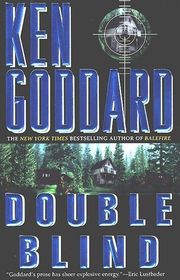
Double Blind
by Ken Goddard
1997
Henry Lightstone and his wildlife agents head to the Pacific Northwest posing as corrupt animal smugglers. The sting turns savage when political corruption, hired killers, and armed extremists collide around the case.
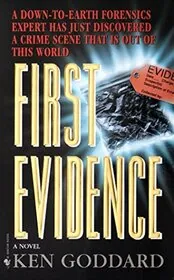
First Evidence
by Ken Goddard
1999
Oregon crime scene investigator Colin Cellars arrives at a woodland shooting and finds clues that refuse to behave like normal evidence. As witnesses vanish and the case turns stranger, his best tool, reason itself, starts to feel under siege.
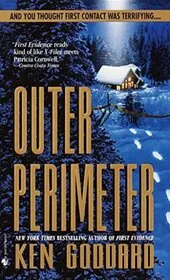
Outer Perimeter
by Ken Goddard
2001
After the events of First Evidence, Colin Cellars and his friends are pulled back into a case that feels bigger and more dangerous. This time the threat is closing in fast, and survival may depend on facing it alone.
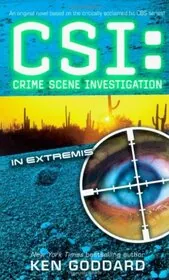
In Extremis
by Ken Goddard
2007
A contract killer engineers a chain of crimes in Nevada's Desert National Wildlife Range, pulling Gil Grissom and the Las Vegas CSI team into a layered investigation. As the scenes connect, the case becomes a deadly contest of patience and precision.
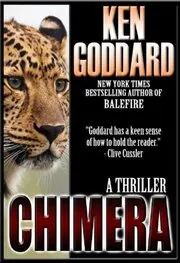
Chimera
by Ken Goddard
2011
After wildlife rangers are massacred in Thailand, U.S. Fish and Wildlife agent Gedimin Bulatt tracks the hunters responsible. The trail leads to Washington State, where trophy killing, genetic tampering, and rich men with lethal hobbies collide.
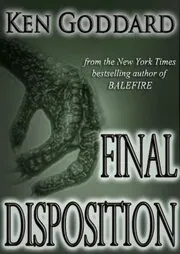
Final Disposition
by Ken Goddard
2011
Colin Cellars wakes in a remote military hospital with no memory of who he is or why someone wants him dead. As voices, music, and fragments of evidence return, he has to rebuild the case before his enemies catch up.

It's Your Crime Scene
by Ken Goddard
2011
This nonfiction guide explains what really happens after a crime, how investigators and forensic teams work, and how victims or families can help protect evidence. It is a plainspoken look at procedure from someone who spent decades in the field.
Where to start with Ken Goddard
If you want the breakout police thriller: Balefire
If you like drug-crime suspense and lab detail: The Alchemist
If you want espionage and procedural suspense: Cheater / Digger
If you want wildlife law enforcement action: Prey → Double Blind
If you want forensic mystery with a strange twist: First Evidence → Outer Perimeter → Final Disposition
Ken Goddard sub-series and character series
CSI: Crime Scene Investigation books in order
Explore this seriesCSI: Crime Scene Investigation books in chronological order
Ken Goddard collections, short stories, and related book types
Non-Fiction
Standalone Ken Goddard books
Author bio
Ken Goddard did not come to fiction by the usual route. He came to it through chemistry, police work, and a lot of time at crime scenes. After Grossmont High School in California, he spent a year in the first freshman class at UC San Diego and then moved to UC Riverside, where he earned a degree in biochemistry.
He thought he was headed for a life in science. Then a judo accident, plus the need for a steady job after college and marriage plans with his future wife Gena, pushed him in a different direction. He joined the Riverside County Sheriff's Department as a deputy sheriff and criminalist, and the change stuck.
From there he kept moving deeper into forensic work. He later studied criminalistics at night in Los Angeles, worked in the San Bernardino County Sheriff's crime lab, and eventually helped build the Scientific Investigation Bureau for the Huntington Beach Police Department. Those years gave him long experience with homicide, robbery, burglary, rape, and drug crime scenes, which is about as direct an education in pressure and bad decisions as a thriller writer can get.
It also gave him a habit of thinking in terms of evidence first, story second.
His turn toward novels became real in the late 1970s, when he started wondering how vulnerable a California beach city might be to a determined terrorist during the run-up to the 1984 Los Angeles Olympics. That question became Balefire, which he wrote on evenings and weekends while still working in law enforcement. The book hit the New York Times bestseller list, and suddenly the working criminalist had a second career.
Goddard has said he learned something important while writing: the story worked best when he was emotionally invested in it, scared by it, or angry about it. You can feel that in The Alchemist, where chemistry and designer drugs drive the danger, and in Prey, where homicide investigator Henry Lightstone gets pulled into federal wildlife law enforcement and a much larger conspiracy. In First Evidence, he takes the same evidence-minded approach and drops it into a case that may not play by earthly rules at all.
Animals matter in his fiction, too.
That makes sense, because much of his later professional life centered on Ashland, Oregon, where he helped create and then lead the National Fish and Wildlife Forensics Laboratory. He also taught crime scene investigation and forensic techniques to law enforcement groups in the United States and abroad, including Interpol. His fiction keeps returning to the places where science, fieldwork, and human fear meet, whether that means the desert, the woods, a wildlife refuge, or a lab table under bright lights.
Readers who like Goddard usually come for the nuts-and-bolts detail, the momentum, and the sense that the investigators are doing real jobs, not magic tricks. In Extremis puts that experience to work inside the world of television tie-in crime fiction, while Chimera carries his wildlife background into a darker story about hunters, power, and engineered creatures. Even his nonfiction fits the pattern. Informative Writing is about getting facts across clearly, and It's Your Crime Scene explains what actually happens after a crime and what victims or families can do to help.
There is a little dry humor running through his author notes as well. He writes about sharing life with another forensic scientist, too many chores, too many weeds, and the occasional horse or cow to chase back where it belongs. That mix of technical know-how, working-cop realism, and slightly amused patience is a good guide to the books themselves.









Edited by
Software engineer whose passion for tracking book recommendations from podcasts inspired the creation of MRB.
Lead investor at 3one4 Capital whose startup expertise and love for books helped shape MRB and its growth.
Comments
Did we miss something? Have feedback?
Help us improve this page by sharing your thoughts