
Kazuo Ishiguro Books in Order
See all Kazuo Ishiguro books in order, with brief summaries, themes, background on his life and career, plus simple reading order tips for where to start.
Last updated: 1 new book added
Coming soonNext book: Miss Lambert Steps Aboard Danger (2027) · Pre-order on Amazon
As an Amazon Associate, we earn from qualifying purchases (at no extra cost to you).
Kazuo Ishiguro books in publication order
13 books
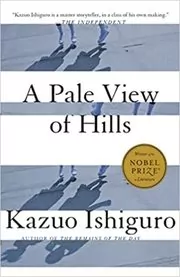
A Pale View of Hills
by Kazuo Ishiguro
1982
In England after a family tragedy, Etsuko looks back on her youth in postwar Nagasaki and a troubled friendship with a single mother and her daughter. Her shifting memories trace uneasy links between motherhood, migration, and the stories we tell to live with loss.
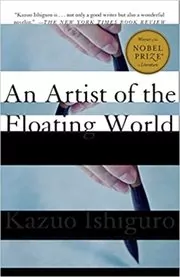
An Artist of the Floating World
by Kazuo Ishiguro
1986
In postwar Japan, ageing painter Masuji Ono looks back on the glamorous pleasure districts he once painted and the nationalist propaganda he later embraced. As his family negotiates a marriage for his daughter, he is forced to confront guilt, denial, and a country remaking its past.
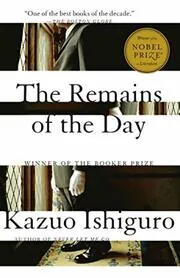
The Remains of the Day
by Kazuo Ishiguro
1989
An aging English butler takes a rare road trip across 1950s England, replaying his decades of service to a disgraced lord and the love he never voiced for a former housekeeper, in a quiet study of duty and regret.
Recommended by
3 people Jeff Bezos recommended this book
Jeff Bezos
"My favorite novel. Teaches pain of regret so well you will think you lived it." - Jeff Bezos
Jeff Bezos's recommendation of this book  Emma Watson recommended this book
Emma Watson
"Emma Watson cites [this book] as one of her favourite books for its expression of the consequences of discretion." - Harper Bazaar
Emma Watson's recommendation of this book  Chimamanda Ngozi Adichie recommended this book
Chimamanda Ngozi Adichie
"A stunning book." - Chimamanda Ngozi Adichie
Chimamanda Ngozi Adichie's recommendation of this book
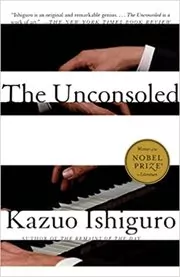
The Unconsoled
by Kazuo Ishiguro
1995
World-famous pianist Ryder arrives in a Central European city for a concert and finds himself trapped in a dreamlike schedule he can never quite grasp. Every corridor leads to another obligation, as time, memory, and identity slide out of focus in an extended waking nightmare.
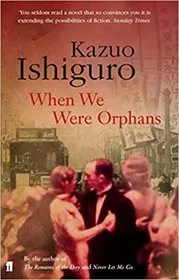
When We Were Orphans
by Kazuo Ishiguro
2000
Celebrated London detective Christopher Banks returns to 1930s Shanghai to solve the mystery of his parents’ disappearance from his childhood. As war closes in, his investigation blurs into memory and fantasy, raising uneasy questions about how much of the past we invent.
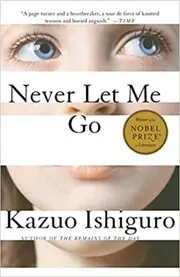
Never Let Me Go
by Kazuo Ishiguro
2005
At an isolated English boarding school, three friends grow up believing they are special, only to discover they were created to donate their organs. Kathy’s calm memories slowly reveal a haunting story of love, friendship, and the cost of being human.
Recommended by
1 person Jack Edwards recommended this book
Jack Edwards
"Has some great twists and turns." - Jack Edwards
Jack Edwards's recommendation of this book

Conversations with Kazuo Ishiguro
by Kazuo Ishiguro
2008
Interviews with Kazuo Ishiguro spanning their career, focused on key books, influences, and craft. A quick, candid way to hear the author in their own words.
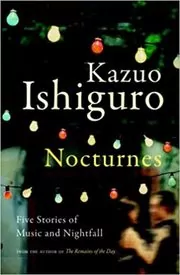
Nocturnes
by Kazuo Ishiguro
2009
This collection of five linked stories follows musicians, singers, and restless listeners in hotel rooms, piazzas, and cafés around the world. Each quiet episode circles music, aging, and missed chances, catching characters in the half-light between ambition and acceptance.
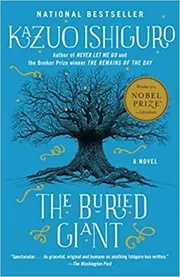
The Buried Giant
by Kazuo Ishiguro
2015
In a mist-shrouded, post-Arthurian Britain where people cannot remember their own pasts, elderly couple Axl and Beatrice set out to find a son they barely recall. Their journey through ruined villages and old feuds becomes a quiet meditation on memory, violence, and forgiveness.
Recommended by
1 person Niall Ferguson recommended this book
Niall Ferguson
"I am more enthralled than I have been by a book in a long time. Profound meditation on memory." - Niall Ferguson
Niall Ferguson's recommendation of this book
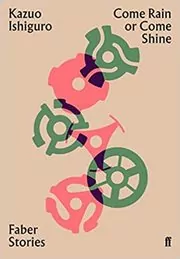
Come Rain or Come Shine
by Kazuo Ishiguro
2019
Ray visits old university friends Charlie and Emily in London, hoping to help patch up their strained marriage by making Charlie look better by comparison. A small mishap with a notebook spirals into farce, exposing buried feelings, shared music, and the quiet humiliations of long friendships.
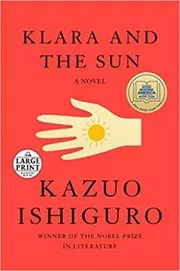
Klara and the Sun
by Kazuo Ishiguro
2021
In a near-future America, Klara, a solar-powered Artificial Friend, is chosen to keep company with a sick teenager, Josie. From the sidelines she pieces together human love, class divides, and sacrifice, believing the sun itself might offer a miracle.
Recommended by
5 people Diane Rehm recommended this book
Diane Rehm
"Set in a not-too-distant future where a young child must be schooled at home without classmates because of fragile health." - Diane Rehm
Diane Rehm's recommendation of this book  Ann Patchett recommended this book
Ann Patchett
Ann Patchett recommended this book on the Parnassus Books website.
Ann Patchett's recommendation of this book  Ezra Klein recommended this book
Ezra Klein
Ezra Klein recommended this book on Twitter.
Ezra Klein's recommendation of this book - Jack Edwards recommended this book
Jack Edwards
"Sort of dystopia about the rise of artificial intelligence." - Jack Edwards
Jack Edwards's recommendation of this book  Jenny Lawson recommended this book
Jenny Lawson
"A good book to give for Xmas." - Jenny Lawson
Jenny Lawson's recommendation of this book

The Summer We Crossed Europe in the Rain
by Kazuo Ishiguro
2024
This illustrated volume gathers sixteen lyrics Ishiguro wrote for jazz singer Stacey Kent, alongside a reflective essay. The songs sketch lovers on trains, solitary hotel rooms, and half-remembered cities, offering a gentle, melodic companion to the moods and concerns of his fiction.
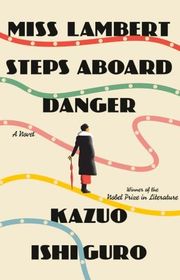
Miss Lambert Steps Aboard Danger
by Kazuo Ishiguro
2027
In 1938 London, Richard Hadley meets the mysterious Miss Lambert and decides she needs his protection. Following her to a country hotel and a Scotland-bound train draws him into a caper where appearances offer little reliable guidance.
Where to start with Kazuo Ishiguro
If you’re new to Ishiguro and want his most acclaimed work: The Remains of the Day → Never Let Me Go
If you prefer speculative or genre-bending fiction: Never Let Me Go → The Buried Giant → Klara and the Sun
If you’re curious about his Japanese settings: A Pale View of Hills → An Artist of the Floating World
If you like detective stories and psychological puzzles: When We Were Orphans → The Unconsoled
If you want shorter pieces and a taste of his voice: Nocturnes → Come Rain or Come Shine → The Summer We Crossed Europe in the Rain
Kazuo Ishiguro collections, short stories, and related book types
Short Stories/Novellas
Short Story Collections
Literary Conversations Books
Graphic Novels
Standalone Kazuo Ishiguro books
Author bio
Kazuo Ishiguro is a Japanese-born British novelist and short story writer whose calm narrators often uncover the gap between what people remember and what really happened. He is best known for quiet, emotionally intense books that linger long after you close them.
He was born in Nagasaki in 1954 and spent his early childhood in a three-generation household shaped by his parents’ memories of the war. When he was five, his father, an oceanographer, moved the family to Guildford in Surrey to work at a government research institute. They expected to stay only a few years, but England became home.
Growing up as a Japanese child in an English town gave him a double perspective he has often described as crucial to his writing. At school he was a choirboy and an eager reader, but his first creative passion was music. As a teenager he wrote songs on guitar and piano, dreaming more of record deals than book contracts.
That apprenticeship in writing intimate, first-person songs later fed straight into the voices of his narrators.
In the mid-1970s he studied English and philosophy at the University of Kent, then went on to the creative writing master’s program at the University of East Anglia, finishing in 1980. Around the same time he worked as a residential resettlement worker for a London homelessness charity. There he met social worker Lorna MacDougall, whom he married in 1986; the couple later settled in north London and have a daughter, Naomi, who is also a writer.
His first novel, A Pale View of Hills (1982), draws on his mother’s stories of postwar Nagasaki, following a woman in England who revisits unsettling memories of her life in Japan. He returned to that imagined Japan in An Artist of the Floating World (1986), narrated by an ageing painter forced to reckon with work he did in support of an imperial regime.
With The Remains of the Day (1989), Ishiguro turned to England and reached a far wider audience. The novel follows Stevens, a butler on a 1950s motoring trip, as he reflects on his loyalty to a disgraced aristocrat and on his repressed feelings for the housekeeper Miss Kenton. It won the Booker Prize and was later adapted into a much-loved film, bringing his restrained, first-person style to readers around the world.
Rather than repeating that success, he kept changing shape. In The Unconsoled he drops a pianist into a surreal Central European city, while When We Were Orphans sends a detective back to 1930s Shanghai to investigate his parents’ disappearance. Never Let Me Go, The Buried Giant, and Klara and the Sun all use speculative elements to explore cloning, old age, and artificial companionship while staying focused on ordinary emotions.
Across these shifts in genre, his work stays remarkably consistent in feeling: characters tell their stories in polite, often hesitant language, slowly revealing what they cannot quite admit to themselves until it is almost too late.
Alongside the novels, Ishiguro has written short fiction, including the linked collection Nocturnes, and lyrics for jazz singer Stacey Kent, work he gathered in The Summer We Crossed Europe in the Rain. In 2017 he received the Nobel Prize in Literature, followed by a knighthood in the United Kingdom and honours in Japan. He continues to live in London with his family, writing at a measured pace and returning, again and again, to questions of memory, loyalty, and how we live with the stories we choose to believe.



Edited by
Software engineer whose passion for tracking book recommendations from podcasts inspired the creation of MRB.
Lead investor at 3one4 Capital whose startup expertise and love for books helped shape MRB and its growth.
Comments
Did we miss something? Have feedback?
Help us improve this page by sharing your thoughts