
Katrine Engberg Books in Order
Browse Katrine Engberg books in order, with quick summaries, Kørner/Werner series background, and simple tips on where to start reading.
Last updated:
As an Amazon Associate, we earn from qualifying purchases (at no extra cost to you).
Katrine Engberg books in publication order
4 books
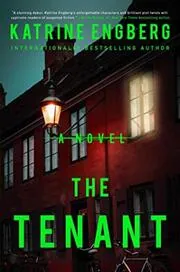
The Tenant
by Katrine Engberg
2020
A young woman is found murdered in her Copenhagen apartment, and the case takes detectives Jeppe Kørner and Anette Werner to her landlady, Esther de Laurenti, whose unfinished novel seems to predict the crime. Smart, unsettling, and full of hidden grudges.
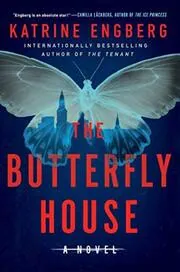
The Butterfly House
by Katrine Engberg
2021
A woman turns up dead in a Copenhagen fountain, and a separate death inside a hospital points to a hidden system of manipulation. Jeppe and Anette follow the case into a world where care, ambition, and cruelty are tangled together.
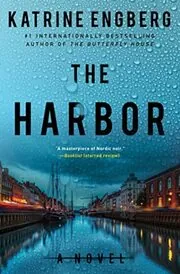
The Harbor
by Katrine Engberg
2022
When fifteen-year-old Oscar Dreyer-Hoff disappears, the only clue is a cryptic literary quotation. Jeppe and Anette race through family tensions and old lies as the missing-person case grows darker by the hour.
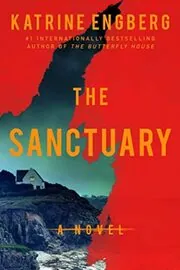
The Sanctuary / The Island
by Katrine Engberg
2023
While Jeppe hides out on Bornholm after heartbreak, Anette investigates a severed corpse found in Copenhagen. The clues point back to the island, where old loyalties and long-buried secrets make a dangerous final case.
Where to start with Katrine Engberg
If you want the clearest character arc: The Tenant → The Butterfly House → The Harbor → The Sanctuary / The Island
If you want the best first taste of the series: The Tenant
If you like missing-person cases and family secrets: The Harbor → The Sanctuary / The Island
If you want the coldest, most isolated setting: The Sanctuary / The Island
Katrine Engberg sub-series and character series
Author bio
Katrine Engberg was born in Copenhagen in 1975 and grew up in Østerbro, a part of the city that would later feed so much of her fiction. She has described her childhood as one shaped by books, conversation, and storytelling at the dinner table. Crime fiction was part of that world early, so her interest in dark plots and complicated people did not arrive late. It was there from the start.
Books came first.
As a teenager, though, Engberg did not head straight for a writing desk. She left home to train as a dancer and went on to work professionally in dance and choreography, with a background in theater and television too. That earlier career still shows up in the novels. Her scenes move with purpose, and she has a strong feel for rhythm, staging, and physical space, especially when the city itself seems to press in on the characters.
Writing stayed with her in the background. She kept reading, kept making notes, and gradually started sharing her own work with people close to her. One of the characters who helped unlock her fiction was Esther de Laurenti, the eccentric older writer who becomes a key figure in the Kørner/Werner books. Engberg has said those first ideas grew into crime plots almost by surprise. Her debut, The Tenant, took years to develop as a side project before it finally became the book that launched her new career.
Then things moved fast.
The Tenant introduced Copenhagen detectives Jeppe Kørner and Anette Werner, along with Esther, and set the tone for what readers would come back for: sharp police work, messy human histories, and a city full of elegant streets and darker corners. In The Butterfly House, the series turns toward hospitals and the abuse of care and power. The Harbor begins with the disappearance of fifteen-year-old Oscar Dreyer-Hoff and opens into a tense missing-person case full of family strain and old secrets. In The Sanctuary / The Island, the story stretches from Copenhagen to Bornholm, where the landscape feels colder, quieter, and no less dangerous.
What many readers like most is the balance. These are crime novels with real momentum, but they also make room for people who feel bruised, contradictory, funny, lonely, stubborn, and recognizable. Jeppe and Anette are capable investigators, yet neither is written as a flawless puzzle-solving machine. Esther, meanwhile, gives the series an offbeat pulse. Engberg also returns again and again to themes like grief, revenge, hidden pasts, social systems under pressure, and the uneasy gap between how safe a place looks and how unsafe it can be.
Copenhagen matters too.
Engberg has said that place often comes first for her, and that shows on the page. She writes about canals, apartment buildings, hospitals, industrial edges, and neighborhoods that carry both comfort and menace. The city is not just a backdrop in these books. It pushes the mood, the action, and sometimes the mystery itself. She lives in Copenhagen with her family, still close to the city that shaped her. After years of telling stories through movement and performance, she found a new form that could hold the same energy in words.





Edited by
Software engineer whose passion for tracking book recommendations from podcasts inspired the creation of MRB.
Lead investor at 3one4 Capital whose startup expertise and love for books helped shape MRB and its growth.
Comments
Did we miss something? Have feedback?
Help us improve this page by sharing your thoughts