
Karen Joy Fowler Books in Order
Browse Karen Joy Fowler books in order, with short summaries, reading guidance, background, and clear where-to-start picks for new and longtime readers.
Last updated: 1 new book added
Coming soonNext book: Otter Music (2027) · Pre-order on Amazon
As an Amazon Associate, we earn from qualifying purchases (at no extra cost to you).
Karen Joy Fowler books in publication order
16 books

Artificial Things
by Karen Joy Fowler
1986
Fowler's debut collection gathers thirteen early stories that mix aliens, fairy tale echoes, and sharp social observation. Even here, she is interested in how strange premises expose ordinary fears, bad habits, and the stories people tell themselves.

The Faithful Companion at Forty
by Karen Joy Fowler
1987
In this sly, melancholy story, an aging sidekick who strongly resembles Tonto looks back on a lifetime spent beside a more famous hero. Fowler turns pop culture legend inside out and finds loneliness, anger, and hard-earned self-knowledge underneath.

Peripheral Vision
by Karen Joy Fowler
1990
This brief early collection brings together several of Fowler's standout stories, including Lieserl and The Faithful Companion at Forty. It is a compact introduction to her speculative side, full of sly humor, emotional distance, and sudden human ache.
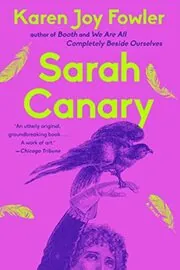
Sarah Canary
by Karen Joy Fowler
1991
A mysterious woman appears in Washington Territory in 1873 and draws a Chinese railroad worker, an asylum inmate, and others into her wake. Part frontier odyssey, part first-contact story, it keeps asking who gets called sane, human, or American.
The War of the Roses
by Karen Joy Fowler
1991
This slim standalone edition showcases one of Fowler's early speculative stories, set in a future society pulled between custom and rebellion. Brief and unsettling, it uses an invented world to think about power, loyalty, and the cost of choosing a side.
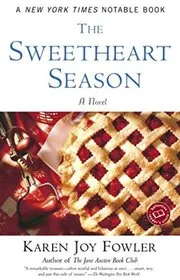
The Sweetheart Season
by Karen Joy Fowler
1996
In 1947, a cereal-town with no men coming home from war sends an all-girl baseball team on the road. Told years later by a player's daughter, it is a funny, wistful novel about postwar mythmaking, mothers, and the stories families tell.

Standing Room Only
by Karen Joy Fowler
1997
Set in Washington on the eve of Lincoln's assassination, this story follows Anna Surratt as teenage infatuation collides with history. Fowler uses a crush on John Wilkes Booth to show how ordinary lives can brush catastrophe without understanding it.

Black Glass
by Karen Joy Fowler
1998
These fifteen stories range from Carry Nation loose in the modern world to Tonto at forty and a weary Mrs. Gulliver. The collection is witty, strange, and quietly cutting, using fantasy and revisionist play to expose the rules people live by.
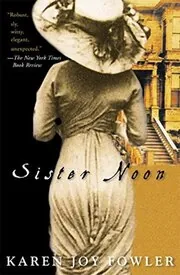
Sister Noon
by Karen Joy Fowler
2001
In Gilded Age San Francisco, dutiful spinster Lizzie Hayes is pulled out of her narrow life by the notorious Mary Ellen Pleasant. Their connection turns this into a sly historical novel about class, race, gossip, and the dangerous freedom of changing who you are.

What I Didn't See
by Karen Joy Fowler
2002
This collection moves through history, fantasy, and quiet horror, from Edwin Booth after his brother's crime to the brutal title story of a gorilla-hunting expedition. Fowler keeps her focus on people under pressure, where kindness and cruelty sit close together.
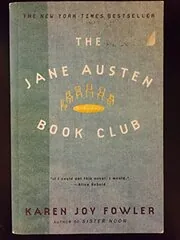
The Jane Austen Book Club
by Karen Joy Fowler
2004
In California's Central Valley, five women and one man meet to discuss Jane Austen over six months. As the club works through Austen's novels, marriages wobble, crushes bloom, and the members start reading their own lives a little differently.
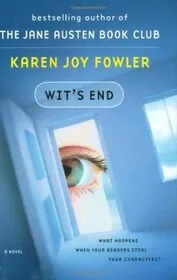
Wit's End / The Case of the Imaginary Detective
by Karen Joy Fowler
2008
After losses at home, Rima Lansill heads to Santa Cruz to stay with her godmother, a famous mystery writer, and starts digging into her father's past. The novel mixes literary mystery, internet fandom, and questions about who gets to control a story.
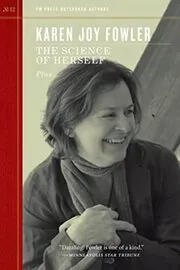
The Science of Herself
by Karen Joy Fowler
2013
This short collection opens with a Darwin-era novella about a brilliant female fossil hunter pushing back against Victorian gatekeeping. Three more stories, including The Pelican Bar, show Fowler at her fiercest, funniest, and most unsettling.
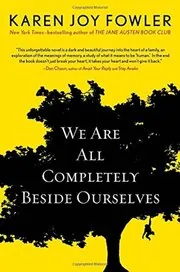
We Are All Completely Beside Ourselves
by Karen Joy Fowler
2013
Rosemary tells the story of the Cooke family from the middle, circling the childhood loss that changed everything. As memories return, this funny, painful novel asks what family means and how badly love can fail when science crosses a line.
Recommended by
1 person Jack Edwards recommended this book
Jack Edwards
"The book with the most shocking plot twist for me." - Jack Edwards
Jack Edwards's recommendation of this book
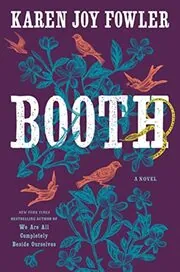
Booth
by Karen Joy Fowler
2022
Rather than centering John Wilkes Booth alone, Fowler follows the whole Booth family as America moves toward civil war. It is a big, intimate historical novel about ambition, performance, sibling loyalty, and the damage one family cannot stop.
Recommended by
1 person Nicola Sturgeon recommended this book
Nicola Sturgeon
"A fictionalised account of the family life of John Wilkes Booth who assassinated Abraham Lincoln." - Nicola Sturgeon
Nicola Sturgeon's recommendation of this book
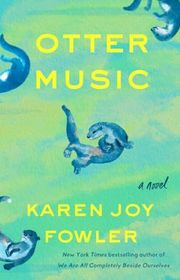
Otter Music
by Karen Joy Fowler
2027
Marine researcher Lainey Miller studies sea otters in Santa Cruz while worrying about environmental destruction and political decline. A remark from her niece prompts her to question her quiet post-divorce life and whether she can still seek happiness.
Where to start with Karen Joy Fowler
If you want her most talked-about novel: We Are All Completely Beside Ourselves → Booth
If you love bookish relationship stories: The Jane Austen Book Club
If you want the historical fiction first: Sarah Canary → The Sweetheart Season → Sister Noon
If you prefer mysteries and metafiction: Wit's End / The Case of the Imaginary Detective
If you want the short fiction: Black Glass → What I Didn't See → The Science of Herself
Karen Joy Fowler collections, short stories, and related book types
Short Stories/Novellas
Collections
Non-Fiction
Standalone Karen Joy Fowler books
Author bio
Karen Joy Fowler was born in Bloomington, Indiana, in 1950 and spent her first eleven years there before her family moved to Palo Alto, California. She has said that the move was a shock. Indiana felt easy, outdoorsy, and small enough to know your place in it. Palo Alto felt sharper, more polished, and much less like home. That early sense of being slightly out of step shows up all through her fiction.
As a teenager, she was deeply affected by the civil rights movement, and later by feminism, both of which widened the kind of stories she wanted to read and the questions she wanted fiction to ask. At the University of California, Berkeley, she studied political science and became active in the antiwar movement, where she met her husband. She later did graduate work at UC Davis and, while finishing that stage of school, started raising a family.
Writing came later.
Near her thirtieth birthday, Fowler felt she had drifted from interest to interest without choosing a real path. She was taking ballet, feeling the years a little, and looking for something that asked more of her mind. A creative writing class in Davis became the turning point. She decided to treat it seriously, even if she failed, and that choice changed the rest of her life.
She began publishing short science fiction in the mid-1980s, and people noticed fast. Her first collection, Artificial Things, helped earn her the John W. Campbell Award for Best New Writer. Before long she had built a reputation for stories that were sly, emotionally exact, and hard to box into one shelf. Even in those early pieces, you can see the things she keeps returning to, odd social rules, people who do not fit, a dry joke landing right beside something unsettling.
She has never stayed in one lane.
Sarah Canary made that plain. Set in Washington Territory in 1873, it follows a mysterious woman and the people drawn into her wake, including a Chinese railroad worker and an asylum inmate. It can feel like a western, a historical novel, and a first-contact story all at once. The Sweetheart Season and Sister Noon also move through American history, using baseball teams, boomtown money, gossip, race, and women's constrained lives to ask who gets to reinvent themselves and who pays for it.
Then came The Jane Austen Book Club, the book that brought Fowler to a much wider audience and later became a film. Its setup is simple, six Californians reading Austen together, but the novel uses that small frame to talk about friendship, marriage, loneliness, desire, aging, and the private ways people build themselves out of books. The book spent thirteen weeks on the New York Times bestsellers list. It also showed how neatly Fowler could turn a clever premise into something tender and observant.
Her shorter work never stopped mattering. Black Glass won a World Fantasy Award, and What I Didn't See won another. Those books range from playful literary riffs to stories that are genuinely hard to shake, but they keep returning to the same questions about power, kindness, and the stories people tell to excuse themselves. We Are All Completely Beside Ourselves brought those concerns into one family novel and won the PEN/Faulkner Award after being shortlisted for the Booker Prize.
More recently, Booth turned to the family of John Wilkes Booth and looked at history through brothers, sisters, parents, ambition, and damage done close to home. Across her work, you see recurring interests in nineteenth-century America, women negotiating bad rules, animals and human exceptionalism, and characters living at the edge of whatever their culture calls normal. She also co-founded the award now called the Otherwise Award and has long been involved with Clarion. Fowler lives in Santa Cruz, California, with her husband, and she still writes like someone deeply curious about how people love, fail, improvise, and keep going.





Edited by
Software engineer whose passion for tracking book recommendations from podcasts inspired the creation of MRB.
Lead investor at 3one4 Capital whose startup expertise and love for books helped shape MRB and its growth.
Comments
Did we miss something? Have feedback?
Help us improve this page by sharing your thoughts