
Juris Jurjevics Books in Order
See Juris Jurjevics's books in order, with short summaries, where to start advice, and a simple guide to his Vietnam thrillers and Arctic suspense.
Last updated:
As an Amazon Associate, we earn from qualifying purchases (at no extra cost to you).
Juris Jurjevics books in publication order
3 books

The Trudeau Vector
by Juris Jurjevics
2005
After four scientists die in bizarre ways at an Arctic research station, an epidemiologist is sent north to find the cause before winter seals everyone in. The case widens into a tense mix of disease mystery, geopolitics, and environmental risk.
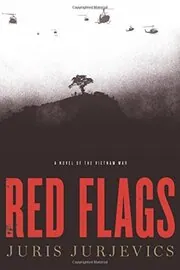
Red Flags
by Juris Jurjevics
2011
Sent from Saigon to remote Cheo Reo, Army cop Erik Rider is supposed to shut down an opium operation funding the enemy. Instead he walks into a maze of corruption, shifting loyalties, and danger from inside the camp as much as outside it.
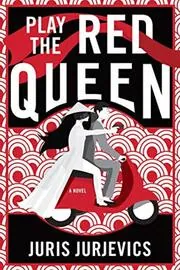
Play the Red Queen
by Juris Jurjevics
2020
Saigon, 1963. Two U.S. Army investigators chase a scooter-riding Viet Cong assassin known as the Red Queen, only to find a city thick with fear, intrigue, and political collapse.
Where to start with Juris Jurjevics
If you want his Vietnam fiction in story order: Play the Red Queen → Red Flags
If you prefer a science-driven thriller: The Trudeau Vector
If you want the darkest look at war and corruption: Red Flags
If you like murder cases wrapped in political tension: Play the Red Queen
Standalone Juris Jurjevics books
Author bio
Juris Jurjevics was born in Tukums, Latvia, on April 26, 1943, in the middle of World War II. His family spent roughly five years in displaced persons camps in Germany before immigrating to New York in 1950. That beginning, shaped by war, exile, and starting over, stayed close to the surface in the fiction he wrote later.
He grew up in New York, attended Valparaiso University, and was then drafted into the U.S. Army. He served in Vietnam for fourteen months, nine days, and, as his family liked to note, two extra hours. The experience gave him material he would return to decades later, not for simple combat stories, but for novels about corruption, divided loyalties, and the long afterlife of war.
He came to fiction late, but not to books.
After Vietnam, Jurjevics entered publishing in 1968 and spent years learning the business from the inside. He worked at Harper & Row and Avon Books, helped revive an employee union at Harper & Row, and later became editor in chief at E.P. Dutton and then Dial Press. At Dutton, he backed Nicholas Meyer's The Seven-Per-Cent Solution on instinct, and at Dial he edited James Baldwin's final novel, Just Above My Head.
In 1986 he joined Laura and Alan Hruska in founding Soho Press, an independent house that would become a lasting home for literary fiction and crime writing. He retired from Soho in 2006 so he could write full time. That move makes sense when you hear how he talked about it: he had spent years helping fix other people's manuscripts and had long wanted to see what happened if he gave that same time and care to his own work.
The Trudeau Vector, his debut novel, shows what he could do with that chance. Set around a deadly mystery at an Arctic research station, it mixes disease investigation, geopolitics, and environmental unease without losing sight of the people trapped inside the crisis. Readers who click with it usually like the cold, vivid setting, the procedural detail, and the way the science feels worked through rather than waved away. The book also reached readers well beyond the United States and was later optioned for film.
Then he turned back to Vietnam.
Red Flags and Play the Red Queen are both set in the early years of American involvement there, and both use investigation as a way into a much larger mess. In Red Flags, Army cop Erik Rider is sent from Saigon to the Central Highlands and finds opium trafficking, military corruption, and danger inside the American perimeter as well as beyond it. In Play the Red Queen, two U.S. Army investigators hunt a female assassin in 1963 Saigon as the Diem era wobbles toward collapse. These books are tense and readable, but what lingers is Jurjevics's feel for place and his refusal to clean up the moral confusion of war.
Certain themes keep showing up in his work. He was drawn to pressure-cooker settings, outsiders trying to read broken systems, and the ways institutions bend truth to protect themselves. He also paid close attention to place, whether that meant Arctic isolation or the heat, bustle, and unease of Saigon. The refugee child, the soldier, and the editor all seem to be in conversation inside his novels.
His life in books was personal too. He was married to the writer Laurie Colwin, and he lived and worked in Brooklyn until his death in November 2018. Play the Red Queen, his third novel, appeared after his death, with help from his family. He wasn't prolific, but the books he left behind feel lived in, deeply researched, and very alert to the human cost of power.











Edited by
Software engineer whose passion for tracking book recommendations from podcasts inspired the creation of MRB.
Lead investor at 3one4 Capital whose startup expertise and love for books helped shape MRB and its growth.
Comments
Did we miss something? Have feedback?
Help us improve this page by sharing your thoughts