
Jose Saramago Books in Order
Browse Jose Saramago books in order, with quick summaries, where to start, and background on major novels, from Blindness to Seeing and beyond.
Last updated:
As an Amazon Associate, we earn from qualifying purchases (at no extra cost to you).
Jose Saramago books in publication order
33 books

Terra do Pecado / Land of Sin
by Jose Saramago
1947
Saramago's first novel centers on Maria Leonor, a widow whose household is unsettled by desire, guilt, and an affair with her brother-in-law. It's a more traditional early work, but you can already feel his interest in moral pressure and private unrest.

Provavelmente Alegria: Poesia
by Jose Saramago
1970
This second poetry collection turns toward love, desire, sea imagery, and the uneasy meeting of light and shadow. It shows a younger Saramago working in a more intimate key, while many of his later obsessions are already in place.

Deste Mundo e do Outro
by Jose Saramago
1973
This early collection gathers Saramago's newspaper chronicles on everyday life, memory, politics, and the oddness of ordinary things. The pieces are brief, observant, and already full of the irony and moral curiosity that shape his later fiction.
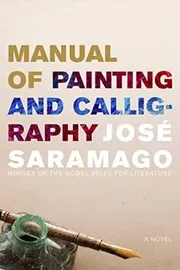
Manual of Painting and Calligraphy
by Jose Saramago
1977
An uneasy portrait painter known only as H. begins to question his work, his clients, and the life he's built. Part novel and part artistic self-examination, it tracks a man trying to find a truer way to see and write.
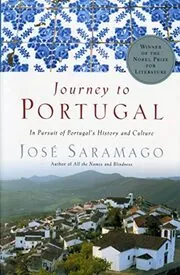
Journey to Portugal
by Jose Saramago
1983
Part travel book and part personal map of a country, this nonfiction work follows Saramago across Portugal's towns, roads, churches, and landscapes. He notices history everywhere, but also the textures, customs, and odd details that standard guides miss.
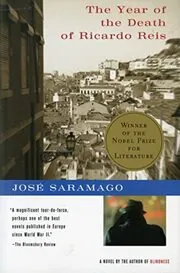
The Year of the Death of Ricardo Reis
by Jose Saramago
1984
Fernando Pessoa's heteronym Ricardo Reis returns to Lisbon after Pessoa's death and walks through a tense 1930s Europe. The novel blends history, philosophy, desire, and ghostly conversation into a meditation on watching the world versus joining it.

Os Poemas Possíveis
by Jose Saramago
1985
Saramago's first poetry book brings together poems of freedom, fraternity, irony, and resistance, written under the pressure of censorship-era Portugal. The voice is direct but searching, and you can hear a future novelist testing how language might push back.
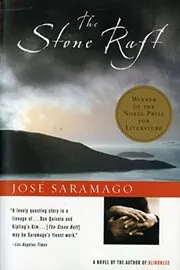
The Stone Raft
by Jose Saramago
1986
When the Iberian Peninsula breaks loose from Europe and drifts into the Atlantic, several strangers find their lives oddly linked. Saramago turns the impossible premise into a road novel about borders, identity, and what holds a place together.

Baltasar and Blimunda
by Jose Saramago
1987
In eighteenth-century Portugal, Baltasar, a wounded soldier, and Blimunda, a woman with extraordinary sight, are drawn into love and an impossible flying-machine project. Saramago mixes romance, labor, faith, and royal spectacle into one richly imagined story.
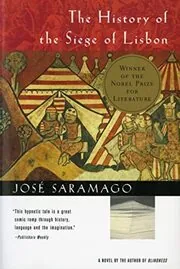
The History of the Siege of Lisbon
by Jose Saramago
1989
A proofreader inserts one small word, no, into a history book about the 1147 siege of Lisbon and changes everything. From that act of disobedience grows a novel about history, authorship, and a late-blooming love story.
The Gospel According to Jesus Christ
by Jose Saramago
1991
Saramago retells Jesus's life as a deeply human story shaped by desire, guilt, fear, and argument. Moving from Bethlehem to Golgotha, the novel questions divine plans while giving its central figure a startling inner life.
Recommended by
1 person Zack D'Aleo recommended this book
Zack D'Aleo
"Chi dice che è blasfemo non ha mai capito nulla sulla figura di Gesù Cristo. Questo libro è illuminante." - Zac D'Aleo
Zack D'Aleo's recommendation of this book

In Nomine Dei
by Jose Saramago
1993
Set against the failed Anabaptist uprising in sixteenth-century Münster, this play studies how ideals harden into fanaticism. Saramago uses the stage to examine faith, power, and the brutal damage done in the name of justice.
Blindness
by Jose Saramago
1995
An unexplained epidemic of white blindness sweeps through an unnamed city, and society collapses with terrifying speed. Following a small group of survivors, Saramago asks what remains of decency when fear, hunger, and power strip away the rules.
All the Names
by Jose Saramago
1997
Senhor José is a minor clerk in a vast civil registry who collects clippings about famous people. When he becomes fixated on an unknown woman, his careful routine breaks apart and turns into a lonely, funny, surprisingly moving search.
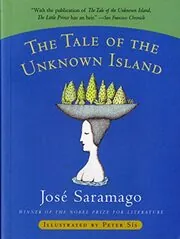
The Tale of the Unknown Island
by Jose Saramago
1997
A man asks the king for a boat so he can search for an unknown island. This brief fable turns that simple request into a gentle, witty meditation on freedom, self-knowledge, and the stubborn need to imagine more.
The Cave
by Jose Saramago
2000
Cipriano Algor, an aging potter, loses his livelihood when the vast commercial Center stops buying his wares. As he and his family are pulled toward that artificial world, Saramago builds a quiet, unsettling parable about work, consumerism, and reality.

La flor más grande del mundo
by Jose Saramago
2001
A boy from the countryside discovers a small dying flower and decides to save it, no matter how far he has to walk for water. It is a simple children's story that grows into a tender fable about care and imagination.

Las maletas del viajero
by Jose Saramago
2001
In these collected chronicles, Saramago moves between childhood memories, travel, city life, art, and political disillusion. The pieces are conversational and sharp, offering a good look at the essayist behind the better-known novelist.

Poesía completa
by Jose Saramago
2002
This bilingual collected volume brings together Saramago's three poetry books, letting readers trace his verse from the 1960s into the mid-1970s. It is the clearest window onto a side of his work that often gets overshadowed by the novels.
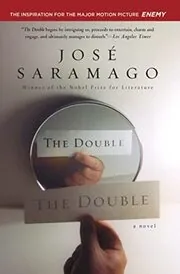
The Double
by Jose Saramago
2002
A bored history teacher discovers an actor who is his exact physical double, and obsession takes over. What starts as a strange curiosity becomes a tense, unsettling novel about identity, rivalry, and how fragile a single life can feel.
Seeing
by Jose Saramago
2004
Set in the same unnamed country as Blindness, this novel begins when most voters cast blank ballots in a national election. The government's paranoid response turns a political mystery into a fierce satire about democracy, fear, and control.

Don Giovanni ou o Dissoluto Absolvido
by Jose Saramago
2005
Returning to the Don Juan myth, Saramago rewrites the familiar story as a sly theatrical game about seduction, guilt, and performance. The title tells you the twist: this Don Giovanni is not simply punished, but reimagined and argued with.
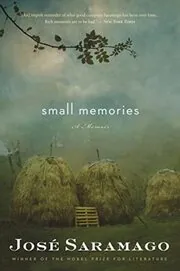
Small Memories
by Jose Saramago
2006
In this memoir, Saramago returns to the years between early childhood and adolescence, moving between village life and Lisbon. The book is full of small scenes that show how memory, class, family, and curiosity shaped the writer he became.
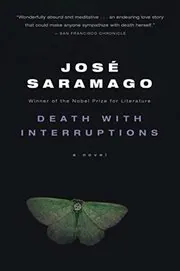
Death at Intervals / Death with Interruptions
by Jose Saramago
2008
One New Year's Day, nobody in an unnamed country dies. The miracle quickly becomes a bureaucratic, religious, and personal crisis as Saramago follows the chaos, then narrows the story to a surprisingly intimate encounter with Death herself.
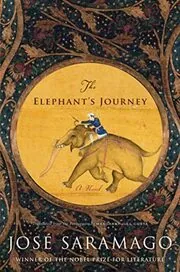
The Elephant's Journey
by Jose Saramago
2008
Based on a real sixteenth-century journey, the novel follows an elephant named Solomon from Portugal toward Vienna as a royal gift. Along the road, soldiers, handlers, priests, and onlookers turn the trip into a funny, humane study of power and spectacle.
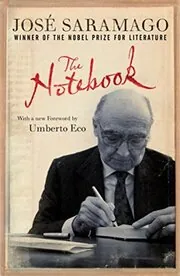
The Notebook
by Jose Saramago
2008
Drawn from his blog, this volume gathers Saramago's sharp reflections on politics, culture, war, memory, and daily life. It reads like a public notebook, part diary, part argument, part running conversation with the world.
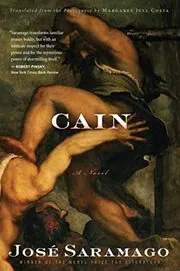
Cain
by Jose Saramago
2009
After killing Abel, Cain wanders through the Old Testament and meets its most troubling scenes head-on. Saramago uses his journey to question divine justice, human cruelty, and the stories many readers think they already know.

O Silêncio da Água
by Jose Saramago
2011
Drawn from Saramago's childhood memories, this short tale follows a boy who thinks he has hooked a huge fish in the river. What remains is wonder, frustration, and the hush of a moment he never forgets.
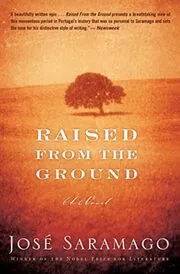
Raised from the Ground
by Jose Saramago
2012
Following the Mau-Tempo family across much of the twentieth century, this novel traces the hard lives of landless peasants in Portugal's Alentejo. It's a family saga and a political story about work, dignity, and slow resistance.

The Lives of Things
by Jose Saramago
2012
This collection of early stories is full of strange premises, living objects, uneasy satire, and sudden turns into the fantastic. It feels like a workshop of future Saramago themes, where ordinary life keeps slipping into allegory.

Que farei com este livro? / What Will I Do With This Book?
by Jose Saramago
2014
This play follows Luís de Camões after his return to Lisbon as he tries to get Os Lusíadas into print. Saramago turns that struggle into a sharp historical drama about art, poverty, censorship, and official indifference.
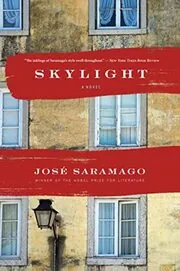
Skylight
by Jose Saramago
2014
In a shabby Lisbon apartment building, six households live side by side under the same roof. This early novel watches their routines, frustrations, gossip, and desires until ordinary life starts to feel quietly dramatic.
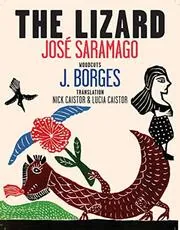
The Lizard
by Jose Saramago
2019
A giant lizard appears in Lisbon's Chiado district and throws the city into panic. In a few pages, Saramago turns that strange visit into a sly fairy tale about fear, violence, and transformation.
Where to start with Jose Saramago
If you want the best first read: Blindness → Seeing
If you want historical Portugal: Baltasar and Blimunda → The Year of the Death of Ricardo Reis → The History of the Siege of Lisbon
If you want intimate, idea-driven novels: All the Names → The Cave → The Double
If you want his bold biblical retellings: The Gospel According to Jesus Christ → Cain
Jose Saramago sub-series and character series
Jose Saramago collections, short stories, and related book types
Picture Books
Non-Fiction
Poetry
Plays
Short Stories/Novellas
Short Story Collections
Standalone Jose Saramago books
Author bio
José Saramago was born on November 16, 1922, in Azinhaga, a small village in Portugal's Ribatejo region, into a family of landless peasants. The village stayed with him for the rest of his life. Its fields, animals, hard work, and plain speech would later feed his fiction and his memoir Small Memories.
When he was still very young, his family moved to Lisbon after his father found work as a policeman. Saramago did well in school, but money was tight, and at twelve he had to leave grammar school for technical training. He studied mechanics, worked with his hands, and spent a great deal of his free time reading in public libraries.
Writing did not arrive as a straight line. He held a long list of jobs, including mechanic, metalworker, civil servant, editor, translator, and journalist. That mix of manual labor and office work mattered. Saramago understood both the people who make things and the people trapped inside paperwork, which helps explain why his books are so full of workers, clerks, officials, and systems that grind people down.
He was a late-blooming novelist, and he never hid that fact.
His first novel, Land of Sin, appeared in 1947, but fiction did not become his true public life until much later. After years of poetry, translation, essays, and chronicles, and after newspaper work in the 1970s, he returned to the novel with Manual of Painting and Calligraphy, then found his full stride with Raised from the Ground. In the 1980s, books like Baltasar and Blimunda and The Year of the Death of Ricardo Reis made clear that he had become one of the central writers in Portuguese literature.
Many readers start with Blindness. Its premise is simple, an epidemic of white blindness, but the book opens into a study of fear, power, and mutual care. Others come in through All the Names, with its lonely registry clerk, or The Gospel According to Jesus Christ, which retells a sacred story in strikingly human terms. Even Death with Interruptions, about a country where no one dies, shows his gift for taking one impossible change and following its consequences.
He was also outspoken in public life. He distrusted official pieties and institutions that claimed moral certainty. After The Gospel According to Jesus Christ was blocked by the Portuguese government from a European literary prize in 1992, Saramago and his wife, the journalist Pilar del Río, moved to Lanzarote the following year. He kept writing there until the end of his life.
Lanzarote gave him distance, but not silence.
In 1998 he became the first writer in Portuguese to receive the Nobel Prize in Literature. He kept publishing into his eighties, with later books such as Seeing, The Elephant's Journey, and Cain. He died in Lanzarote on June 18, 2010. The José Saramago Foundation, based in Lisbon, continues to keep his work and public concerns in view.




Edited by
Software engineer whose passion for tracking book recommendations from podcasts inspired the creation of MRB.
Lead investor at 3one4 Capital whose startup expertise and love for books helped shape MRB and its growth.
Comments
Did we miss something? Have feedback?
Help us improve this page by sharing your thoughts