
Jonathan Swift Books in Order
Browse Jonathan Swift books in order, with quick summaries of the satires, poems, and pamphlets, plus background on his work and tips on where to start.
Last updated:
As an Amazon Associate, we earn from qualifying purchases (at no extra cost to you).
Jonathan Swift books in publication order
49 books

A Tale of a Tub and Other Works
by Jonathan Swift
1704
Swift's early breakthrough follows three brothers through a crazed allegory of religion, while the surrounding pieces keep interrupting and provoking. It is messy on purpose, dazzling in style, and much stranger than first-time readers expect.
The Battle of the Books
by Jonathan Swift
1704
In a mock war between ancient and modern authors, books literally fight for prestige. Swift turns a learned literary quarrel into brisk comic spectacle, and the joke still lands.
Abolishing Christianity and Other Short Pieces
by Jonathan Swift
1708
This volume gathers shorter Swift works, including his sly attack on fashionable unbelief. It is a good entry point if you want the quick, concentrated version of his irony.
The Benefit of Farting Explain'd
by Jonathan Swift
1722
A notorious mock-medical pamphlet that argues, with deadpan seriousness, for the social and bodily benefits of flatulence. Crude on purpose, it shows the kind of bodily joke eighteenth-century satire could turn into an essay.
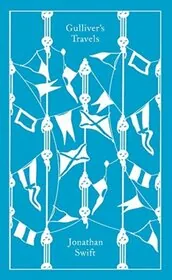
Gulliver's Travels
by Jonathan Swift
1726
Lemuel Gulliver journeys to lands of tiny people, giants, projectors, and speaking horses. The adventure is memorable on its own, but the real force comes from the way each voyage exposes human vanity and cruelty.
Recommended by
5 people Neil deGrasse Tyson recommended this book
Neil deGrasse Tyson
"To learn, among other satirical lessons, that most of the time humans are Yahoos." - Neil deGrasse Tyson
Neil deGrasse Tyson's recommendation of this book  Mahatma Gandhi recommended this book
Mahatma Gandhi
"Effective condemnation of modem civilization, written in an ironic vein." - Mahatma Gandhi
Mahatma Gandhi's recommendation of this book  Mark Twain recommended this book
Mark Twain
Mark Twain recommended this book in a letter.
Mark Twain's recommendation of this book  Alice Walker recommended this book
Alice Walker
"I was 11 when I read it and it encouraged me to believe the world was large, fascinating, and with incredibly interesting creatures in it!" - Alice Walker
Alice Walker's recommendation of this book  Winston Churchill recommended this book
Winston Churchill
"One of the books I would like to take with me to Purgatory." - Winston Churchill
Winston Churchill's recommendation of this book
A Modest Proposal and Other Satirical Works
by Jonathan Swift
1729
Best known for the shocking title essay, this collection also shows how varied Swift's satire could be. Politics, religion, manners, and literary feuds all get the same cold, exacting treatment.
Directions to Servants
by Jonathan Swift
1731
This mock manual teaches servants how to shirk work, waste supplies, and dodge blame without losing face. Swift uses upside-down advice to expose the petty chaos of everyday household life.
Polite Conversation
by Jonathan Swift
1738
Swift turns dinner-table chatter into social satire by repeating the stock phrases and empty polish of fashionable talk. It is funny, mean, and a little too recognizable.

Journal to Stella
by Jonathan Swift
1766
These letters to Esther Johnson and Rebecca Dingley move between politics, gossip, affection, and private habit. They show Swift at his most immediate, playful, and human.
The Drapier's Letters
by Jonathan Swift
1935
Written under the name M. B. Drapier, these letters attack a coinage scheme imposed on Ireland. They are political pamphlets, but they read with the energy of a public campaign and a personal challenge.
The Letters of Jonathan Swift to Charles Ford
by Jonathan Swift
1935
These letters to Charles Ford show Swift in a more relaxed, conversational register. They are valuable for the mix of friendship, gossip, practical concerns, and flashes of the same old sting.
The Bickerstaff Partridge Papers
by Jonathan Swift
1940
Swift's fake predictions and mock reports announce an astrologer's death on paper, then keep the joke going. It is brisk, mischievous satire, and a great example of his love of invented personae.
The Examiner and Other Pieces Written in 1710-11
by Jonathan Swift
1940
These essays capture Swift in full political-journalist mode during a tense year in London. He writes quickly, sharply, and with the kind of confidence that makes every argument sound like common sense.

The Prose Works Of Jonathan Swift
by Jonathan Swift
1940
A broad collection of Swift's essays, pamphlets, tracts, and other prose. It is best for readers who want range, from literary satire and church writing to politics and social argument.
Irish Tracts 1720-1723 and Sermons
by Jonathan Swift
1948
This volume pairs Swift's Irish prose with sermons, showing how easily he moved between church duty and public argument. It is a useful bridge between the cleric, the moralist, and the satirist.

The Portable Swift
by Jonathan Swift
1948
Designed as a one-volume introduction, this collection brings together major prose and verse in an accessible format. It is a strong place to sample Swift before moving into the fuller editions.

Selected Prose Works of Jonathan Swift
by Jonathan Swift
1949
This selection focuses on the prose that made Swift formidable, ironic essays, political writing, and satire with a hard edge. A useful way to get the essentials without the full collected works.

Selected Writings
by Jonathan Swift
1950
A general introduction to Swift across forms, this volume samples the works that made his reputation. Expect satire, pamphlets, poems, and the voice of a writer who rarely wastes a sentence.
Political Tracts, 1711-1713
by Jonathan Swift
1951
These pieces come from Swift's years in the middle of English party politics. They show him as a working journalist and polemicist, shaping arguments about war, peace, government, and public opinion.
The History of the Last Four Years of the Queen
by Jonathan Swift
1951
Swift's account of Queen Anne's final years reads like insider history written with a partisan pen. Court rivalry, ministerial struggle, and the push for peace all sit close to the surface.
Irish Tracts 1728-1733
by Jonathan Swift
1955
This collection brings together Swift's later Irish writings, where outrage over poverty and policy hardens into some of his bleakest satire. It is essential for readers who want the political Swift rather than the schoolroom caricature.

Collected Poems: v. 1
by Jonathan Swift
1958
This volume gathers a substantial stretch of Swift's verse, from polished occasional poems to rougher satiric pieces. It is a reminder that his poetry could be tender, comic, and brutally direct.

The Poems of Jonathan Swift
by Jonathan Swift
1958
A poetry collection that lets Swift's verse stand on its own rather than in the shadow of the prose. Readers will find satire, friendship poems, urban sketches, and flashes of startling intimacy.

Directions to Servants and Miscellaneous Pieces 1733-42
by Jonathan Swift
1959
This volume combines Swift's upside-down household manual with later shorter prose pieces. It shows an older writer still sharp, still funny, and still uncomfortably alert to folly.

Selected Prose and Poetry
by Jonathan Swift
1959
A balanced sampler of Swift's two main modes, the cutting prose and the colloquial verse. It works well for readers who want more than just the famous satires.
The Correspondence of Jonathan Swift, D.D.
by Jonathan Swift
1963
Swift's letters show the public wit in private motion, clever, busy, affectionate, and often surprisingly practical. Together they open out his friendships, politics, and daily life across decades.
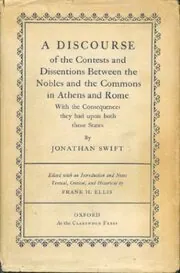
A discourse of the contests and dissentions between the nobles and the commons in Athens and Rome with the consequences they had upon both those states
by Jonathan Swift
1967
Using Athens and Rome as a screen, Swift examines struggles between elites and commoners while glancing at his own political moment. The tone is more sober than comic, but the argument has a clear edge.

Best of Swift
by Jonathan Swift
1967
A curated selection of Swift's best-known writing, chosen to give a quick sense of his range and tone. Good for browsing, teaching, or meeting the sharper side of eighteenth-century literature.

Selected Poems
by Jonathan Swift
1967
This compact edition highlights Swift as a poet, not just the author of Gulliver's Travels. The poems move from comic bite to private feeling without losing his plainspoken control.

Stella's Birth-Days
by Jonathan Swift
1967
These poems for Stella are among Swift's warmest and strangest personal writings. They mix affection, wit, aging, and unease, which is part of what makes them linger.

The Prose Writings
by Jonathan Swift
1968
A substantial prose collection that gathers the essays, pamphlets, and satirical pieces at the center of Swift's reputation. Useful for seeing how many different voices he could inhabit.
Proposal for Correcting, Improving and Ascertaining the English Tongue
by Jonathan Swift
1969
Swift argues that English needs care, discipline, and better standards if it is not to decay. It is part language complaint, part cultural manifesto, and still surprisingly readable.
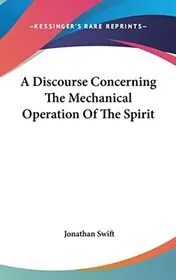
A Discourse Concerning The Mechanical Operation Of The Spirit
by Jonathan Swift
1970
In this early satire, Swift treats religious enthusiasm as if it were a kind of machine. The pose is dry, the joke is barbed, and the target is empty preaching that mistakes noise for conviction.

Miscellanies in Prose and Verse by Pope, Swift and Gay
by Jonathan Swift
1972
This joint volume places Swift alongside Alexander Pope and John Gay, the kind of company that helps clarify his comic method. It is part anthology, part snapshot of an eighteenth-century literary circle.

The Writings of Jonathan Swift: Authoritative Texts, Backgrounds, Criticism
by Jonathan Swift
1973
More than a reading edition, this volume pairs Swift's major work with context and critical material. It suits students and curious readers who want the writing and the conversation around it.

Jonathan Swift, the Complete Poems
by Jonathan Swift
1983
A full poetry edition for readers who want Swift beyond the usual few anthology pieces. It reveals the scale of his verse, from satiric attack to domestic and occasional poems.

Jonathan Swift: A Critical Edition of the Major Works
by Jonathan Swift
1984
This edition gathers Swift's central works with scholarly framing and reliable texts. It is a strong choice if you want the major pieces in one place with helpful context.
The Account Books of Jonathan Swift
by Jonathan Swift
1984
Not a satire but a record of daily life, this volume preserves Swift's financial books and household accounts. It gives a practical, oddly intimate view of spending, gifts, charity, and routine.
The Last Will and Testament of the Revd. Dr. Jonathan Swift
by Jonathan Swift
1984
Swift's will is short, formal, and unexpectedly revealing. Beyond the legal language, it shows his loyalties, his careful planning, and the serious social purpose behind one of his final bequests.
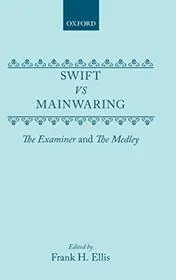
Swift vs. Mainwaring
by Jonathan Swift
1985
This volume sets Swift's Examiner pieces beside Arthur Mainwaring's replies in the Medley. Read together, they turn an early eighteenth-century newspaper fight into a fast, revealing lesson in partisan prose.
Service Is No Inheritance, Or, Rules to Servants According to the REV. Dr. Swift
by Jonathan Swift
1987
This edition of Swift's servant satire offers instructions that reward laziness, theft, excuses, and chaos. The joke is simple and effective, every rule describes the worst possible way to run a household.
Swift's Irish pamphlets
by Jonathan Swift
1990
This selection gathers Swift's writings on Ireland, where economic anger, political pressure, and satire meet. It is one of the clearest ways to see how fiercely he wrote about trade, poverty, and English policy.
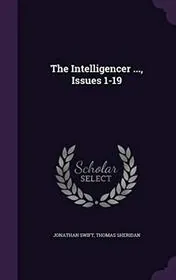
The Intelligencer
by Jonathan Swift
1992
These short periodical pieces, linked with Swift's Dublin circle, mix literary play, civic concern, and mock seriousness. They offer a lively glimpse of Swift working in public, one sharp essay at a time.
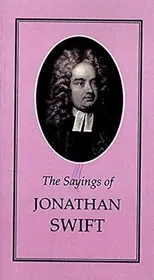
Sayings of Jonathan Swift
by Jonathan Swift
1994
A compact gathering of Swift's aphorisms, barbs, and memorable remarks. Good for dipping into, it shows how quickly he could move from common sense to something much darker and funnier.
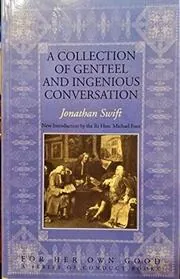
A Complete Collection of Genteel and Ingenious Conversation
by Jonathan Swift
1995
Swift stages polished talk among fashionable people and lets the emptiness speak for itself. The result is a sharp comedy of cliches, borrowed wit, and social chatter that never says quite as much as it thinks it does.

Major Works
by Jonathan Swift
2003
A one-volume collection of Swift's essential writing, usually centered on the big satires and a representative spread of shorter pieces. Ideal for readers who want breadth without chasing many separate books.

Jonathan Swift: Poems selected by Derek Mahon
by Jonathan Swift
2006
This selection, chosen by Derek Mahon, puts the focus on Swift's poetry and its range. It makes a strong case for the verse as lively, Irish, and much more than a side note.
Cadenus And Vanessa
by Jonathan Swift
2010
This long, uneasy poem turns Swift's relationship with Esther Vanhomrigh into a courtship fable. It is witty, self-protective, and revealing, especially for readers curious about the private tensions behind the public satirist.
Baucis and Philemon
by Jonathan Swift
2017
Swift reworks the old classical tale of a devoted elderly couple into a comic, slyly local poem. It mixes myth, village life, and affectionate mockery, showing how tenderness and satire can live in the same lines.
Where to start with Jonathan Swift
If you want the essential Swift: Gulliver's Travels → A Modest Proposal and Other Satirical Works → The Battle of the Books
If you want the early, wild satire: A Tale of a Tub and Other Works → A Discourse Concerning The Mechanical Operation Of The Spirit → Abolishing Christianity and Other Short Pieces
If you want Swift the political writer: The Drapier's Letters → Political Tracts, 1711-1713 → Swift's Irish pamphlets
If you want the private Swift: Journal to Stella → The Correspondence of Jonathan Swift, D.D. → The Letters of Jonathan Swift to Charles Ford
If you want the poems: Selected Poems → Jonathan Swift, the Complete Poems → Stella's Birth-Days
Jonathan Swift sub-series and character series
Chapbooks (Jonathan Swift) books in order
Explore this seriesChapbooks (Jonathan Swift) books in chronological order
Jonathan Swift collections, short stories, and related book types
Collections
Non-Fiction





Service Is No Inheritance, Or, Rules to Servants According to the REV. Dr. Swift
by Jonathan Swift
1987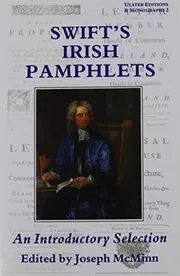
Standalone Jonathan Swift books
Author bio
Jonathan Swift was born in Dublin on November 30, 1667, a few months after his father died. His mother returned to England not long after, and much of his childhood was shaped by relatives who helped raise and educate him. He went to Kilkenny School, then to Trinity College Dublin, and from early on he knew what it meant to live by intelligence, patronage, and persistence.
He was not one of those writers who glided smoothly into literary life. The political turmoil of 1688 and 1689 pushed him from Ireland to England, where he entered the household of Sir William Temple at Moor Park in Surrey. There he worked as a secretary, read deeply in Temple's library, met Esther Johnson, later known in his writing as Stella, and absorbed the manners of politics at very close range. He also took holy orders, served briefly at Kilroot, and received an M.A. from Oxford.
Moor Park changed everything.
Out of those years came the early prose that made Swift impossible to ignore. A Tale of a Tub, The Battle of the Books, and A Discourse Concerning the Mechanical Operation of the Spirit showed how well he could use parody, fake authority, and comic overstatement. He loved masks, anonymous pamphlets, invented speakers, and voices that sounded reasonable right up to the moment they exposed themselves as absurd. A lot of later satire still works inside the space he helped define.
In London, especially after 1710, Swift became a powerful political journalist. He wrote for The Examiner, moved among ministers and writers, and turned current events into sharp prose that sounded brisk and plain even when it was doing heavy damage. Journal to Stella lets you see him inside that world, busy, watchful, affectionate, touchy, and often very funny. It is one of the best records we have of Swift not as a monument, but as a working writer moving through each day.
Swift could sound calm while saying something savage.
In 1713 he was appointed dean of St. Patrick's Cathedral, Dublin. He had hoped for a bigger place in English church life, but Ireland became the center of his remaining years and of some of his strongest writing. His Irish pamphlets took on trade, coinage, poverty, and government failure with a mix of hard fact and bitter comedy. The Drapier's Letters made him a public force, and A Modest Proposal remains shocking because the voice is so controlled. He does not rant. He simply keeps reasoning, and the reasoning becomes the horror.
Then came Gulliver's Travels in 1726, the book most readers meet first. Its tiny people, giants, projectors, and horses are easy to remember, but the deeper pull is the way the story keeps changing shape under your feet. It can feel like adventure, political satire, travel parody, and a very dark joke about human pride, all at once. Readers who stay with Swift usually end up finding more to like in the rest of the work too, the sly household inversion of Directions to Servants, the private warmth and strain in the Stella poems, and the letters that keep his public severity from being the whole picture.
His later years were marked by serious illness, including long trouble with dizziness, and then by physical decline. He died in Dublin on October 19, 1745, and was buried in St. Patrick's Cathedral. One of the plainest facts about him feels right as an ending, the writer who spent so much of his life exposing public cruelty also left money that helped found a hospital in Dublin.




Edited by
Software engineer whose passion for tracking book recommendations from podcasts inspired the creation of MRB.
Lead investor at 3one4 Capital whose startup expertise and love for books helped shape MRB and its growth.
Comments
Did we miss something? Have feedback?
Help us improve this page by sharing your thoughts